


Multi-Dimensional Gene Regulation in Innate and Adaptive Lymphocytes: A View From Regulomes
- PMID: 33841440
- PMCID: PMC8034253
- DOI: 10.3389/fimmu.2021.655590
Multi-Dimensional Gene Regulation in Innate and Adaptive Lymphocytes: A View From Regulomes
Abstract
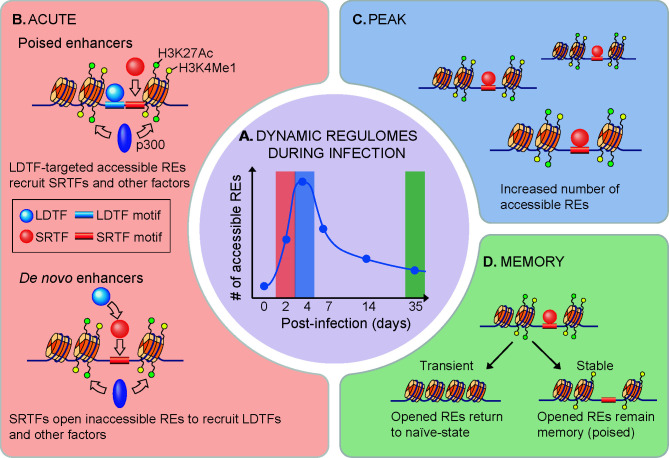
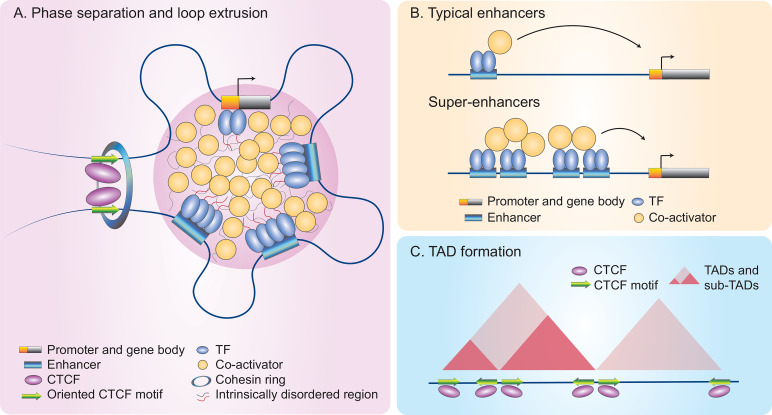
The precise control of cytokine production by innate lymphoid cells (ILCs) and their T cell adaptive system counterparts is critical to mounting a proper host defense immune response without inducing collateral damage and autoimmunity. Unlike T cells that differentiate into functionally divergent subsets upon antigen recognition, ILCs are developmentally programmed to rapidly respond to environmental signals in a polarized manner, without the need of T cell receptor (TCR) signaling. The specification of cytokine production relies on dynamic regulation of cis-regulatory elements that involve multi-dimensional epigenetic mechanisms, including DNA methylation, transcription factor binding, histone modification and DNA-DNA interactions that form chromatin loops. How these different layers of gene regulation coordinate with each other to fine tune cytokine production, and whether ILCs and their T cell analogs utilize the same regulatory strategy, remain largely unknown. Herein, we review the molecular mechanisms that underlie cell identity and functionality of helper T cells and ILCs, focusing on networks of transcription factors and cis-regulatory elements. We discuss how higher-order chromatin architecture orchestrates these components to construct lineage- and state-specific regulomes that support ordered immunoregulation.
Keywords: ATAC-seq and chromatin accessibility; de novo enhancers; histone modifications; innate lymphoid cell (ILC); lineage-determining transcription factors; poised enhancers; signal-regulated transcription factors.
Copyright © 2021 Fernando, Sciumè, O’Shea and Shih.
Conflict of interest statement
The authors declare that the research was conducted in the absence of any commercial or financial relationships that could be construed as a potential conflict of interest.
Figures
References
Publication types
MeSH terms
Substances
Grants and funding
LinkOut - more resources
Full Text Sources
Other Literature Sources
