


Comparison of tear proteomic and neuromediator profiles changes between small incision lenticule extraction (SMILE) and femtosecond laser-assisted in-situ keratomileusis (LASIK)
- PMID: 33842006
- PMCID: PMC8020296
- DOI: 10.1016/j.jare.2020.11.001
Comparison of tear proteomic and neuromediator profiles changes between small incision lenticule extraction (SMILE) and femtosecond laser-assisted in-situ keratomileusis (LASIK)
Abstract
Introduction: The tear proteomics and neuromediators are associated with clinical dry eye parameters following refractive surgery.
Purpose: To investigate and compare the tear proteomic and neuromediator profiles following small incision lenticule extraction (SMILE) versus laser-assisted in-situ keratomileusis (LASIK).
Methods: In this randomized controlled trial with paired-eye design, 70 patients were randomized to receive SMILE in one eye and LASIK in the other eye. Tear samples were collected preoperatively, and 1 week, 1, 3, 6 and 12 months postoperatively, and were examined for protein concentration changes using sequential window acquisition of all theoretical fragment ion mass spectrometry (SWATH-MS). The data were analyzed with DAVID Bioinformatics Resources for enriched gene ontology terms and over-represented pathways. Tear neuromediators levels were correlated with clinical parameters.
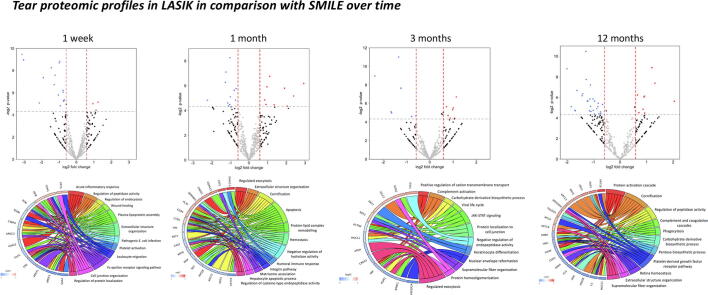
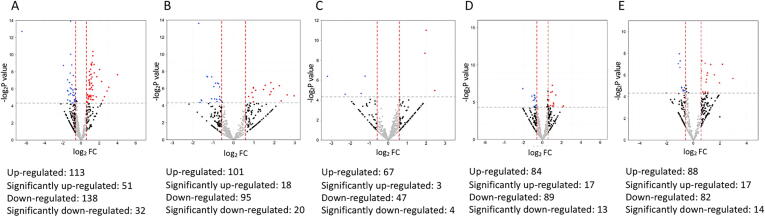
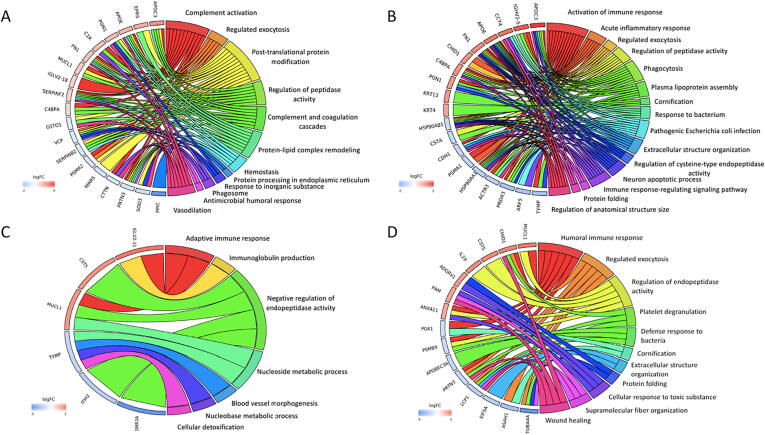
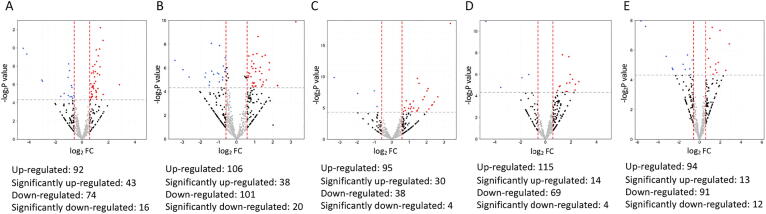
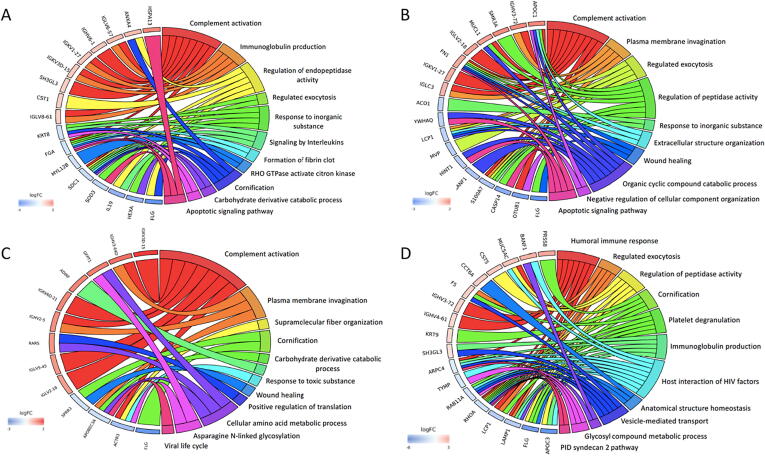
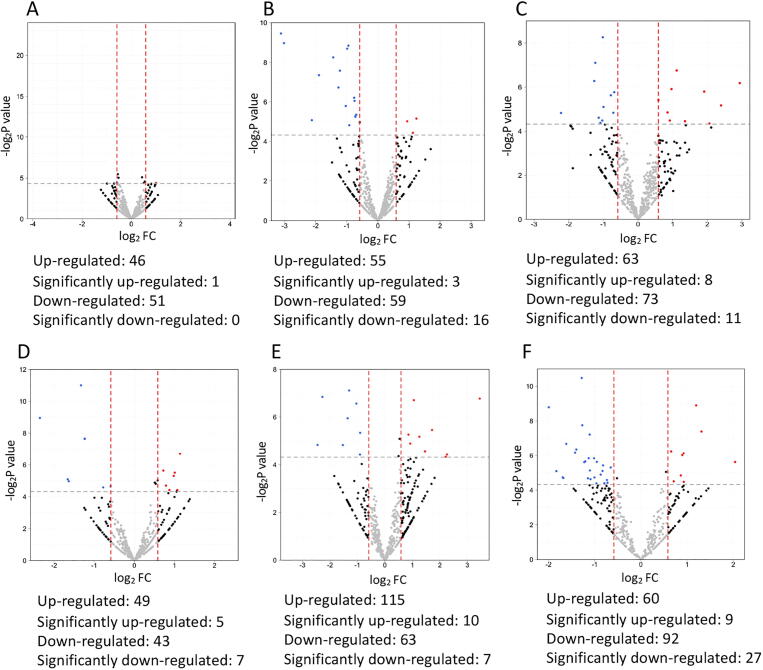
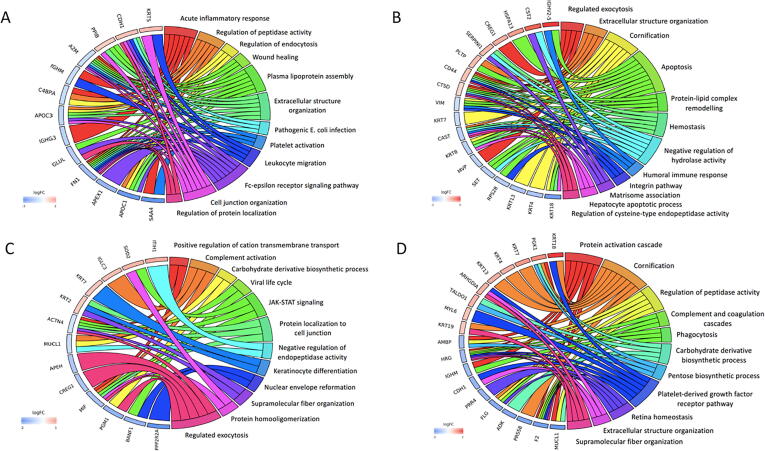
Results: Post-SMILE eyes had significantly better Oxford staining scores and tear break-up time (TBUT) than post-LASIK eyes at 1 and 3 months, respectively. Tear substance P and nerve growth factor levels were significantly higher in the LASIK group for 3 months and 1 year, respectively. SMILE and LASIK shared some similar biological responses postoperatively, but there was significant up-regulation in leukocyte migration and wound healing at 1 week, humoral immune response and apoptosis at 1 month, negative regulation of endopeptidase activity at 3 to 6 months, and extracellular structure organization at 1 year in the post-LASIK eyes. Tear mucin-like protein 1 and substance P levels were significantly correlated with TBUT (r = -0.47, r = -0.49, respectively).
Conclusion: Significant differences in the tear neuromediators and proteomics were observed between SMILE and LASIK, even though clinical dry eye signs have subsided and became comparable between 2 procedures.
Keywords: Dry eye; Laser-assisted in-situ keratomileusis; Neuromediators; Proteomics; Small incision lenticule extraction; Tear.
© 2021 The Authors. Published by Elsevier B.V. on behalf of Cairo University.
Conflict of interest statement
The authors declare that they have no known competing financial interests or personal relationships that could have appeared to influence the work reported in this paper.
Figures
References
-
- Liu Y.C., Rosman M., Mehta J.S. Enhancement after small-incision lenticule extraction: Incidence, risk factors, and outcomes. Ophthalmology. 2017;124(6):813–821. - PubMed
-
- Kobashi H., Kamiya K., Shimizu K. Dry eye after small incision lenticule extraction and femtosecond laser-assisted LASIK: Meta-analysis. Cornea. 2017;36(1):85–91. - PubMed
-
- Denoyer A., Landman E., Trinh L., Faure J.F., Auclin F., Baudouin C. Dry eye disease after refractive surgery: comparative outcomes of small incision lenticule extraction versus LASIK. Ophthalmology. 2015;122(4):669–676. - PubMed
-
- Fuest M., Mehta J.S. Iatrogenic dry eye following cataract and refractive surgical procedures. In: He M.G., editor. Ocular surface diseases, disorders, & dysfunctions. Thorofare; NJ, Healio: 2016. pp. 3–6.
-
- Liu Y.C., Tan D.T.H., Mehta J.S. Wound healing after ReLEx surgery. In: Sekundo W., editor. small incision lenticule extraction: Principles, techniques, complication management and future concepts. NY, Springer; New York: 2015. pp. 13–26.
Publication types
MeSH terms
Substances
LinkOut - more resources
Full Text Sources
Other Literature Sources
Medical
Research Materials
