Novel interventional radiological management for lymphatic leakages after gynecologic surgery: lymphangiography and embolization
- PMID: 33842273
- PMCID: PMC8033090
- DOI: 10.21037/gs-2019-ursoc-10
Novel interventional radiological management for lymphatic leakages after gynecologic surgery: lymphangiography and embolization
Abstract
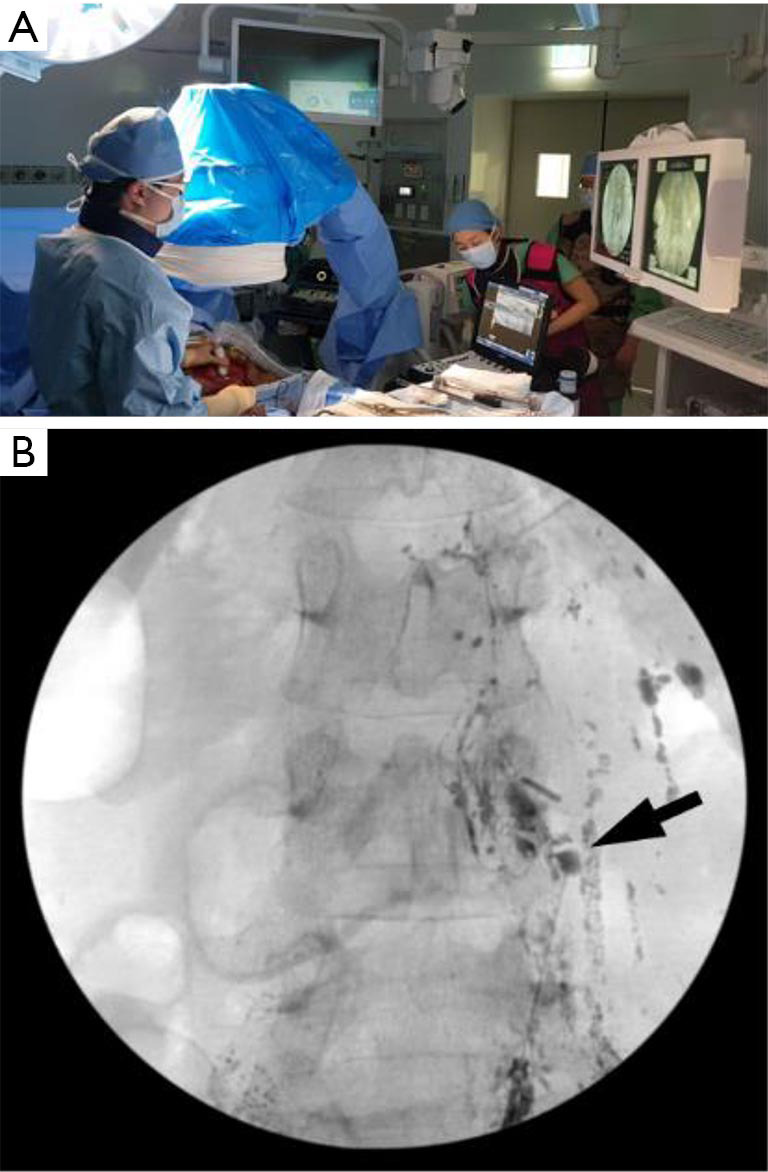
Post-operative lymphatic leakage is a common complication of a radical gynecologic surgery involving aggressive lymph node dissection. Its manifestation varies from asymptomatic lymphoceles to life-threatening chylous ascites. In the past, nuclear medicine lymphoscintigraphy was the sole imaging modality for the confirmation of the leakage, of which application is limited due to its poor spatial resolution. While a conservative treatment with percutaneous drainage was the mainstream treatment method, surgical exploration was the last resort for the recalcitrant leakages. Recently, there have been a series of innovations in the field of interventional radiology, including intranodal Lipiodol® lymphangiography, dynamic magnetic resonance (MR) lymphangiography, lymphatic embolization, and mesenteric lymph node lymphangiography. Intranodal Lipiodol® lymphangiography provides very reliable and secure access to the lymphatic system, while requiring only fundamental skills and equipment available to all interventional radiologists. Besides, Lipiodol® is being received a spotlight for its potential therapeutic effects on refractory lymphatic leakage. Dynamic MR lymphangiography plays a vital role in the diagnosis and management of non-traumatic lymphatic diseases, as well as in the post-operative lymphatic leakage with its superior contrast, spatial and temporal resolution. Lymphatic embolization is a technique of using N-BCA glue, a liquid embolic agent, for lymphatic leakages. It can be further described as lymphopseudoaneurysm (LPA) embolization or lymph node embolization, according to which structure is being embolized. Lymphatic embolization opened a new realm of possibilities in the field of interventional lymphology, resulting in the development of treatment approaches for chylous ascites and lymphoceles. Mesenteric lymph node lymphangiography offers the opacification of the upstream mesenteric chylous lymphatic system and can detect lymphatic leakage from the intestinal trunk or the more proximal parts of the mesenteric lymphatic system. With the advent of these latest interventional radiological techniques, more comprehensive approaches to the management of recalcitrant post-operative lymphatic leakages have been enabled.
Keywords: Lymphocele; chylous; embolization; lymphangiography; lymphatic leakage.
2021 Gland Surgery. All rights reserved.
Conflict of interest statement
Conflicts of Interest: All authors have completed the ICMJE uniform disclosure form (available at http://dx.doi.org/10.21037/gs-2019-ursoc-10). The series “Ultra-Radical Surgery in Ovarian Cancer: Surgical Techniques for Gynecologic Oncologist” was commissioned by the editorial office without any funding or sponsorship. The authors have no other conflicts of interest to declare.
Figures


References
-
- Prodromidou A, Iavazzo C, Fotiou A, et al. The application of fibrin sealant for the prevention of lymphocele after lymphadenectomy in patients with gynecological malignancies: a systematic review and meta-analysis of randomized controlled trials. Gynecol Oncol 2019;153:201-8. 10.1016/j.ygyno.2019.01.011 - DOI - PubMed
Publication types
LinkOut - more resources
Full Text Sources
Other Literature Sources
Miscellaneous