


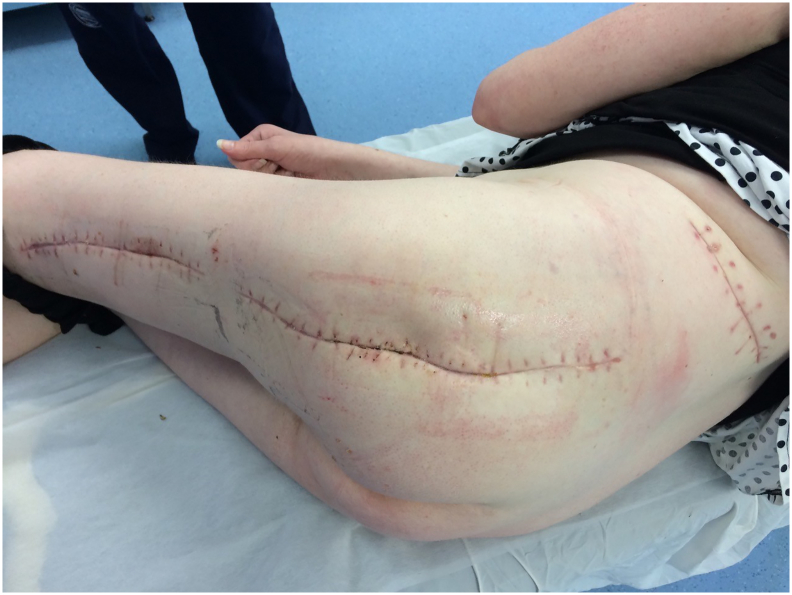
Extensive clostridial myonecrosis after gluteal intramuscular injection in immunocompromised patient treated with surgical debridement and negative-pressure wound therapy
- PMID: 33842680
- PMCID: PMC8020469
- DOI: 10.1016/j.tcr.2021.100469
Extensive clostridial myonecrosis after gluteal intramuscular injection in immunocompromised patient treated with surgical debridement and negative-pressure wound therapy
Erratum in
-
Erratum regarding missing Declaration of Competing Interest statements in previously published articles.Trauma Case Rep. 2023 Feb 17;45:100794. doi: 10.1016/j.tcr.2023.100794. eCollection 2023 Jun. Trauma Case Rep. 2023. PMID: 37234575 Free PMC article.
-
Erratum regarding missing patient consent statement in previously published articles.Trauma Case Rep. 2023 Mar 1;45:100810. doi: 10.1016/j.tcr.2023.100810. eCollection 2023 Jun. Trauma Case Rep. 2023. PMID: 37234591 Free PMC article.
Abstract
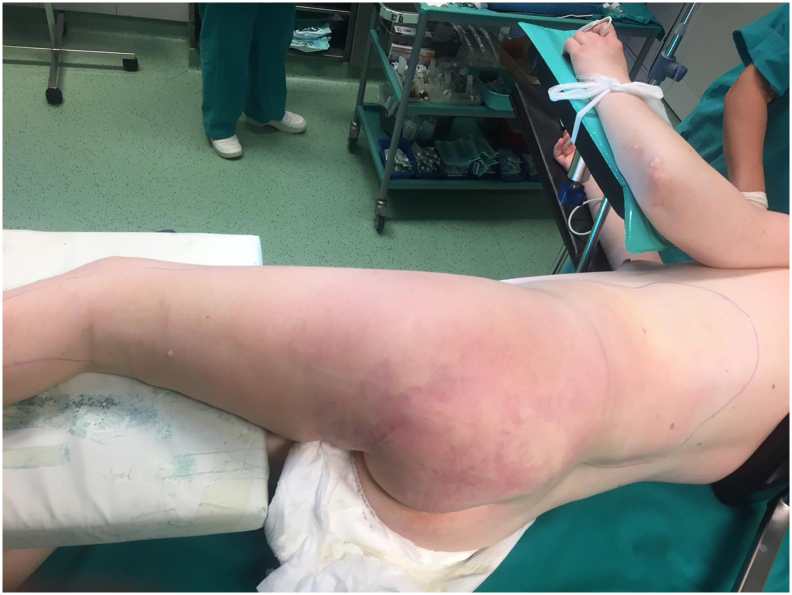
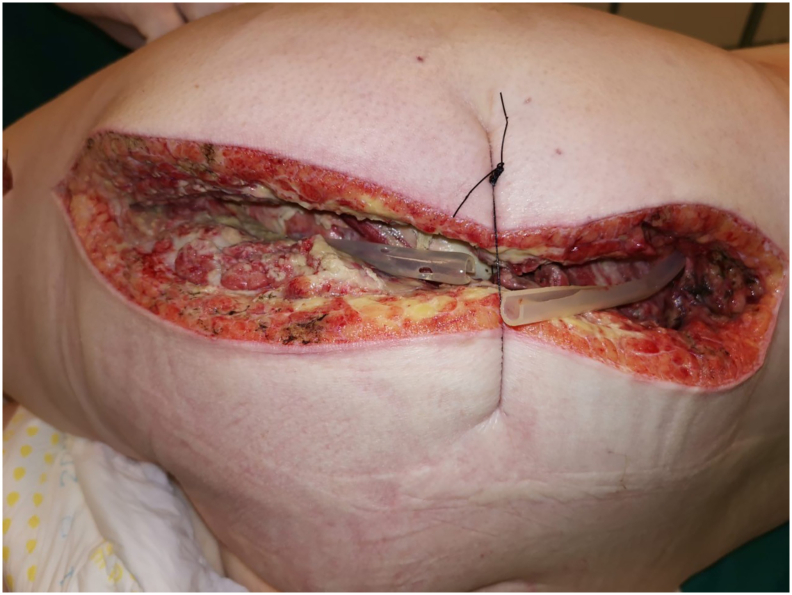
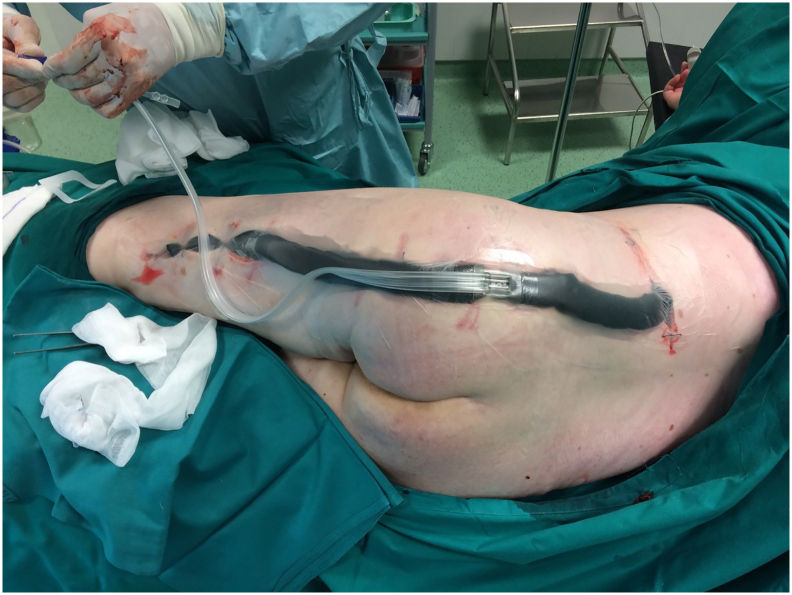
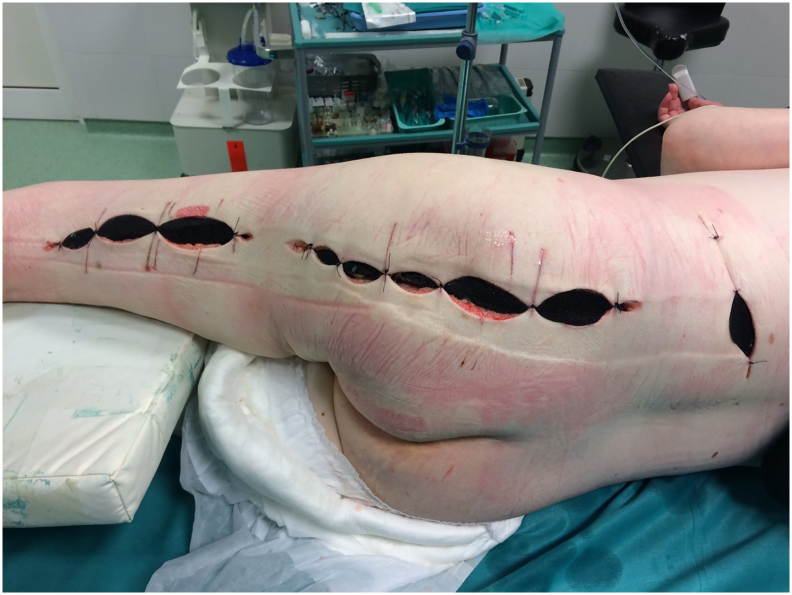
Gas gangrene is infectious disease caused by Clostridium perfringens infection. We are presenting extremely rare case of gluteal clostridial myonecrosis after intramuscular injection of diclofenac in immunocompromised young patient on a long-standing corticosteroid therapy presented with sepsis and initially absent clinical signs of severe anaerobic infection. After delayed diagnosis, she was treated with aggressive surgical removal of necrosed tissue and targeted antibiotic therapy which led to a rapid improvement allowing application of a negative-pressure wound therapy device with favorable outcome. This report shows the importance of timely diagnosis with pitfalls of imaging. It confirms that surgical debridement along with specific antibiotic therapy is the mainstay of treatment, but also promotes negative-pressure wound therapy which has proved convenient for accelerated closure of large incisions with tissue loss without any adverse effects or the need for complex reconstructive procedures.
Keywords: Clostridum perfringens; Gas gangrene; Immunosuppression; Intramuscular injections; Negative-pressure wound therapy; Steroids.
© 2021 The Authors.
Figures
References
-
- Zacharias N., Velmahos G.C., Salama A., Alam H.B., de Moya M., King D.R. Diagnosis of necrotizing soft tissue infections by computed tomography. Arch. Surg. 2010;145(5):452–455. - PubMed
-
- Stevens D.L., Bisno A.L., Chambers H.F., Dellinger E.P., Goldstein E.J., Gorbach S.L. Practice guidelines for the diagnosis and management of skin and soft tissue infections: 2014 update by the Infectious Diseases Society of America. Clin. Infect. Dis. 2014;59(2):e10–e52. - PubMed
-
- Kobayashi L., Konstantinidis A., Shackelford S., Chan L.S., Talving P., Inaba K. Necrotizing soft tissue infections: delayed surgical treatment is associated with increased number of surgical debridements and morbidity. J. Trauma. 2011;71(5):1400–1405. - PubMed
Publication types
LinkOut - more resources
Full Text Sources
Other Literature Sources
