Review
. 2021 Jan;18(1):53-74.
doi: 10.1007/s13311-021-01031-8. Epub 2021 Apr 12.

Circadian Rhythm Sleep-Wake Disorders: a Contemporary Review of Neurobiology, Treatment, and Dysregulation in Neurodegenerative Disease

Affiliations
Review

Circadian Rhythm Sleep-Wake Disorders: a Contemporary Review of Neurobiology, Treatment, and Dysregulation in Neurodegenerative Disease

Tyler A Steele et al. Neurotherapeutics. 2021 Jan.

Abstract

Circadian rhythms oscillate throughout a 24-h period and impact many physiological processes and aspects of daily life, including feeding behaviors, regulation of the sleep-wake cycle, and metabolic homeostasis. Misalignment between the endogenous biological clock and exogenous light-dark cycle can cause significant distress and dysfunction, and treatment aims for resynchronization with the external clock and environment. This article begins with a brief historical context of progress in the understanding of circadian rhythms, and then provides an overview of circadian neurobiology and the endogenous molecular clock. Various tools used in the diagnosis of circadian rhythm sleep-wake disorders, including sleep diaries and actigraphy monitoring, are then discussed, as are the therapeutic applications of strategically timed light therapy, melatonin, and other behavioral and pharmacological therapies including the melatonin agonist tasimelteon. Management strategies towards each major human circadian sleep-wake rhythm disorder, as outlined in the current International Classification of Sleep Disorders - Third Edition, including jet lag and shift work disorders, delayed and advanced sleep-wake phase rhythm disorders, non-24-h sleep-wake rhythm disorder, and irregular sleep-wake rhythm disorder are summarized. Last, an overview of chronotherapies and the circadian dysregulation of neurodegenerative diseases is reviewed.


Figures
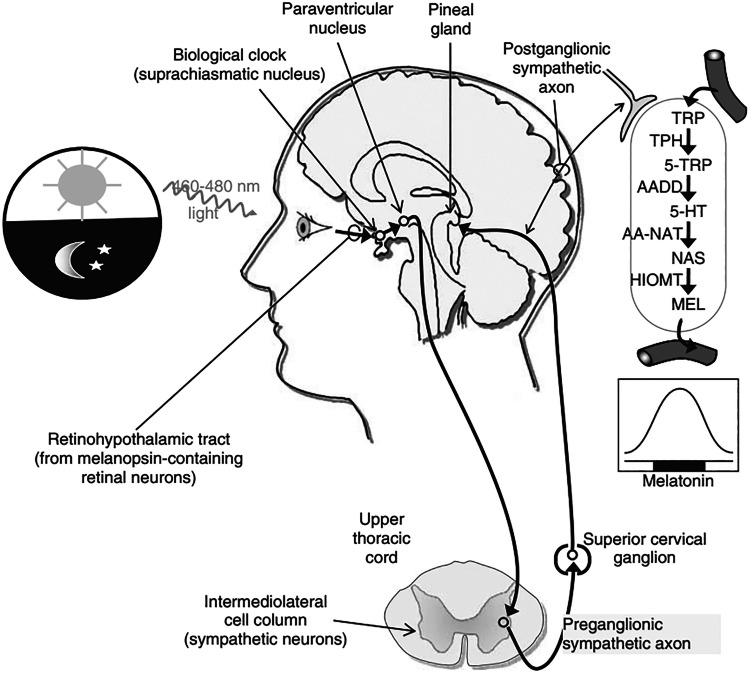
Fig. 1
Fig. 1
Key neuroanatomical pathways of the circadian system. The light-dark detection pathway begins at the intrinsically photosensitive retinal ganglion cells (ipRGCs), activated by the presence of light with a wavelength of approximately 460 nm during the day. Light activates the pathway via the melanopsin-containing ipRGCs which phototransduces light stimuli into electrophysiological impulses that are further conveyed through the retinohypothalamic tract to the suprachiasmatic nucleus (SCN), the master biological timekeeper. Projections from the SCN mainly innervate the paraventricular nucleus, which travels down to the intermediolateral cell column and superior cervical ganglion (SCG). Noradrenergic SCG projections to the pineal gland activate melatonin secretion into the bloodstream. In the presence of light, the SCN provides an inhibitory (via ϒ-aminobutryiuc acid) signal to this pathway to suppress melatonin secretion. Conversely, glutamatergic output from the SCN to the PVN enhances melatonin synthesis and secretion during darkness. Figure reproduced and legend adapted from Korkmaz A, Topal T, Tan D, et al. Role of melatonin in metabolic regulation. Rev Endocr Metab Disord 2009; 10, 261–270
Fig. 2
Fig. 2
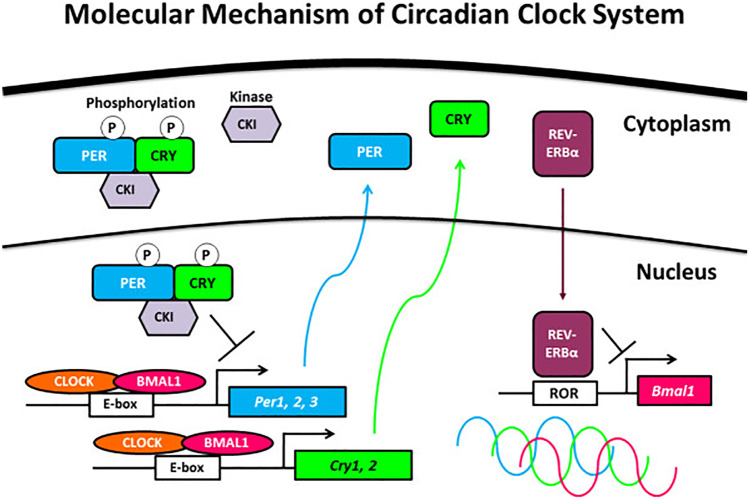
Schema of the circadian clock system. The foundation of the molecular clock involves a transcription-translation negative feedback loop of clock genes along with post-translational modifications to the genetic products. CLOCK and BMAL1 heterodimerize and promote transcription of Per1-3 and Cry1-2 by binding to E-box elements in promoter regions. Per and Cry gradually build up in the cytoplasm during the biological day. Phosphorylation and binding result in a trimeric complex that can translocate into the nucleus enabling feedback inhibition upon the production of genes promoted by the transcription factors CLOCK and BMAL1 [47]. A second more recently discovered feedback loop is also pictured, which involves nuclear receptors REV-ERBα and a family of retinoid-related orphan receptors (ROR), which primarily regulate BMAL1 transcription and modulate CLOCK expression [45]. Figure reproduced and legend adapted from Hida A, Kitamura S, Mishima K. Pathophysiology and pathogenesis of circadian rhythm sleep disorders. J Physiol Anthropol. 2012; 31(1):7
Fig. 3
Fig. 3
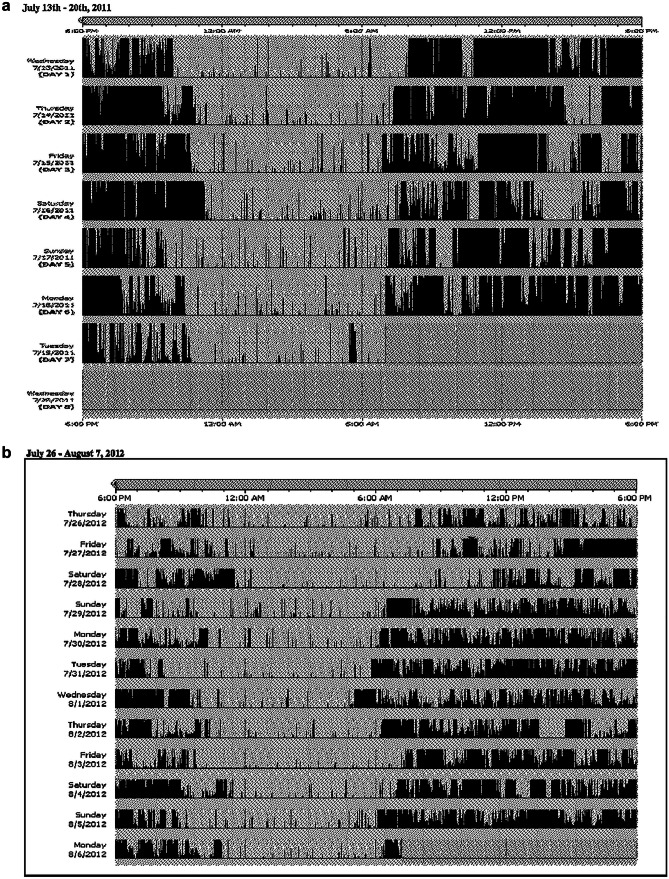
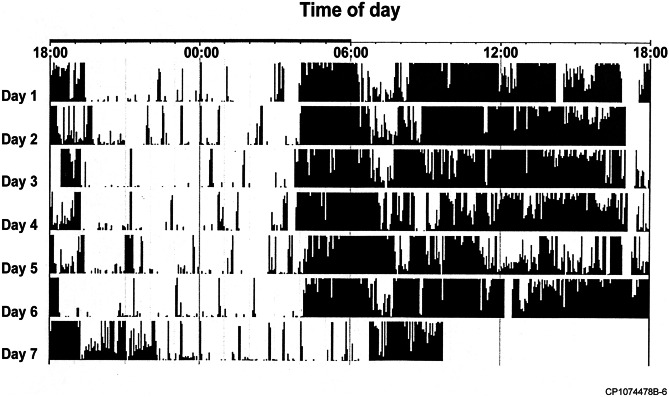
Normal actigraphy monitoring profiles, shown for a 1-week and b 2-week recording periods. Note that in each example, the major sleep period shows a relative paucity of movement activity, whereas during the normal daytime waking period, varying but relatively active movement is seen. a Normal actigraphy recording (1 week). The total estimated sleep time in this patient was an average of 7 h 42 min, with sleep efficiency estimated at approximately 94%. The usual sleep period varied from an approximate bedtime between 21:30 and 23:00, while average rise time varied from about 06:00 to 08:00. b Normal actigraphy recording (2 weeks). The total estimated sleep time in this patient was an average of 7 h 54 min, with sleep efficiency estimated at approximately 93%. The usual sleep period varied from an approximate bedtime between 22:00 and 23:30, while average rise time varied from about 06:30 to 08:00
Fig. 4
Fig. 4
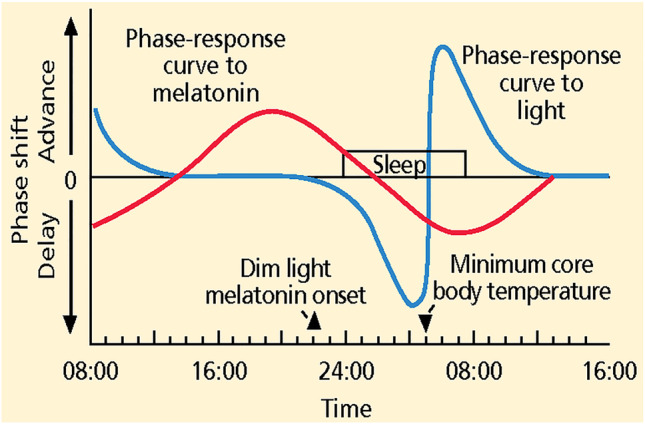
A schematic human phase-response curve to light (blue line) and to exogenous melatonin (red line). The y axis shows the direction and relative magnitude of the phase shift produced by the administration of light or melatonin at various times, which are shown on the x axis. This graph shows typical times and phase relationships among these rhythms when the circadian clock is entrained to a 24-h day. For individuals with earlier or later circadian rhythms, the local time axis should be adjusted accordingly. The light phase-response curve is a schematic based on the results of numerous studies. The melatonin curve is based on a single study using 0.5-mg doses of melatonin. Used with permission from Burgess HJ, Sharkey KM, Eastman CI. Bright light, dark and melatonin can promote circadian adaptation in night shift workers. Sleep Med Rev. 2002;6(5):407-20
Fig. 5
Fig. 5
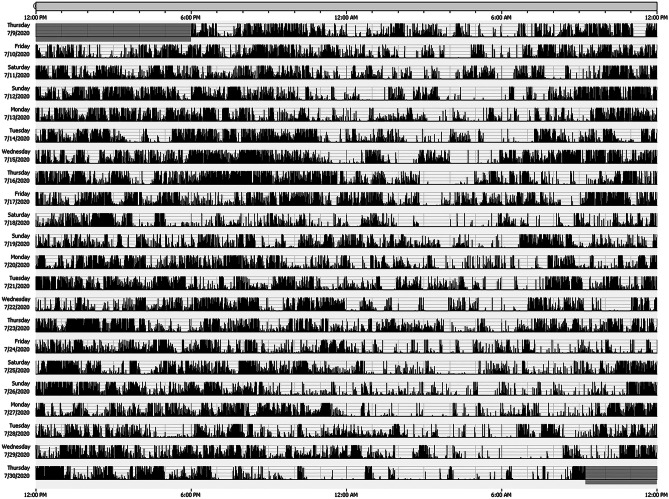
Actigraphy monitoring in shift work disorder. This 42-year-old woman was employed as a police and fire dispatcher in a rural vicinity, with work shift requirements for alternating “swing” shift work alternating between morning, afternoon, or overnight evening shifts every few days. Her morning daytime shifts were from 07:00 to 12:00, her afternoon shifts typically began at 16:00 and lasted until 23:00, and her overnight evening shifts were scheduled from 22:00 to 06:00. Shifts alternated every 2–3 days throughout the work week, with every other weekend off from work. She was a single mother of an 11-year-old son, requiring her to often have abbreviated or incomplete sleep periods to take care of her son or to drive him to activities when she was off from work. She had profound daytime sleepiness with an Epworth Sleepiness Scale score of 22 (abnormal, > 10 [97]), despite treatment with modafinil 400 mg during periods of wakefulness prior to her commutes to work. The actigraphy findings demonstrate regular well-consolidated sleep–wake periods mirroring her described work shift patterns
Fig. 6
Fig. 6
Actigraphy recording of a 22-year-old man with delayed sleep–wake phase disorder. Average total sleep time estimate was 6 h 34 min. The patient’s average bedtime was approximately 02:30, with average rise time of 10:30. There was some additional variability in bed and rise times that also implied inadequate sleep hygiene (irregular sleep habits). Morning bright light therapy and melatonin 0.5 mg at 1800 were prescribed, with subsequent improvement in ability to bed and fall asleep earlier around 00:00 midnight and rise by 07:00 with relief of daytime sleepiness
Fig 7.
Fig 7.
Wrist actigraphy documentation of advanced sleep–wake phase disorder in a 73-year-old man. Note the average sleep onset time with an average of approximately 1900 h, with early rise time near average of 0400
Fig 8.
Fig 8.
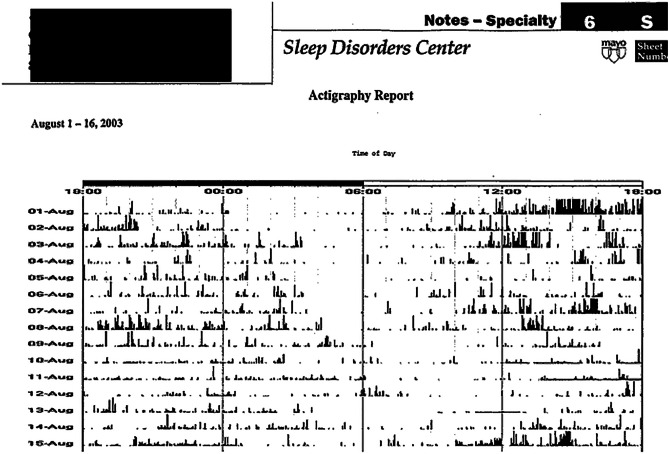
Wrist actigraphy monitoring in a 24-year-old non-sighted man confirmatory of non-24-h sleep–wake rhythm disorder. Note the progressively delayed sleep-onset times in successive nights, suggestive of an endogenous prolonged tau period of longer than 24 h causing successive delays in sleep onset and subsequent sleep periods and rise times
Fig. 9
Fig. 9
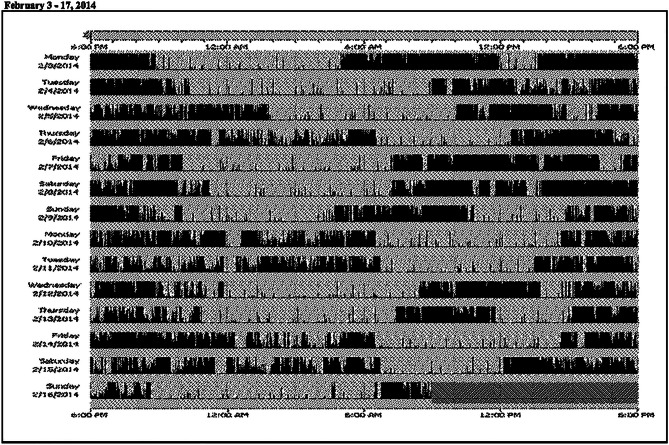
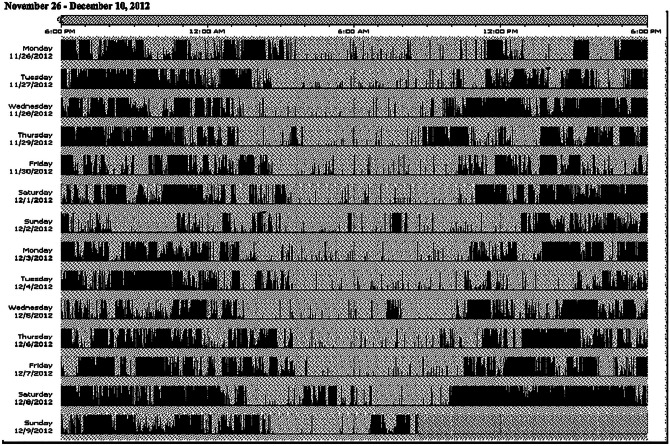
Actigraphy recording for 3 weeks in a patient with ISWRD. Note the highly chaotic, irregular, and disorganized brief bouts of activity alternating with inactivity (likely sleep) seen throughout the daytime and nighttime, without an obvious sustained sleep or wake period. There are rarely more than 1 to 3 h of consolidated sleep or more than 1–2 h of wake time

References

    1. Stokkan KA, Yamazaki S, Tei H, Sakaki Y, Menaker M. Entrainment of the circadian clock in the liver by feeding. Science. 2001;291:490–493. - PubMed
    1. Auger RR, Burgess HJ, Emens JS, Deriy LV, Thomas SM, Sharkey KM. Clinical practice guideline for the treatment of intrinsic circadian rhythm sleep-wake disorders: Advanced sleep-wake phase disorder (aswpd), delayed sleep-wake phase disorder (dswpd), non-24-hour sleep-wake rhythm disorder (n24swd), and irregular sleep-wake rhythm disorder (iswrd). An update for An american academy of sleep medicine clinical practice guideline. J Clin Sleep Med 2015;11:1199-1236. - PMC - PubMed
    1. LaBarbera VA, Sharkey KM. Review of protocols and terminology to enhance understanding of circadian-based literature. In: Auger RR, editor. Circadian rhythm sleep-wake disorders: An evidence-based guide for clinicians and investigators. Cham: Springer International Publishing; 2020. pp. 21–27.
    1. Brown MR, Matveyenko AV. Biological timekeeping: Scientific background. In: Auger RR, editor. Circadian rhythm sleep-wake disorders: An evidence-based guide for clinicians and investigators. Cham: Springer International Publishing; 2020. pp. 1–20.
    1. Javeed N, Matveyenko AV. Circadian etiology of type 2 diabetes mellitus. Physiology (Bethesda) 2018;33:138–150. - PMC - PubMed

Publication types

MeSH terms