. 2021 May 13;64(9):5404-5428.
doi: 10.1021/acs.jmedchem.0c01549. Epub 2021 Apr 12.

Targeting Acute Myelogenous Leukemia Using Potent Human Dihydroorotate Dehydrogenase Inhibitors Based on the 2-Hydroxypyrazolo[1,5- a]pyridine Scaffold: SAR of the Biphenyl Moiety

Affiliations

Targeting Acute Myelogenous Leukemia Using Potent Human Dihydroorotate Dehydrogenase Inhibitors Based on the 2-Hydroxypyrazolo[1,5- a]pyridine Scaffold: SAR of the Biphenyl Moiety

Stefano Sainas et al. J Med Chem. .

Abstract

The connection with acute myelogenous leukemia (AML) of dihydroorotate dehydrogenase (hDHODH), a key enzyme in pyrimidine biosynthesis, has attracted significant interest from pharma as a possible AML therapeutic target. We recently discovered compound 1, a potent hDHODH inhibitor (IC50 = 1.2 nM), able to induce myeloid differentiation in AML cell lines (THP1) in the low nM range (EC50 = 32.8 nM) superior to brequinar's phase I/II clinical trial (EC50 = 265 nM). Herein, we investigate the 1 drug-like properties observing good metabolic stability and no toxic profile when administered at doses of 10 and 25 mg/kg every 3 days for 5 weeks (Balb/c mice). Moreover, in order to identify a backup compound, we investigate the SAR of this class of compounds. Inside the series, 17 is characterized by higher potency in inducing myeloid differentiation (EC50 = 17.3 nM), strong proapoptotic properties (EC50 = 20.2 nM), and low cytotoxicity toward non-AML cells (EC30(Jurkat) > 100 μM).


Conflict of interest statement

The authors declare no competing financial interest.

Figures

Chart 1
Chart 1. Present Landscape of the Most Potent hDHODH Inhibitorsa
Figure 1
Figure 1
Compounds involved in the SAR exploration.
Figure 2
Figure 2
View of the entrance of the ubiquinone binding site, with the predicted binding mode of 9, on the left, and 17 on the right. The protein structure used for the docking simulation has PDB code 6FMD.
Figure 3
Figure 3
Differentiation (CD14 expression, white histogram) and apoptosis (annexin V expression, red histogram) as induced by inhibitors 117 at 1 μM (a) and 0.1 μM (b) in THP1 cells. DMSO (dimethyl sulfoxide) acts as the negative control group as it was used to solubilize hDHODH inhibitors. ∗, ∗∗, ∗∗∗ represent the statistical significance for apoptosis (respectively p < 0.05, < 0.01, and <0.001). #, ##, and ### represent the statistical significance for differentiation (respectively p < 0.05, <0.01, and <0.001). The statistical significance is calculated by comparing the compounds to DMSO.
Figure 4
Figure 4
Differentiation (CD14 expression, left panel) and apoptosis (annexin V expression, right panel) induced by inhibitors 11, 13, 15, 16, 17 at 1 μM with and without uridine at 100 μM. ∗, ∗∗, ∗∗∗ represent the statistical significance for apoptosis (respectively p < 0.5, <0.01, and <0.001). The statistical significance is calculated by comparing the compounds to DMSO.
Figure 5
Figure 5
Extracted ion chromatograms of identified metabolites of 1 in sample C after incubation (time-point 2 h).
Figure 6
Figure 6
Extracted ion chromatograms of identified metabolites of 17 in sample C after incubation (time-point 2 h).
Scheme 1
Scheme 1. Synthetic Methodologies for the Synthesis of Targets 1, 5, 1013
(i) Oxalyl chloride, dry DMF, dry THF; (ii) AlMe3, dry toluene, reflux; (iii) H2, Pd/C, 37% w/w HCl, ethanol; (iv) H2, Pd/C, dry THF, 40 bar, 65 °C, SynthWAVE.
Scheme 2
Scheme 2. Synthetic Methodologies for the Synthesis of Targets 69, 1417
(i) (a) Cs2CO3, 4-MeOBnBr, dry DMF; (b) flash chromatography; (ii) (a) 5 M NaOH, ethanol, 75 °C; (b) HCl 2M, rt; (iii) nitrogen atmosphere, oxalyl chloride, dry DMF, dry THF; (iv) AlMe3, dry toluene, reflux; (v) nitrogen atmosphere, morpholine, Cs2CO3, Pd(OAc)2, BINAP, dry toluene, sealed tube, 110°C; (vi) (a) Pd(Ph3)4, K2CO3, dioxane/water (9:1 v/v), 1 h rt; (b) corresponding boronic acid, reflux; (vii) thioanisole, trifluoroacetic acid, 70 °C.
Scheme 3
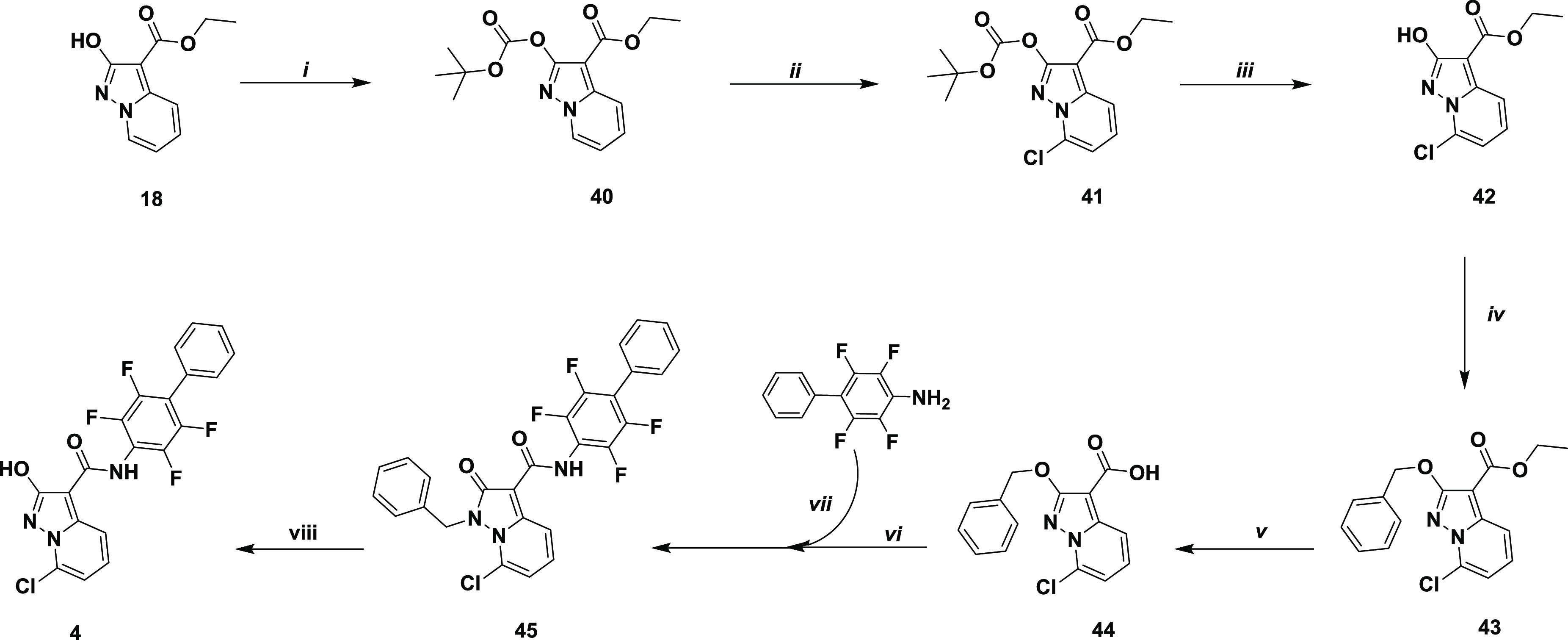
Scheme 3. Synthetic Methodologies for the Synthesis of Compound 4
(i) Cs2CO3, tert-butoxycarbonyl anhydride, dry THF, reflux; (ii) (a) nitrogen atmosphere, lithium hexamethyldisilylazide (LiHMDS, 1.0 M, dry THF), −78 °C, 1 h; (b) nitrogen atmosphere, hexachloroethane rt; (iii) trifluoroacetic acid, dry dichloromethane, rt; (iv) benzyl bromide, Cs2CO3, dry DMF, rt; (v) (a) 6 M NaOH, ethanol, 75 °C; (b) 2M HCl, rt; (vi) nitrogen atmosphere, oxalyl chloride, dry DMF, dry THF; (vii) AlMe3, dry toluene, reflux; (viii) thioanisole, trifluoroacetic acid, 70 °C.

References

    1. Evans D. R.; Guy H. I. Mammalian pyrimidine biosynthesis: fresh insights into an ancient pathway. J. Biol. Chem. 2004, 279, 33035–33038. 10.1074/jbc.R400007200. - DOI - PubMed
    1. Madak J. T.; Bankhead A. 3rd; Cuthbertson C. R.; Showalter H. D.; Neamati N. Revisiting the role of dihydroorotate dehydrogenase as a therapeutic target for cancer. Pharmacol. Ther. 2019, 195, 111–131. 10.1016/j.pharmthera.2018.10.012. - DOI - PubMed
    1. Lolli M. L.; Sainas S.; Pippione A. C.; Giorgis M.; Boschi D.; Dosio F. Use of human dihydroorotate dehydrogenase (hDHODH) inhibitors in autoimmune diseases and new perspectives in cancer therapy. Recent Pat. Anti-Cancer Drug Discovery 2018, 13, 86–105. 10.2174/1574892812666171108124218. - DOI - PubMed
    1. Reis R. A. G.; Calil F. A.; Feliciano P. R.; Pinheiro M. P.; Nonato M. C. The dihydroorotate dehydrogenases: past and present. Arch. Biochem. Biophys. 2017, 632, 175–191. 10.1016/j.abb.2017.06.019. - DOI - PubMed
    1. Boschi D.; Pippione A. C.; Sainas S.; Lolli M. L. Dihydroorotate dehydrogenase inhibitors in anti-infective drug research. Eur. J. Med. Chem. 2019, 183, 111681–111702. 10.1016/j.ejmech.2019.111681. - DOI - PubMed

Publication types

MeSH terms