


Classification Criteria for Fuchs Uveitis Syndrome
- PMID: 33845007
- PMCID: PMC8594748
- DOI: 10.1016/j.ajo.2021.03.052
Classification Criteria for Fuchs Uveitis Syndrome
Abstract
Purpose: To determine classification criteria for Fuchs' uveitis syndrome.
Design: Machine learning of cases with Fuchs' uveitis syndrome and 8 other anterior uveitides.
Methods: Cases of anterior uveitides were collected in an informatics-designed preliminary database, and a final database was constructed of cases achieving supermajority agreement on the diagnosis, using formal consensus techniques. Cases were split into a training set and a validation set. Machine learning using multinomial logistic regression was used on the training set to determine a parsimonious set of criteria that minimized the misclassification rate among the anterior uveitides. The resulting criteria were evaluated on the validation set.
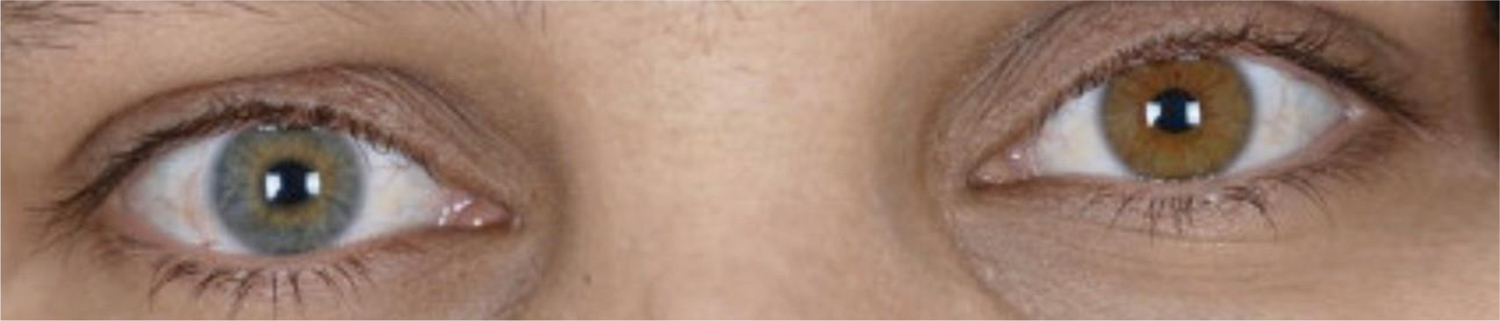
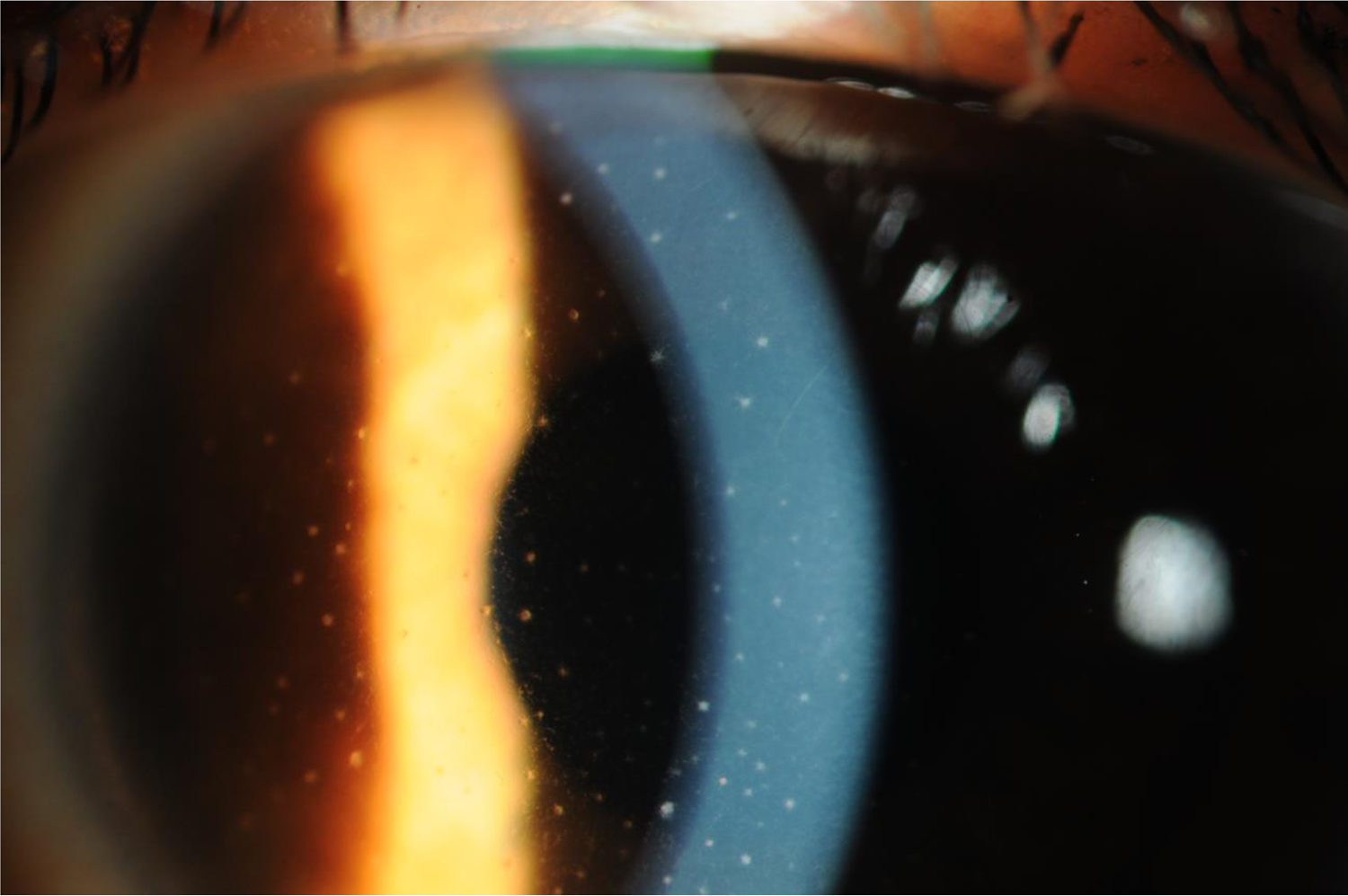
Results: One thousand eighty-three cases of anterior uveitides, including 146 cases of Fuchs' uveitis syndrome, were evaluated by machine learning. The overall accuracy for anterior uveitides was 97.5% in the training set and 96.7% in the validation set (95% confidence interval 92.4, 98.6). Key criteria for Fuchs' uveitis syndrome included unilateral anterior uveitis with or without vitritis and either: 1) heterochromia or 2) unilateral diffuse iris atrophy and stellate keratic precipitates. The misclassification rates for Fuchs' uveitis syndrome were 4.7% in the training set and 5.5% in the validation set, respectively.
Conclusions: The criteria for Fuchs' uveitis syndrome had a low misclassification rate and appeared to perform well enough for use in clinical and translational research.
Copyright © 2021 Elsevier Inc. All rights reserved.
Figures
References
-
- Fuchs E. About complications of heterochromia. Z Augenheilkd 1906;15:191–212.
-
- Jones NP. Fuchs’ heterochromic uveitis: an update. Survey Ophthalmol 1993;37:253–72. - PubMed
-
- Mohamed Q, Zamir E. Update on Fuchs’ uveitis syndrome. Current Opin Ophthalmol 2006;16:356–63. - PubMed
-
- Tejwani S, Murthy S, Sangwan VS. Cataract extraction outcomes in patients with Fuchs heterochromic cyclitis. J Cataract Refract Surg 2006;32:1678–82. - PubMed
Publication types
MeSH terms
Grants and funding
LinkOut - more resources
Full Text Sources
Other Literature Sources
