


Treatable inherited metabolic disorders causing intellectual disability: 2021 review and digital app
- PMID: 33845862
- PMCID: PMC8042729
- DOI: 10.1186/s13023-021-01727-2
Treatable inherited metabolic disorders causing intellectual disability: 2021 review and digital app
Abstract
Background: The Treatable ID App was created in 2012 as digital tool to improve early recognition and intervention for treatable inherited metabolic disorders (IMDs) presenting with global developmental delay and intellectual disability (collectively 'treatable IDs'). Our aim is to update the 2012 review on treatable IDs and App to capture the advances made in the identification of new IMDs along with increased pathophysiological insights catalyzing therapeutic development and implementation.
Methods: Two independent reviewers queried PubMed, OMIM and Orphanet databases to reassess all previously included disorders and therapies and to identify all reports on Treatable IDs published between 2012 and 2021. These were included if listed in the International Classification of IMDs (ICIMD) and presenting with ID as a major feature, and if published evidence for a therapeutic intervention improving ID primary and/or secondary outcomes is available. Data on clinical symptoms, diagnostic testing, treatment strategies, effects on outcomes, and evidence levels were extracted and evaluated by the reviewers and external experts. The generated knowledge was translated into a diagnostic algorithm and updated version of the App with novel features.
Results: Our review identified 116 treatable IDs (139 genes), of which 44 newly identified, belonging to 17 ICIMD categories. The most frequent therapeutic interventions were nutritional, pharmacological and vitamin and trace element supplementation. Evidence level varied from 1 to 3 (trials, cohort studies, case-control studies) for 19% and 4-5 (case-report, expert opinion) for 81% of treatments. Reported effects included improvement of clinical deterioration in 62%, neurological manifestations in 47% and development in 37%.
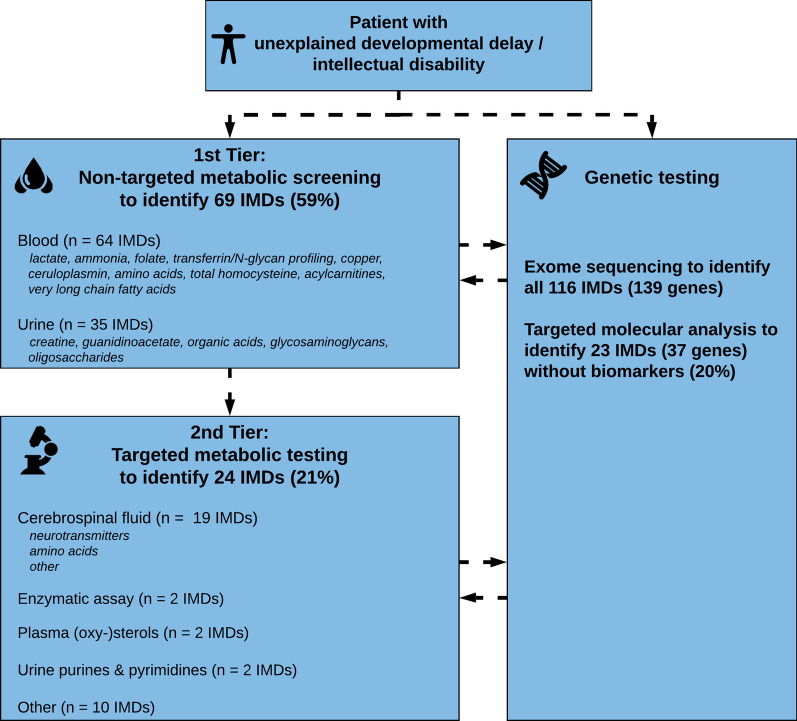
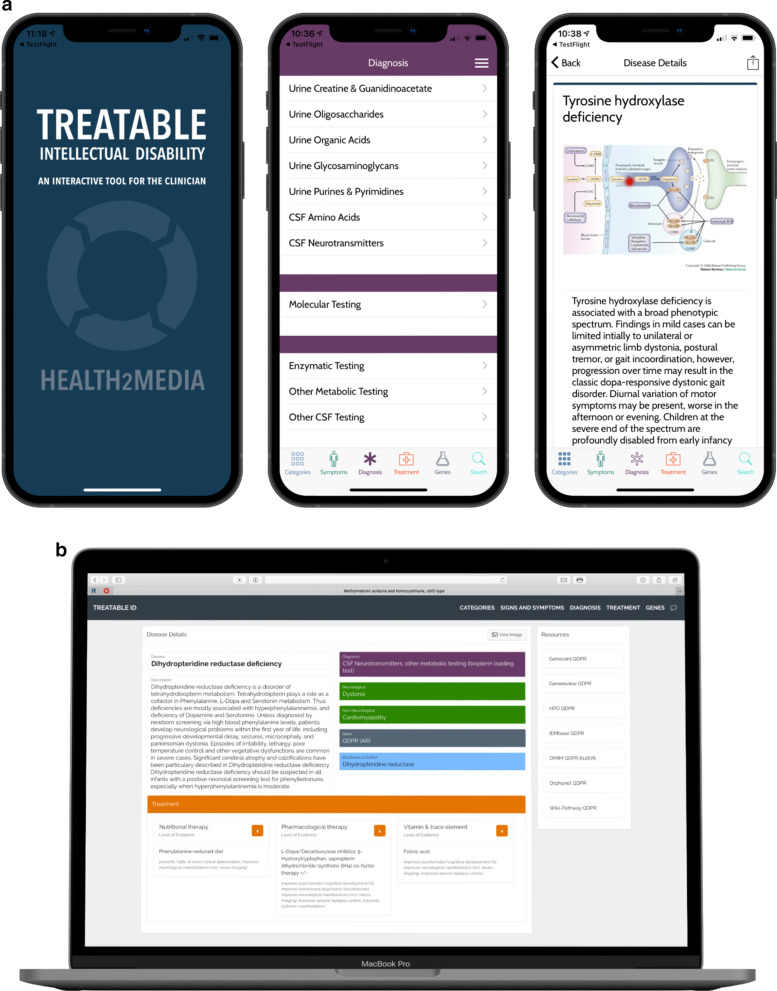
Conclusion: The number of treatable IDs identified by our literature review increased by more than one-third in eight years. Although there has been much attention to gene-based and enzyme replacement therapy, the majority of effective treatments are nutritional, which are relatively affordable, widely available and (often) surprisingly effective. We present a diagnostic algorithm (adjustable to local resources and expertise) and the updated App to facilitate a swift and accurate workup, prioritizing treatable IDs. Our digital tool is freely available as Native and Web App (www.treatable-id.org) with several novel features. Our Treatable ID endeavor contributes to the Treatabolome and International Rare Diseases Research Consortium goals, enabling clinicians to deliver rapid evidence-based interventions to our rare disease patients.
Keywords: Diagnostic; Diet; Epilepsy; Evidence; Inborn error of metabolism; Intellectual developmental disorders; Management; Metabolic disorders; Nutraceutical; Outcomes; Pharmacological; Therapy.
Conflict of interest statement
The authors declare that they have no competing interests.
Figures
References
-
- van Karnebeek CDM, Stockler S. Treatable inborn errors of metabolism causing intellectual disability: A systematic literature review. 2012;105:368–381. - PubMed
-
- van Karnebeek CDM, Shevell M, Zschocke J, Moeschler JB, Stockler S. The metabolic evaluation of the child with an intellectual developmental disorder: diagnostic algorithm for identification of treatable causes and new digital resource. Mol Genet Metab. 2014;111:428–438. doi: 10.1016/j.ymgme.2014.01.011. - DOI - PubMed
-
- International joint recommendations to address specific needs of undiagnosed rare disease patients. SWAN UK (the support group run by Genetic Alliance UK), the Wilhelm Foundation, EURORDIS (Rare Diseases Europe), Rare Voices Australia (RVA), the Canadian Organization for Rare Disorders (CORD), the Advocacy Service for Rare and Intractable Diseases’ stakeholders in Japan (ASrid) and the National Organization for Rare Disorders (NORD). http://download2.eurordis.org.s3.amazonaws.com/documents/pdf/Undiagnosed.... Accessed 23 Dec 2020.
Publication types
MeSH terms
LinkOut - more resources
Full Text Sources
Other Literature Sources
Medical
Molecular Biology Databases
