


A benchmark for RNA-seq deconvolution analysis under dynamic testing environments
- PMID: 33845875
- PMCID: PMC8042713
- DOI: 10.1186/s13059-021-02290-6
A benchmark for RNA-seq deconvolution analysis under dynamic testing environments
Abstract
Background: Deconvolution analyses have been widely used to track compositional alterations of cell types in gene expression data. Although a large number of novel methods have been developed, due to a lack of understanding of the effects of modeling assumptions and tuning parameters, it is challenging for researchers to select an optimal deconvolution method suitable for the targeted biological conditions.
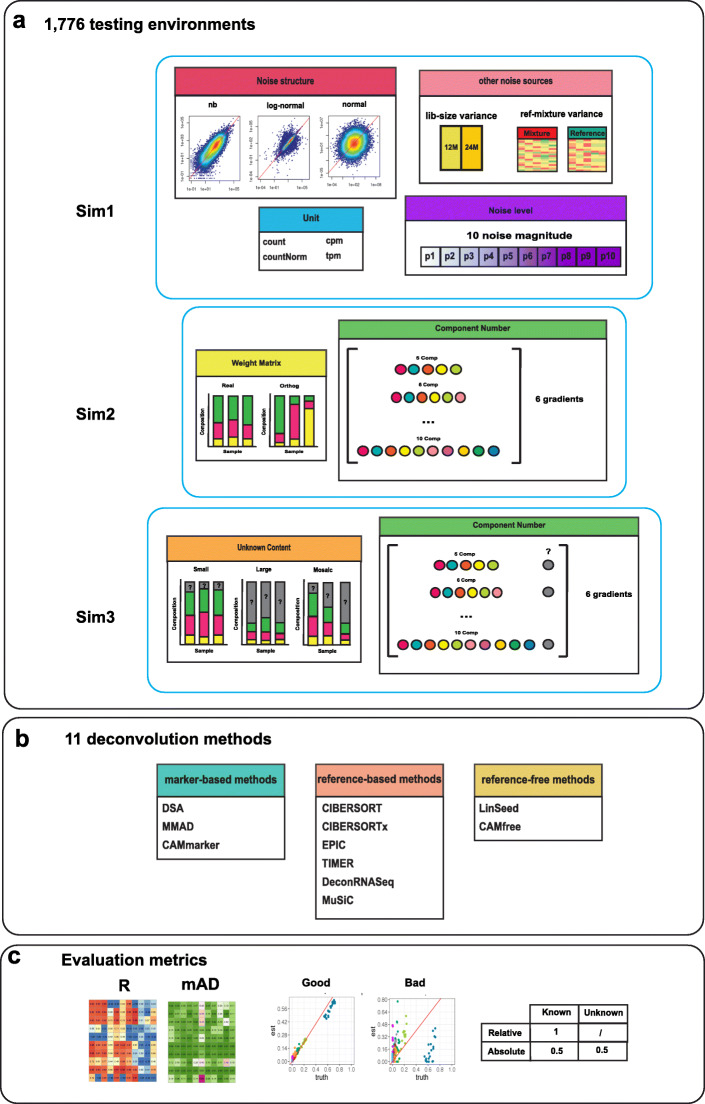
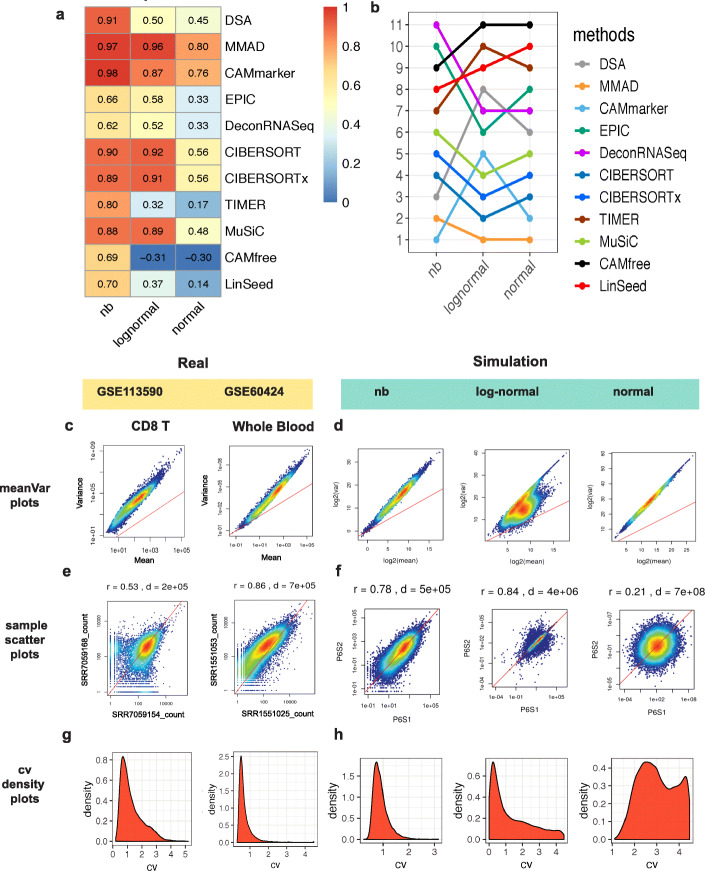
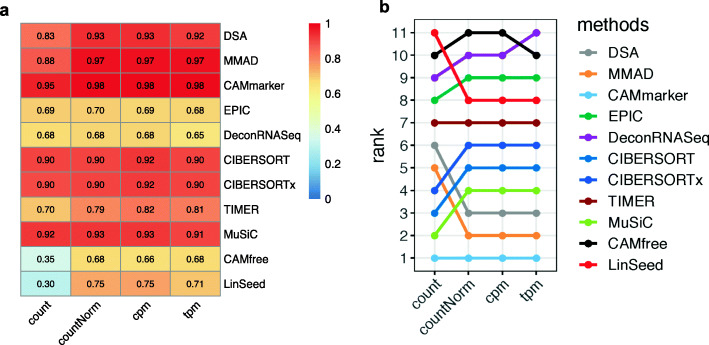
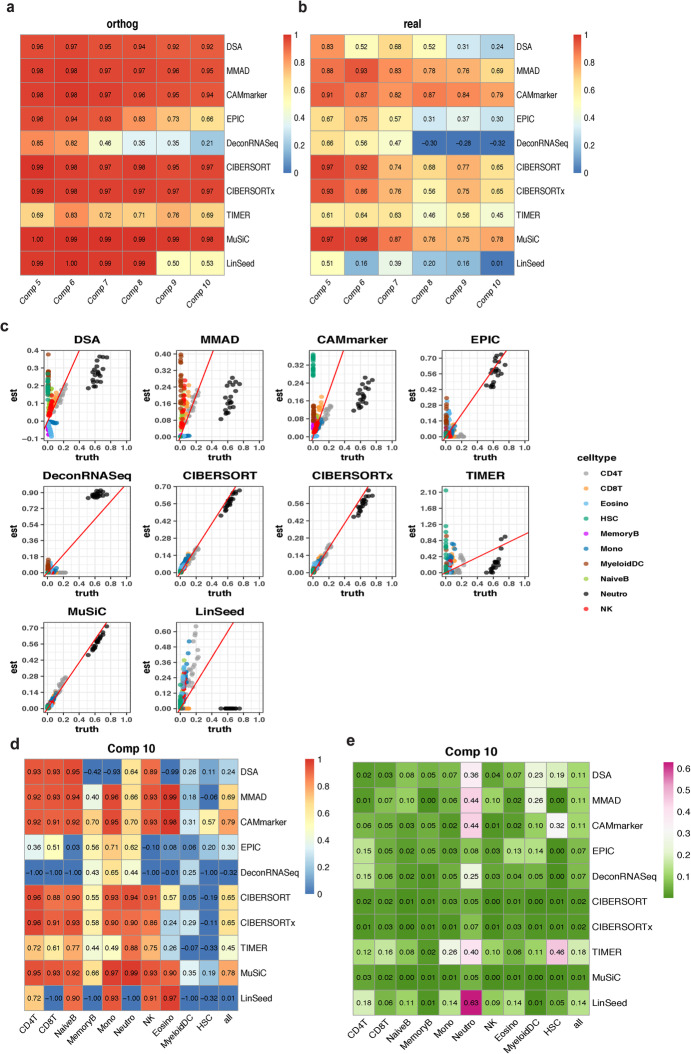
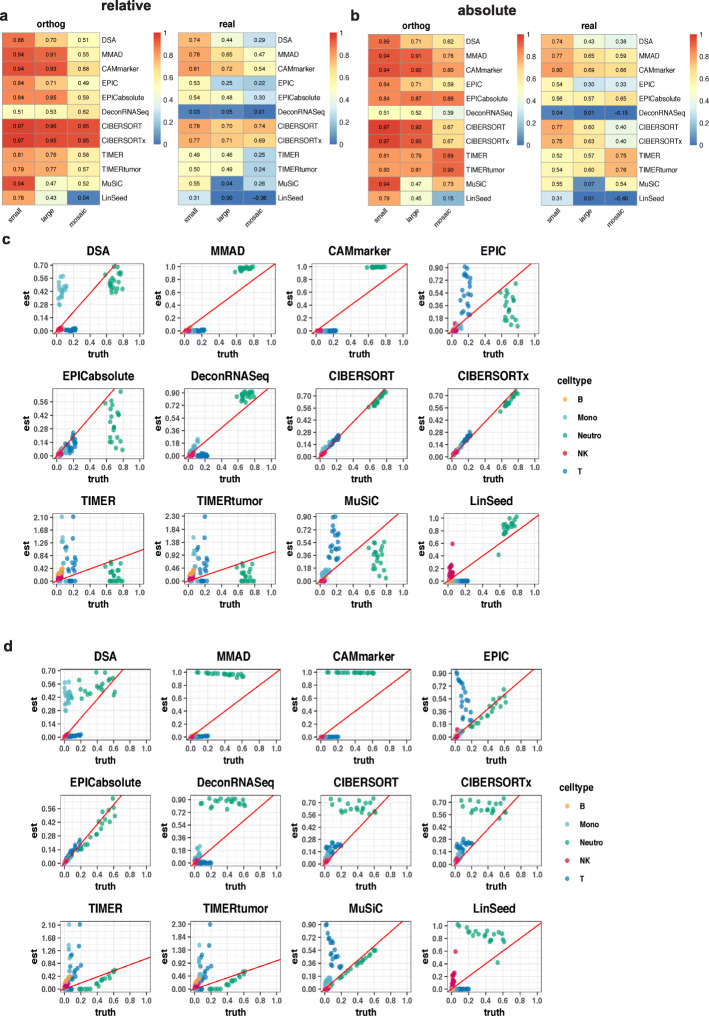
Results: To systematically reveal the pitfalls and challenges of deconvolution analyses, we investigate the impact of several technical and biological factors including simulation model, quantification unit, component number, weight matrix, and unknown content by constructing three benchmarking frameworks. These frameworks cover comparative analysis of 11 popular deconvolution methods under 1766 conditions.
Conclusions: We provide new insights to researchers for future application, standardization, and development of deconvolution tools on RNA-seq data.
Conflict of interest statement
The authors declare that they have no competing interests.
Figures
References
-
- Avila Cobos F, Vandesompele J, Mestdagh P, De Preter K. Computational deconvolution of transcriptomics data from mixed cell populations. Bioinformatics. 2018;34(11):1969–79. - PubMed
Publication types
MeSH terms
Grants and funding
LinkOut - more resources
Full Text Sources
Other Literature Sources
