


Formaldehyde exposure and leukemia risk: a comprehensive review and network-based toxicogenomic approach
- PMID: 33845901
- PMCID: PMC8042688
- DOI: 10.1186/s41021-021-00183-5
Formaldehyde exposure and leukemia risk: a comprehensive review and network-based toxicogenomic approach
Abstract
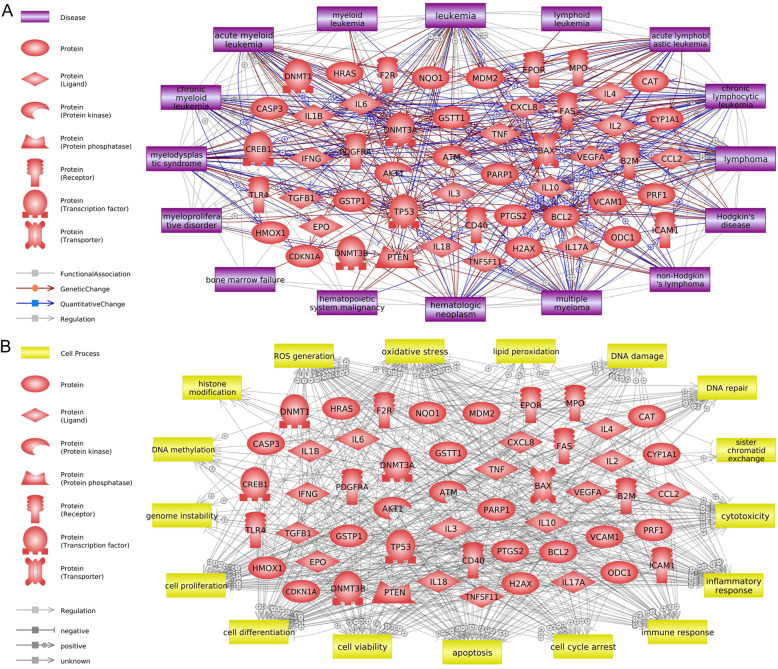
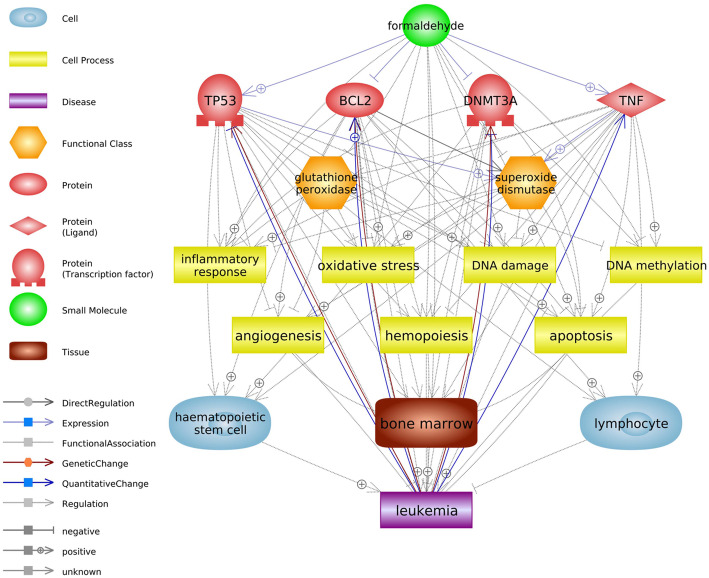
Formaldehyde is a widely used but highly reactive and toxic chemical. The International Agency for Research on Cancer classifies formaldehyde as a Group 1 carcinogen, based on nasopharyngeal cancer and leukemia studies. However, the correlation between formaldehyde exposure and leukemia incidence is a controversial issue. To understand the association between formaldehyde exposure and leukemia, we explored biological networks based on formaldehyde-related genes retrieved from public and commercial databases. Through the literature-based network approach, we summarized qualitative associations between formaldehyde exposure and leukemia. Our results indicate that oxidative stress-mediated genetic changes induced by formaldehyde could disturb the hematopoietic system, possibly leading to leukemia. Furthermore, we suggested major genes that are thought to be affected by formaldehyde exposure and associated with leukemia development. Our suggestions can be used to complement experimental data for understanding and identifying the leukemogenic mechanism of formaldehyde.
Keywords: Biological network analysis; Carcinogenicity; Formaldehyde; Leukemia; Toxicogenomics.
Conflict of interest statement
The authors declare that they have no competing interests.
Figures
References
-
- Agency for Toxic Substances and Disease Registry. Toxicological Profile for Formaldehyde. https://www.atsdr.cdc.gov/toxprofiles/tp111.pdf. Accessed 1 June 2020. - PubMed
-
- World Health Organization . WHO Guidelines for Indoor Air Quality: Selected pollutants. Copenhagen: World Health Organization, Regional Office for Europe; 2010. pp. 103–156.
-
- National Toxicology Program Final report on carcinogens background document for formaldehyde. Rep Carcinog Backgr Doc. 2010;10:i–512. - PubMed
Publication types
Grants and funding
LinkOut - more resources
Full Text Sources
Other Literature Sources
