


Cardiometabolic risks of SARS-CoV-2 hospitalization using Mendelian Randomization
- PMID: 33846372
- PMCID: PMC8042041
- DOI: 10.1038/s41598-021-86757-3
Cardiometabolic risks of SARS-CoV-2 hospitalization using Mendelian Randomization
Abstract
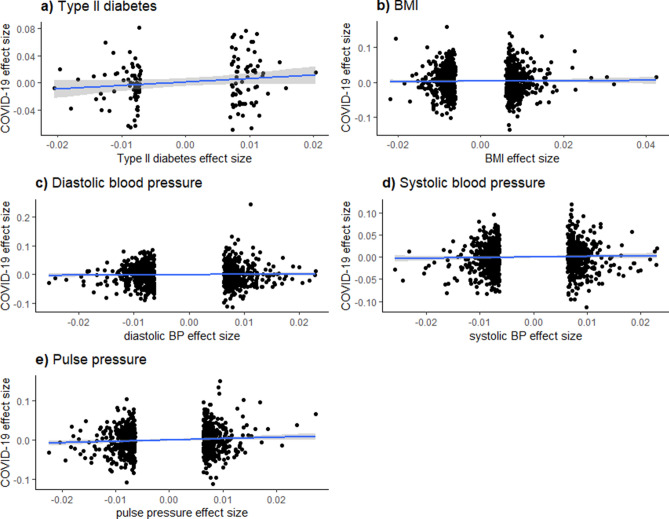
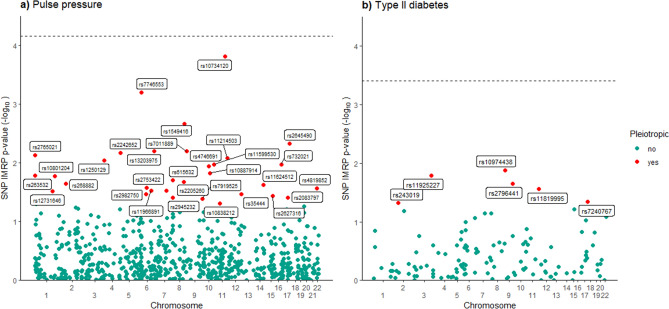
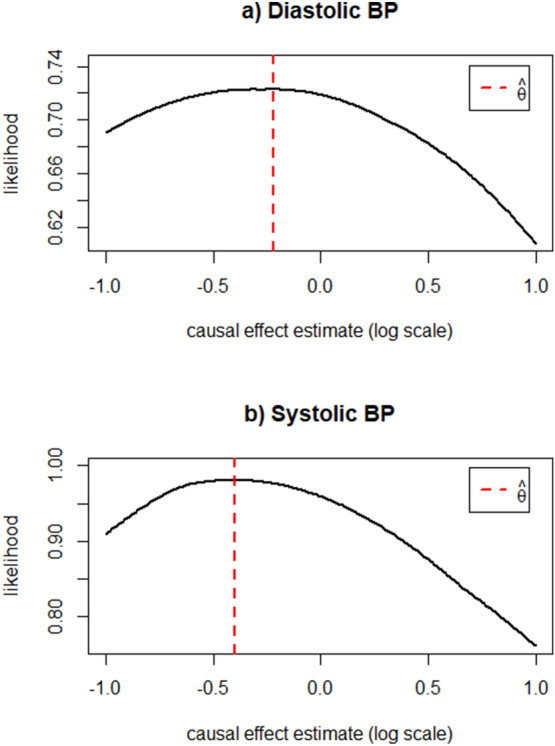
Many cardiometabolic conditions have demonstrated associative evidence with COVID-19 hospitalization risk. However, the observational designs of the studies in which these associations are observed preclude causal inferences of hospitalization risk. Mendelian Randomization (MR) is an alternative risk estimation method more robust to these limitations that allows for causal inferences. We applied four MR methods (MRMix, IMRP, IVW, MREgger) to publicly available GWAS summary statistics from European (COVID-19 GWAS n = 2956) and multi-ethnic populations (COVID-19 GWAS n = 10,908) to better understand extant causal associations between Type II Diabetes (GWAS n = 659,316), BMI (n = 681,275), diastolic and systolic blood pressure, and pulse pressure (n = 757,601 for each) and COVID-19 hospitalization risk across populations. Although no significant causal effect evidence was observed, our data suggested a trend of increasing hospitalization risk for Type II diabetes (IMRP OR, 95% CI 1.67, 0.96-2.92) and pulse pressure (OR, 95% CI 1.27, 0.97-1.66) in the multi-ethnic sample. Type II diabetes and Pulse pressure demonstrates a potential causal association with COVID-19 hospitalization risk, the proper treatment of which may work to reduce the risk of a severe COVID-19 illness requiring hospitalization. However, GWAS of COVID-19 with large sample size is warranted to confirm the causality.
Conflict of interest statement
The authors declare no competing interests.
Figures
References
-
- World Health Organization. Coronavirus Disease (COVID-19) pandemic. https://www.who.int/emergencies/diseases/novel-coronavirus-2019 (2020).
Publication types
MeSH terms
Grants and funding
LinkOut - more resources
Full Text Sources
Other Literature Sources
Medical
Miscellaneous
