


Corrosion and transformation of solution combustion synthesized Co, Ni and CoNi nanoparticles in synthetic freshwater with and without natural organic matter
- PMID: 33846485
- PMCID: PMC8042015
- DOI: 10.1038/s41598-021-87250-7
Corrosion and transformation of solution combustion synthesized Co, Ni and CoNi nanoparticles in synthetic freshwater with and without natural organic matter
Abstract
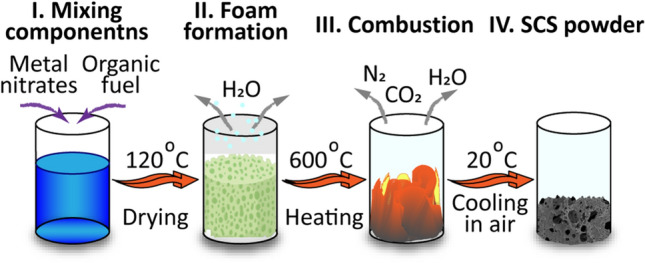
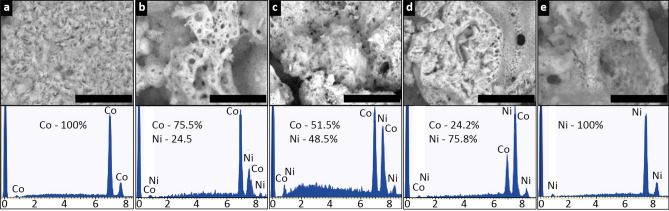
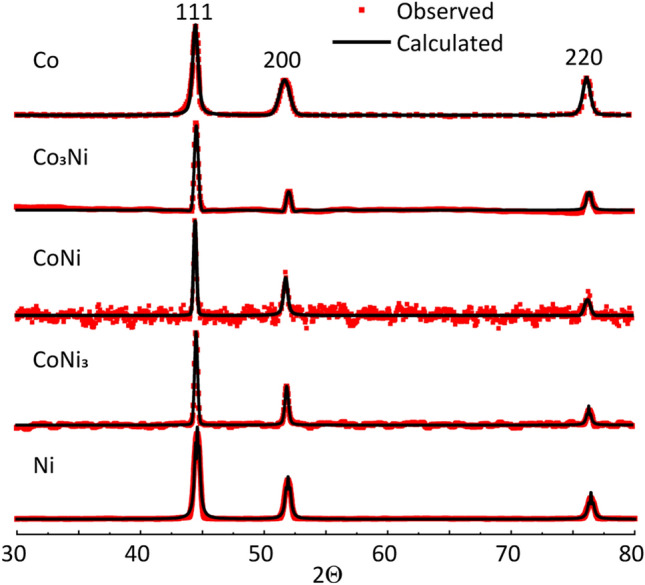
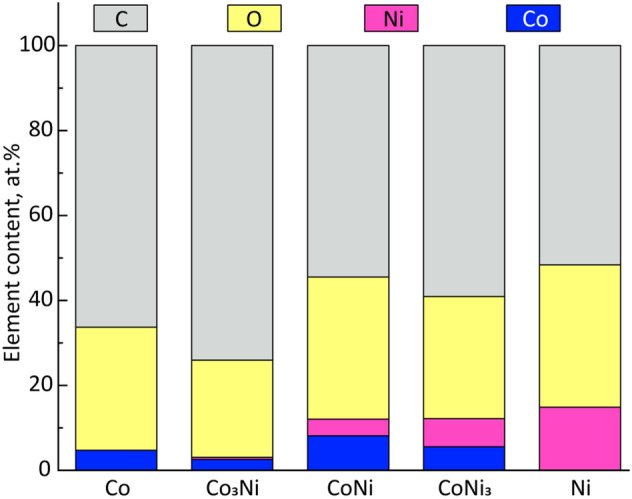
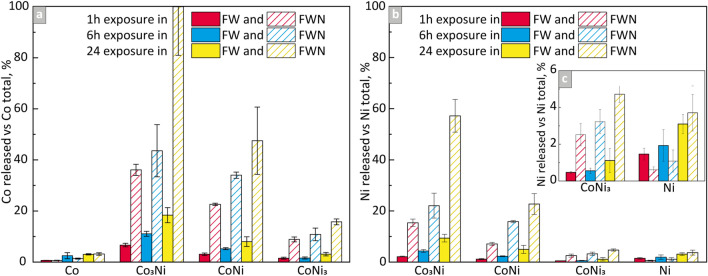
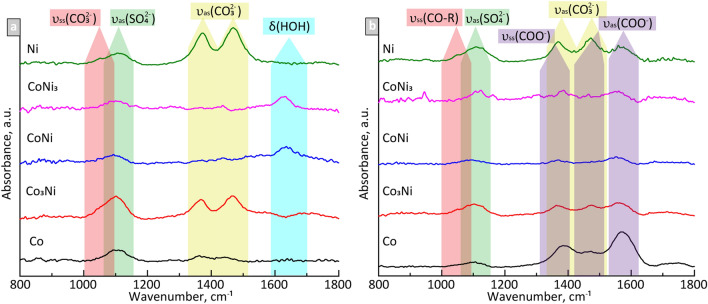
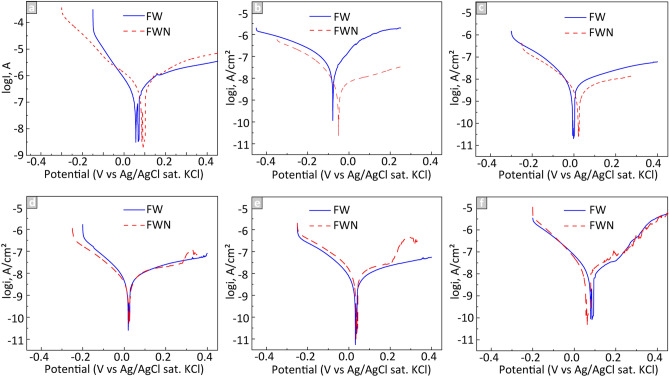
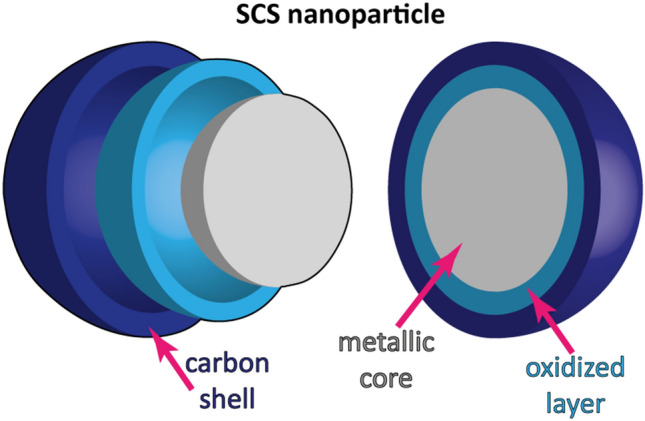
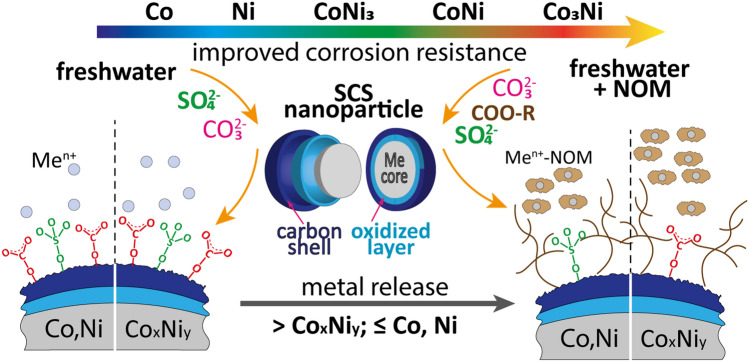
Pure metallic Co, Ni, and their bimetallic compositions of Co3Ni, CoNi, and CoNi3 nanomaterials were prepared by solution combustion synthesis. Microstructure, phase composition, and crystalline structure of these nanoparticles (NPs) were characterized along with studies of their corrosion and dissolution properties in synthetic freshwater with and without natural organic matter (NOM). The nanomaterials consisted of aggregates of fine NPs (3-30 nm) of almost pure metallic and bimetallic crystal phases with a thin surface oxide covered by a thin carbon shell. The nanomaterials were characterized by BET surface areas ranging from ~ 1 to 8 m2/g for the Ni and Co NPs, to 22.93 m2/g, 14.86 m2/g, and 10.53 m2/g for the Co3Ni, CoNi, CoNi3 NPs, respectively. More Co and Ni were released from the bimetallic NPs compared with the pure metals although their corrosion current densities were lower. In contrast to findings for the pure metal NPs, the presence of NOM increased the release of Co and Ni from the bimetallic NPs in freshwater compared to freshwater only even though its presence reduced the corrosion rate (current density). It was shown that the properties of the bimetallic nanomaterials were influenced by multiple factors such as their composition, including carbon shell, type of surface oxides, and the entropy of mixing.
Figures


References
-
- Inshakova E, Inshakova A. Nanomaterials and nanotechnology: prospects for technological re-equipment in the power engineering industry. IOP Conference Series: Materials Science and Engineering. 2020;709:033020. doi: 10.1088/1757-899x/709/3/033020. - DOI
-
- Grassian VH. When size reallymatters: size-dependent properties and surface chemistry of metal and metal oxide nanoparticles in gas and liquid phase environments. J. Phys. Chem. C. 2008;112:18303–18313. doi: 10.1021/jp806073t. - DOI
-
- Anthony LS, Perumal V, Mohamed NM, Saheed MSM, Gopinath SCB. in Nanomaterials for Healthcare, Energy and Environment Advanced Structured Materials Ch. Chapter. 2019;3:51–69.
Publication types
LinkOut - more resources
Full Text Sources
Other Literature Sources
