Review
. 2021 Jun;47(6):100.
doi: 10.3892/ijmm.2021.4933. Epub 2021 Apr 13.

Current and innovative methods for the diagnosis of COVID‑19 infection (Review)

Affiliations
Review

Current and innovative methods for the diagnosis of COVID‑19 infection (Review)

Luca Falzone et al. Int J Mol Med. 2021 Jun.

Abstract

The Coronavirus Disease 2019 (COVID‑19) pandemic has forced the scientific community to rapidly develop highly reliable diagnostic methods in order to effectively and accurately diagnose this pathology, thus limiting the spread of infection. Although the structural and molecular characteristics of the severe acute respiratory syndrome coronavirus 2 (SARS‑CoV‑2) were initially unknown, various diagnostic strategies useful for making a correct diagnosis of COVID‑19 have been rapidly developed by private research laboratories and biomedical companies. At present, rapid antigen or antibody tests, immunoenzymatic serological tests and molecular tests based on RT‑PCR are the most widely used and validated techniques worldwide. Apart from these conventional methods, other techniques, including isothermal nucleic acid amplification techniques, clusters of regularly interspaced short palindromic repeats/Cas (CRISPR/Cas)‑based approaches or digital PCR methods are currently used in research contexts or are awaiting approval for diagnostic use by competent authorities. In order to provide guidance for the correct use of COVID‑19 diagnostic tests, the present review describes the diagnostic strategies available which may be used for the diagnosis of COVID‑19 infection in both clinical and research settings. In particular, the technical and instrumental characteristics of the diagnostic methods used are described herein. In addition, updated and detailed information about the type of sample, the modality and the timing of use of specific tests are also discussed.

Keywords: SARS‑CoV‑2; COVID‑19; diagnosis; viral detection; RT‑PCR; rapid test; immunoenzymatic assay; ddPCR; isothermal amplification technique; CRISPR‑Cas; molecular methods.


Conflict of interest statement

DAS is the Editor-in-Chief for the journal, but had no personal involvement in the reviewing process, or any influence in terms of adjudicating on the final decision, for this article. The other authors declare that they have no competing interests.

Figures
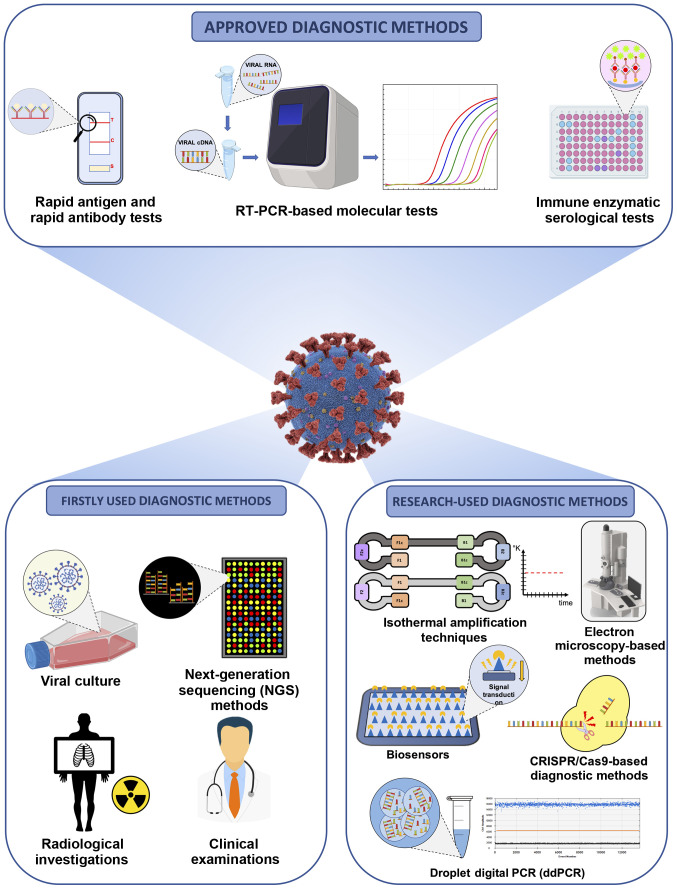
Figure 1
Figure 1
Overview of the available clinical, diagnostic and research strategies for the effective diagnosis of COVID-19 infection.
Figure 2
Figure 2
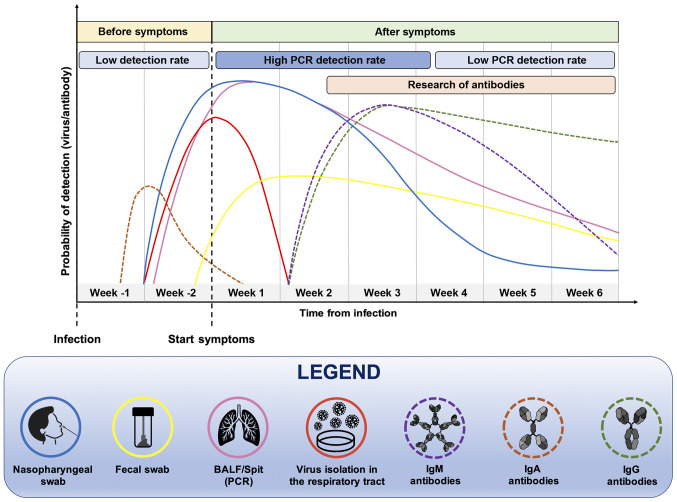
Timing and type of samples that should be analyzed for the effective detection of SARS-CoV-2 RNA or anti-SARS-CoV-2 human antibodies.
Figure 3
Figure 3
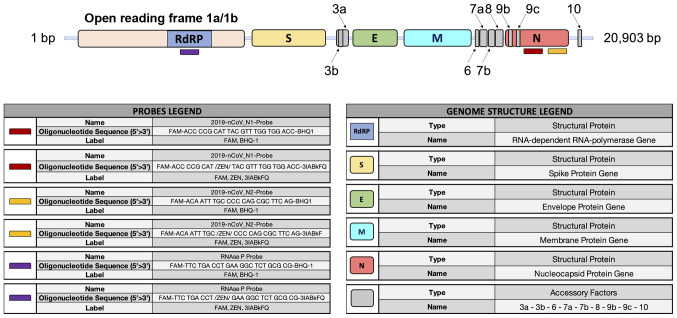
SARS-CoV-2 genome structure and probes for the molecular detection of SARS-CoV-2 RNA in human samples.
Figure 4
Figure 4
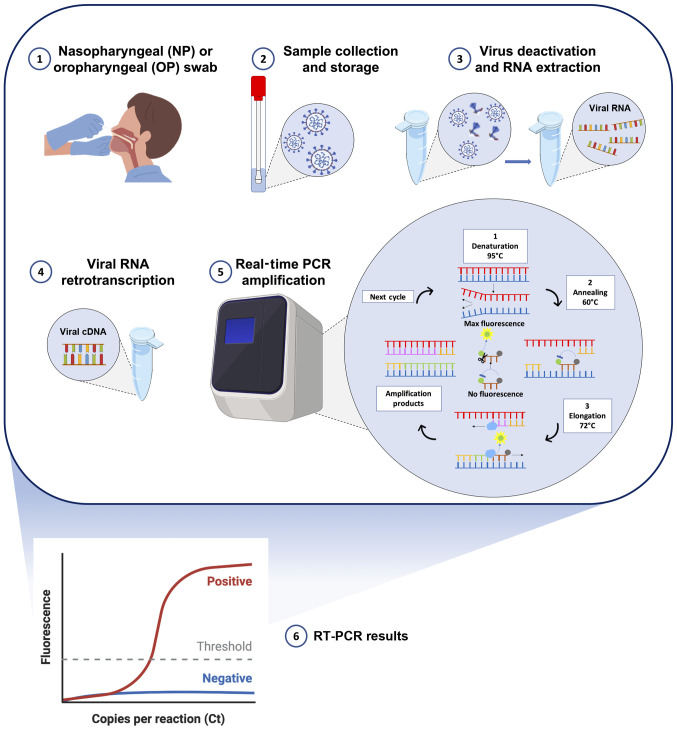
Schematic workflow of RT-PCR-based diagnostic methods. 1) Collection of samples from suspected COVID-19 patient through nasopharyngeal or oropharyngeal swab; 2) storage and handling of the swab to preserve viral RNA integrity; 3) SARS-CoV-2 heat inactivation and RNA extraction through custom or commercial protocols; 4) viral RNA retro-transcription into double strand cDNA; 5) RT-PCR amplification and real-time fluorescent signal detection; 6) interpretation of amplification signals and setting of the positivity threshold.
Figure 5
Figure 5
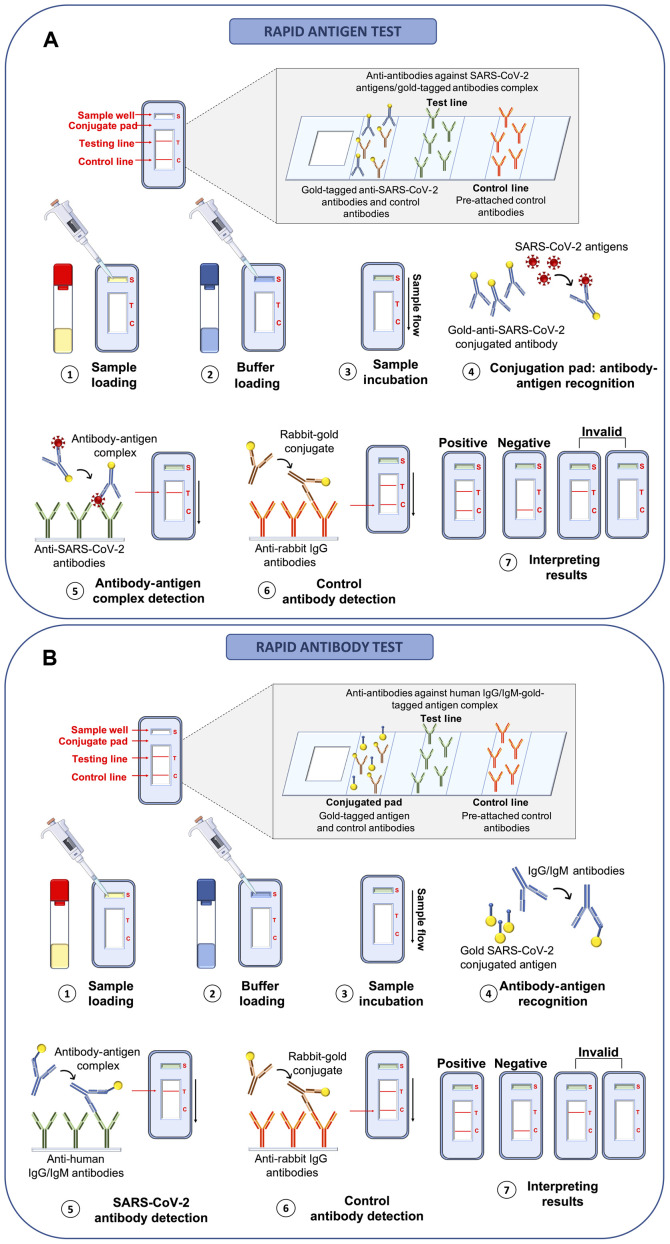
Rapid antigen and rapid antibody tests. (A) Analytical workflow of rapid antigen test for the rapid detection of SARS-CoV-2 viral antigens through lateral flow immunoassay. (B) Analytical workflow of rapid antibody test for the rapid detection of human IgA, IgG or IgM antibodies against SARS-CoV-2 antigens through lateral flow immunoassay.
Figure 6
Figure 6
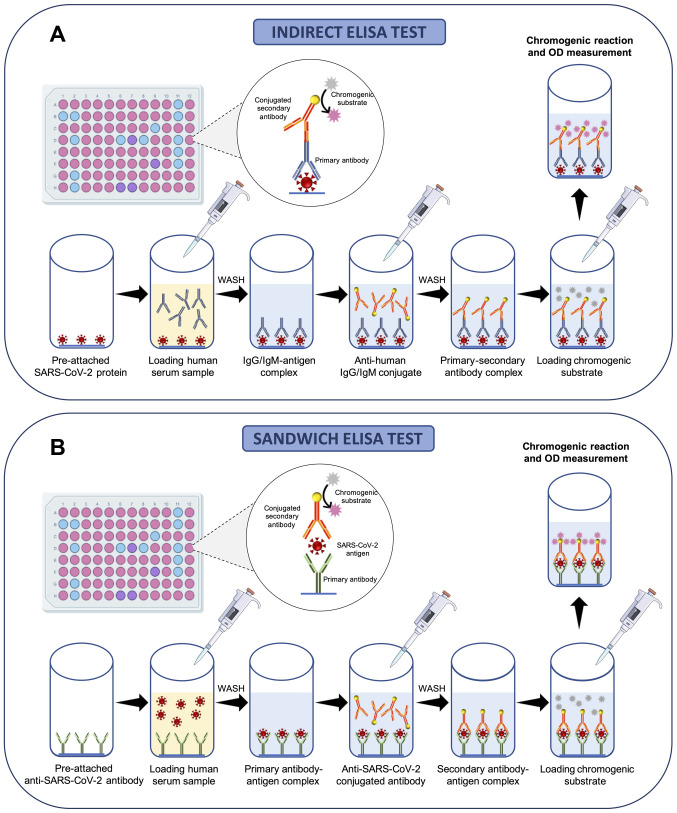
ELISA-based immune enzymatic serological tests. (A) Analytical workflow of indirect ELISA for the effective detection of human IgA, IgG or IgM antibodies against SARS-CoV-2 antigens. (B) Analytical workflow of sandwich ELISA for the effective detection of SARS-CoV-2 antigens.
Figure 7
Figure 7
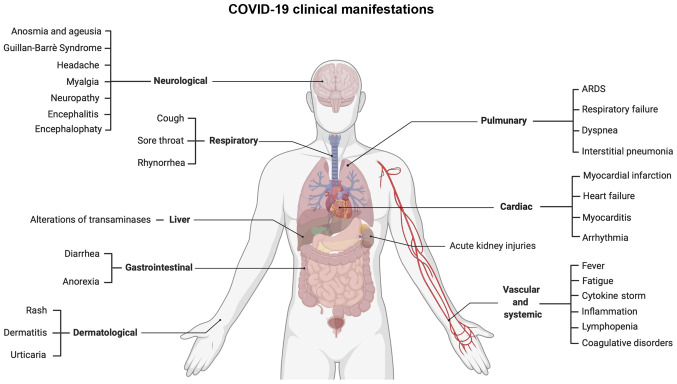
Respiratory and extra-respiratory clinical manifestations of COVID-19 infection.
Figure 8
Figure 8
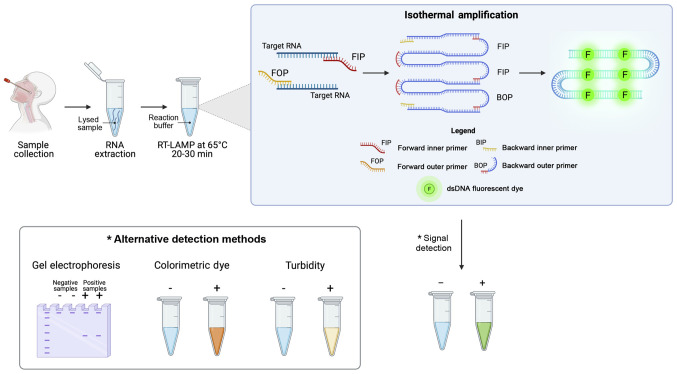
Schematic workflow of nucleic acids isothermal amplification methods for the diagnosis of COVID-19.
Figure 9
Figure 9
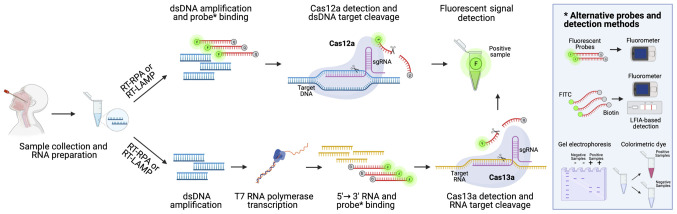
Schematic workflow of CRISPR/Cas-based methods for the diagnosis of COVID-19 infection. CRISPR/Cas12a systems effectively detect SARS-CoV-2 viral RNA after cDNA synthesis through the recognition of a specific SARS-CoV-2 sequence that is cleaved by Cas12a activity resulting in the collateral cleavage of fluorescent probes. In the same manner, CRISPR/Cas13a systems effectively detect SARS-CoV-2 RNA that is cleaved by Cas13a activity resulting in the collateral cleavage of fluorescent probes. Apart from fluorescence, alternative detection methods are based on the use of colorimetric dyes, electrophoresis gel and LFIA cartridge. CRISPR/Cas, clusters of regularly interspaced short palindromic repeats/Cas; LFIA, lateral flow immunoassay.
Figure 10
Figure 10
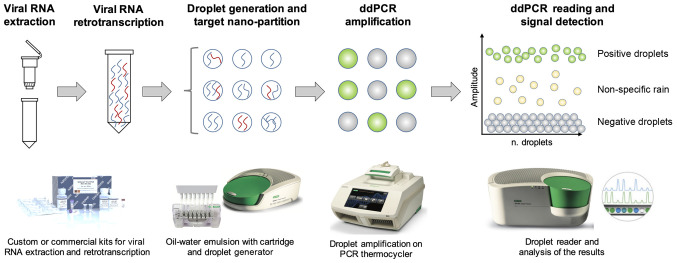
Schematic workflow of the ddPCR detection system. ddPCR, droplet digital PCR.

References

    1. Bontempi E. The europe second wave of COVID-19 infection and the Italy 'strange' situation. Environ Res. 2021;193:110476. doi: 10.1016/j.envres.2020.110476. - DOI - PMC - PubMed
    1. Cacciapaglia G, Cot C, Sannino F. Second wave COVID-19 pandemics in Europe: A temporal playbook. Sci Rep. 2020;10:15514. doi: 10.1038/s41598-020-72611-5. - DOI - PMC - PubMed
    1. COVID-19 Dashboard by the Center for Systems Science and Engineering (CSSE) Jonhs Hopkins University (JHU) https://gisanddata.maps.arcgis.com/apps/opsdashboard/index.html#/bda7594.... Accessed February 27, 2021. - PMC - PubMed
    1. Polack FP, Thomas SJ, Kitchin N, Absalon J, Gurtman A, Lockhart S, Perez JL, Pérez Marc G, Moreira ED, Zerbini C, C4591001 Clinical Trial Group et al. Safety and Efficacy of the BNT162b2 mRNA Covid-19 Vaccine. N Engl J Med. 2020;383:2603–2615. doi: 10.1056/NEJMoa2034577. - DOI - PMC - PubMed
    1. European Medicine Agency (EMA): COVID-19 Vaccines. https://www.ema.europa.eu/en/human-regulatory/overview/public-health-thr.... Accessed February 27, 2021.

MeSH terms