


Long-COVID syndrome-associated brain fog and chemofog: Luteolin to the rescue
- PMID: 33847020
- PMCID: PMC8250989
- DOI: 10.1002/biof.1726
Long-COVID syndrome-associated brain fog and chemofog: Luteolin to the rescue
Abstract
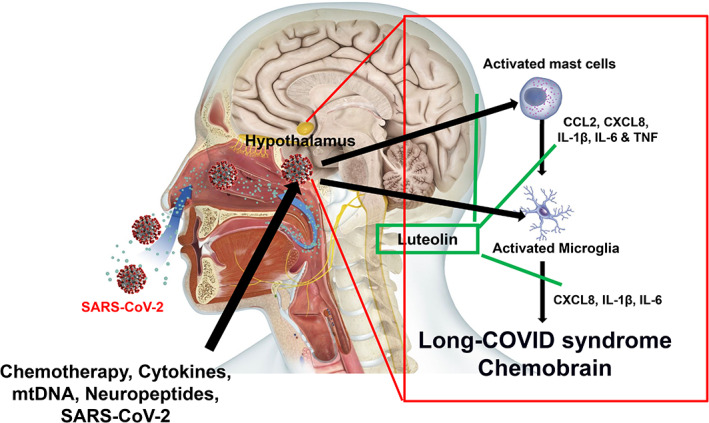
COVID-19 leads to severe respiratory problems, but also to long-COVID syndrome associated primarily with cognitive dysfunction and fatigue. Long-COVID syndrome symptoms, especially brain fog, are similar to those experienced by patients undertaking or following chemotherapy for cancer (chemofog or chemobrain), as well in patients with myalgic encephalomyelitis/chronic fatigue syndrome (ME/CFS) or mast cell activation syndrome (MCAS). The pathogenesis of brain fog in these illnesses is presently unknown but may involve neuroinflammation via mast cells stimulated by pathogenic and stress stimuli to release mediators that activate microglia and lead to inflammation in the hypothalamus. These processes could be mitigated by phytosomal formulation (in olive pomace oil) of the natural flavonoid luteolin.
Keywords: COVID-19; brain fog; chemotherapy; coronavirus; cytokines; fatigue; inflammation; mast cells; microglia.
© 2021 International Union of Biochemistry and Molecular Biology.
Conflict of interest statement
Theoharis C. Theoharides is the Scientific Director of and shareholder in Algonot, LLC (Sarasota, FL), which develops and markets flavonoid‐containing dietary supplements. He is also the recipient of US Patent No. 8,268,365, “Anti‐inflammatory compositions for treating brain inflammation.” The other authors declare no conflict of interest.
Figures
References
-
- Conti P, Ronconi G, Caraffa A, Gallenga CE, Ross R, Frydas I, et al. Induction of pro‐inflammatory cytokines (IL‐1 and IL‐6) and lung inflammation by Coronavirus‐19 (COVI‐19 or SARS‐CoV‐2): anti‐inflammatory strategies. J Biol Regul Homeost Agents. 2020;34(2):327–31. - PubMed
Publication types
MeSH terms
Substances
LinkOut - more resources
Full Text Sources
Other Literature Sources
Medical
