Engineering Selectively Targeting Antimicrobial Peptides
- PMID: 33852346
- PMCID: PMC9017812
- DOI: 10.1146/annurev-bioeng-010220-095711
Engineering Selectively Targeting Antimicrobial Peptides
Abstract
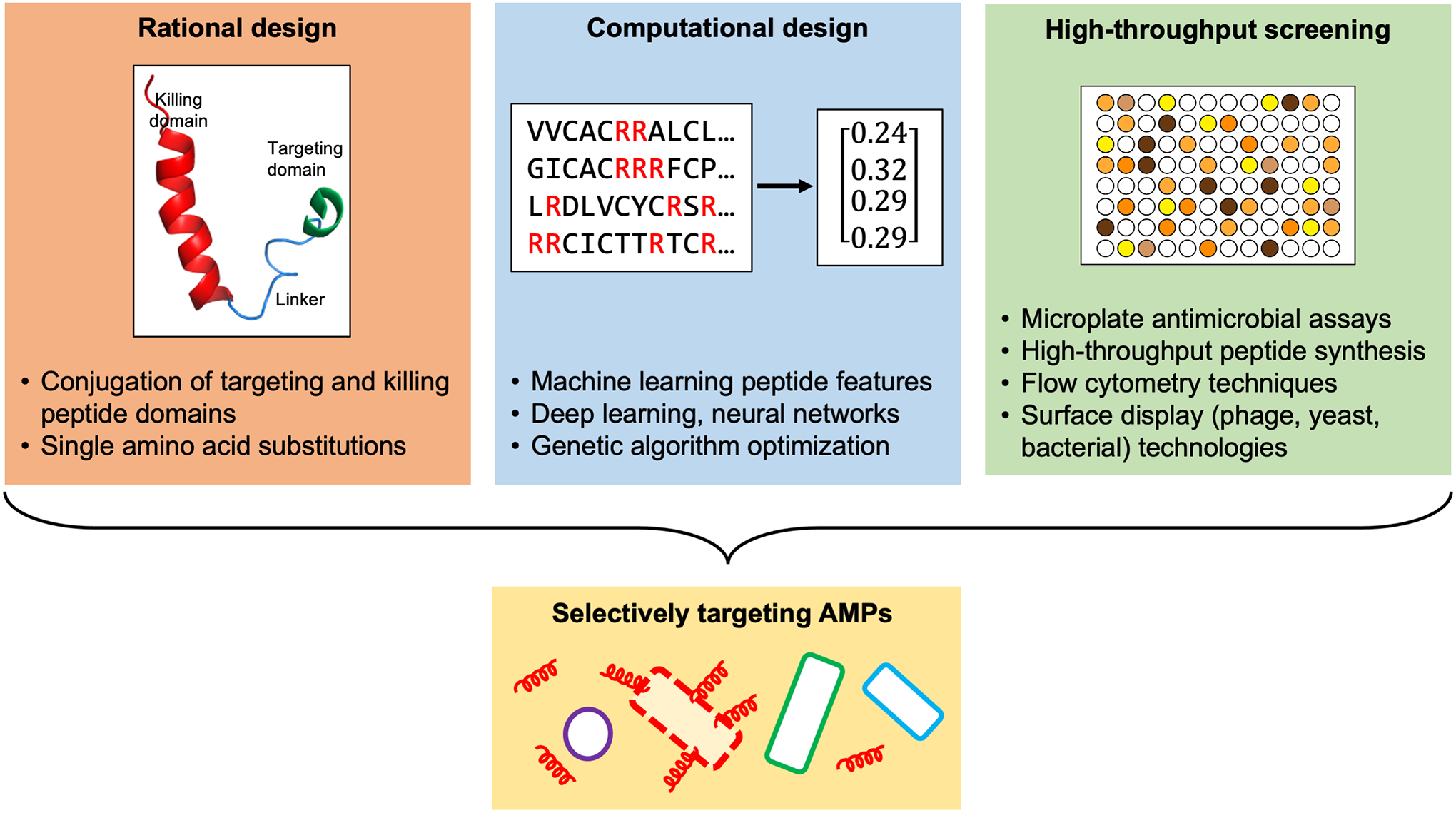
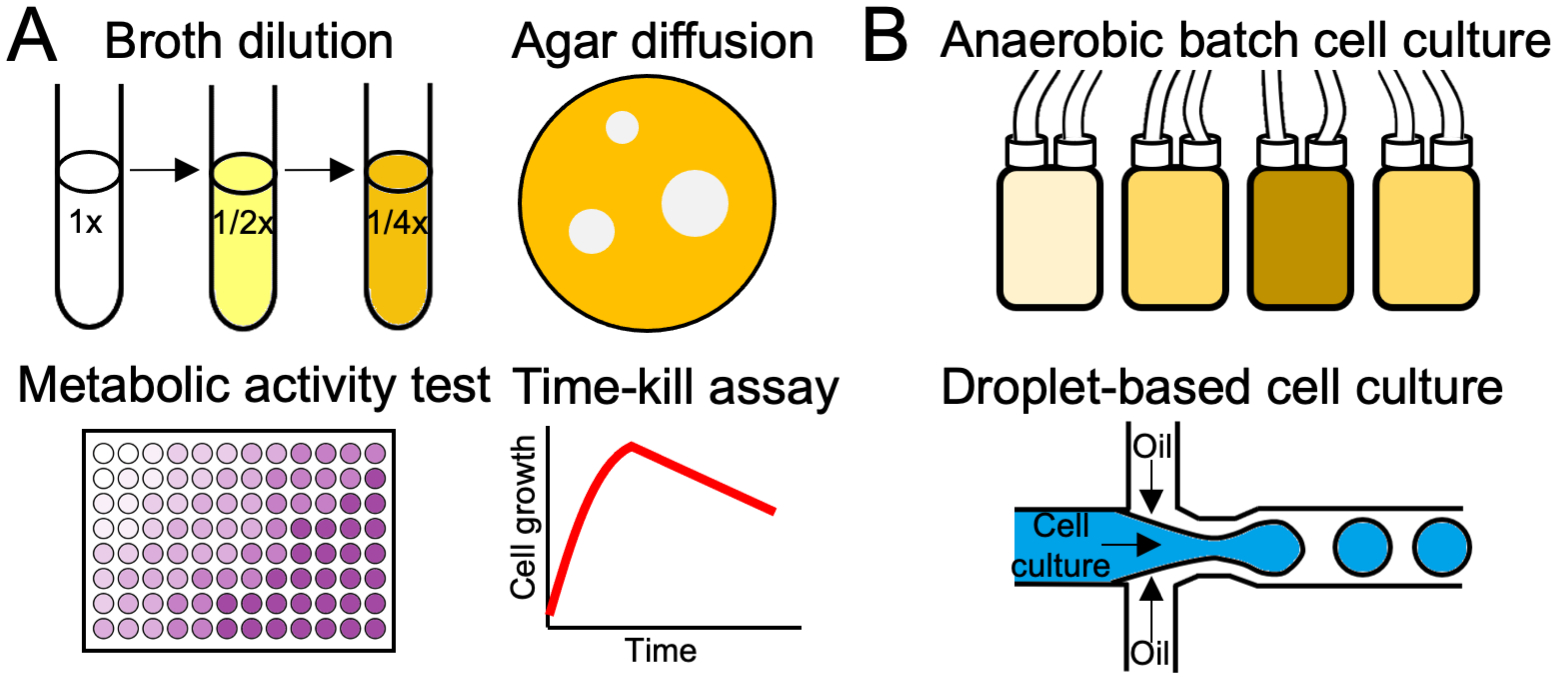
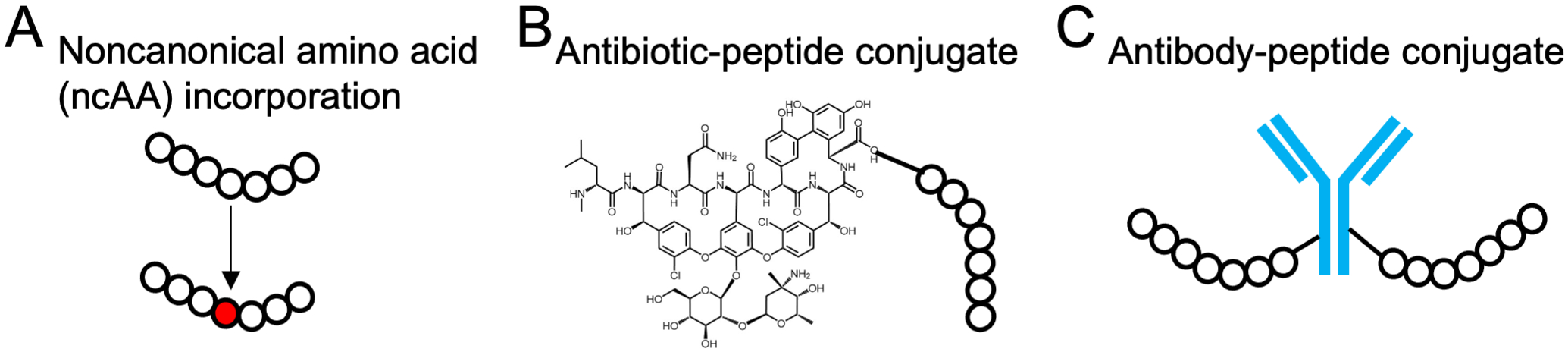
The rise of antibiotic-resistant strains of bacterial pathogens has necessitated the development of new therapeutics. Antimicrobial peptides (AMPs) are a class of compounds with potentially attractive therapeutic properties, including the ability to target specific groups of bacteria. In nature, AMPs exhibit remarkable structural and functional diversity, which may be further enhanced through genetic engineering, high-throughput screening, and chemical modification strategies. In this review, we discuss the molecular mechanisms underlying AMP selectivity and highlight recent computational and experimental efforts to design selectively targeting AMPs. While there has been an extensive effort to find broadly active and highly potent AMPs, it remains challenging to design targeting peptides to discriminate between different bacteria on the basis of physicochemical properties. We also review approaches for measuring AMP activity, point out the challenges faced in assaying for selectivity, and discuss the potential for increasing AMP diversity through chemical modifications.
Keywords: antimicrobial peptides; cell selectivity; high-throughput screening; machine learning; microbiota; peptide conjugates.
Figures
References
-
- Mookherjee N, Anderson MA, Haagsman HP, Davidson DJ. 2020. Antimicrobial host defence peptides: functions and clinical potential. Nat. Rev. Drug Discov 19:311–32 - PubMed
-
- Cotter PD, Ross RP, Hill C. 2013. Bacteriocins—a viable alternative to antibiotics? Nat. Rev. Microbiol 11:95–105 - PubMed
-
- Levy M, Kolodziejczyk AA, Thaiss CA, Elinav E. 2017. Dysbiosis and the immune system. Nat. Rev. Immunol 17:219–32 - PubMed
Publication types
MeSH terms
Substances
Grants and funding
LinkOut - more resources
Full Text Sources
Other Literature Sources