


Characterization and evolution of infection control practices among severe acute respiratory coronavirus virus 2 (SARS-CoV-2)-infected healthcare workers in acute-care hospitals and long-term care facilities in Québec, Canada, Spring 2020
- PMID: 33853702
- PMCID: PMC8111200
- DOI: 10.1017/ice.2021.160
Characterization and evolution of infection control practices among severe acute respiratory coronavirus virus 2 (SARS-CoV-2)-infected healthcare workers in acute-care hospitals and long-term care facilities in Québec, Canada, Spring 2020
Abstract
Objectives: In this study, we aimed to (1) estimate the severe acute respiratory coronavirus 2 (SARS-CoV-2) infection rate and the secondary attack rate among healthcare workers (HCWs) in Québec, the most affected province of Canada during the first wave; (2) describe the evolution of work-related exposures and infection prevention and control (IPC) practices in infected HCWs; and (3) compare the exposures and practices between acute-care hospitals (ACHs) and long-term care facilities (LTCFs).
Design: Survey of cases.
Participants: The study included Québec HCWs from private and public institutions with laboratory-confirmed coronavirus disease 2019 (COVID-19) diagnosed between March 1 and June 14, 2020. HCWs aged ≥18 years who worked during the exposure period and survived their illness were eligible for the survey.
Methods: After obtaining consent, 4,542 HCWs completed a standardized questionnaire. COVID-19 rates and proportions of exposures and practices were estimated and compared between ACHs and LTCFs.
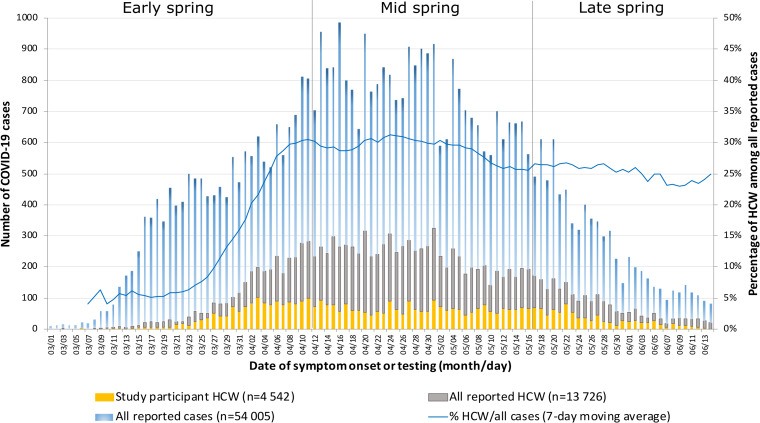
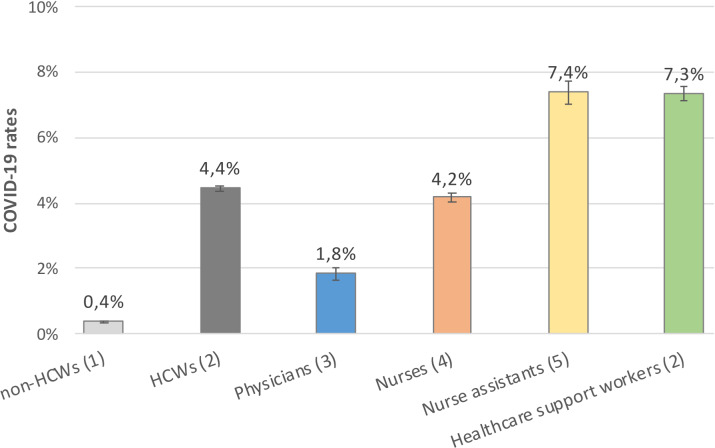
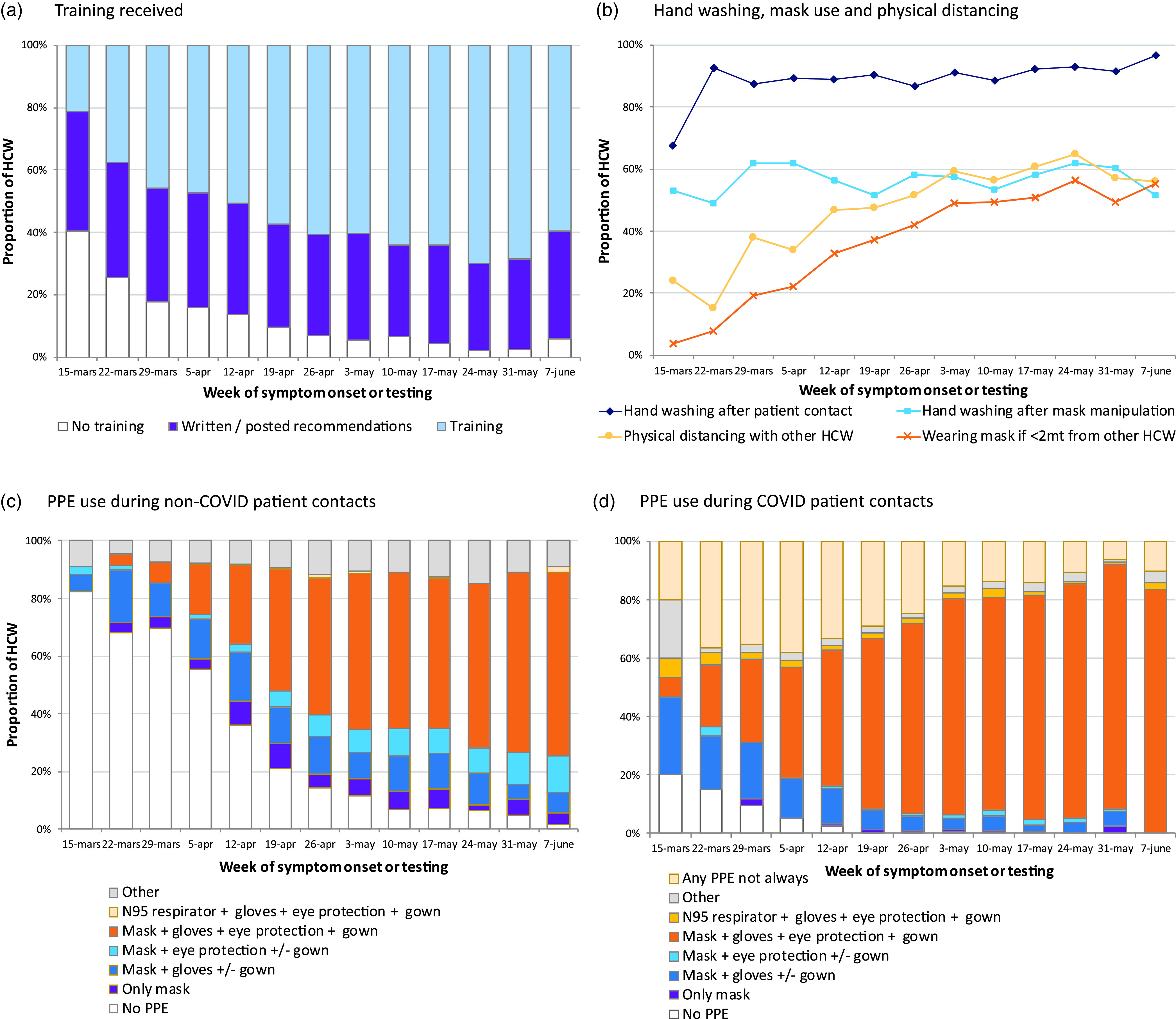
Results: HCWs represented 13,726 (25%) of 54,005 reported COVID-19 cases in Québec and had an 11-times greater rate of COVID-19 than non-HCWs. Their secondary household attack rate was 30%. Most affected occupations were healthcare support workers, nurses and nurse assistants working in LTCFs (45%) and ACHs (30%). Compared to ACHs, HCWs in LTCFs had less training, higher staff mobility between working sites, similar PPE use, and better self-reported compliance with at-work physical distancing. Suboptimal IPC practices declined over time but were still present at the end of the first wave.
Conclusion: Québec HCWs and their families were severely affected during the first wave of COVID-19. Insufficient pandemic preparedness and suboptimal IPC practices likely contributed to high transmission in both LTCFs and ACHs.
Figures
References
-
- Recensement national des cas de COVID-19 chez les professionnels en établissements de santé. Mise à jour le 30 juin 2020. Santé Publique France website. https://www.santepubliquefrance.fr/etudes-et-enquetes/recensement-nation.... Published 2020. Accessed October 30, 2020.
-
- Análisis de los casos de COVID-19 en personal sanitario notificados a la Red Nacional de Vigilancia Epidemiológica hasta el 10 de mayo en España. Fecha del informe: 29-05-2020. Ministerio de Sanidad de España website. Éhttps://www.ÉPIcentro.iss.it/coronavirus/bollettino/Bollettino-sorveglia.... Published 2020. Accessed October 30, 2020.
-
- Épidemia COVID-19 Aggiornamento nazionale 30 giugno 2020 – ore 11:00. Instituto Superior di Sanità website. Éhttps://www.ÉPIcentro.iss.it/coronavirus/bollettino/Bollettino-sorveglia.... Published 2020. Accessed October 30, 2020.
Publication types
MeSH terms
LinkOut - more resources
Full Text Sources
Other Literature Sources
Medical
Miscellaneous
