Long-term storage of feces at -80 °C versus -20 °C is negligible for 16S rRNA amplicon profiling of the equine bacterial microbiome
- PMID: 33854827
- PMCID: PMC7953882
- DOI: 10.7717/peerj.10837
Long-term storage of feces at -80 °C versus -20 °C is negligible for 16S rRNA amplicon profiling of the equine bacterial microbiome
Abstract
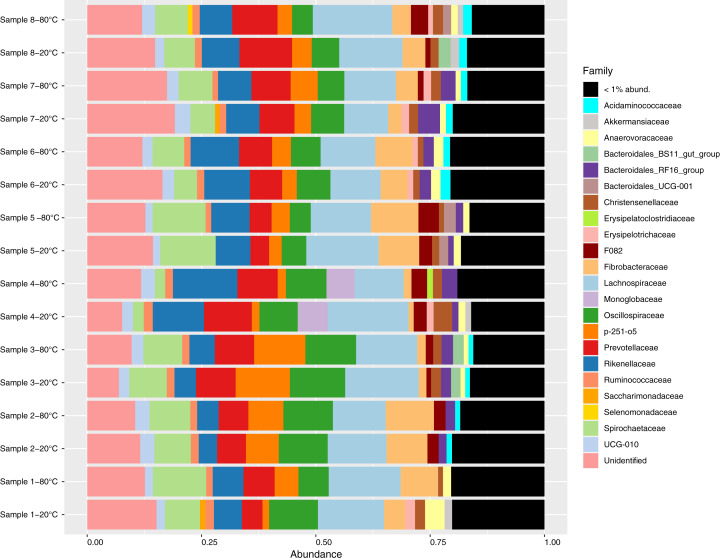
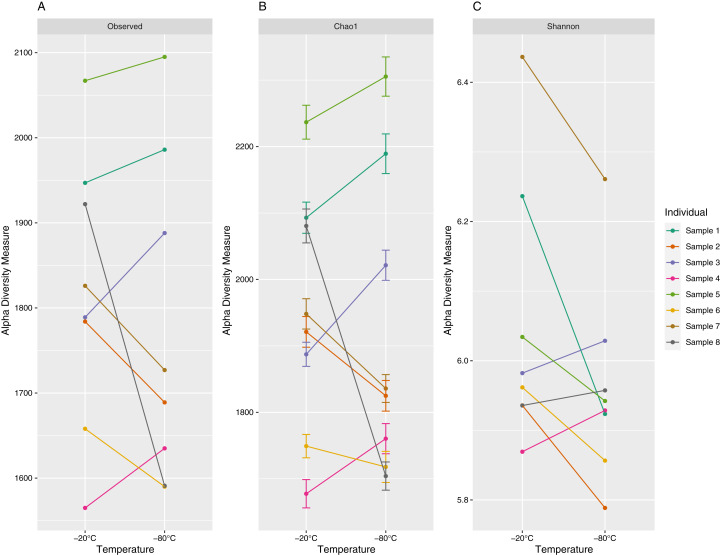
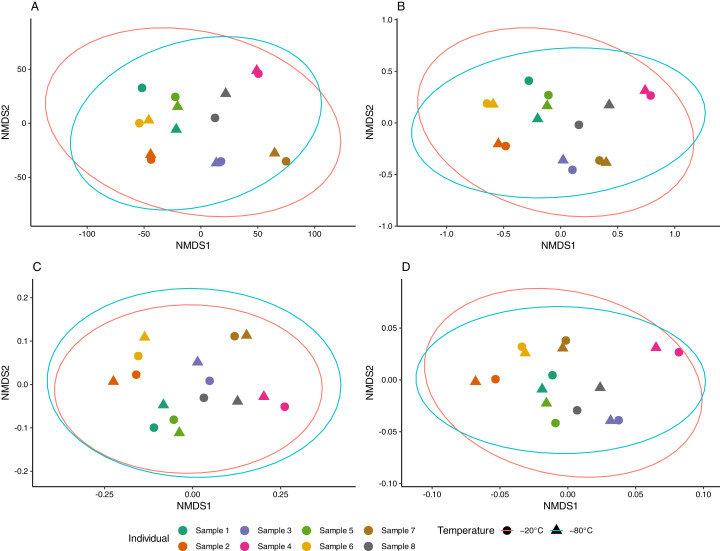
The development of next-generation sequencing technologies has spurred a surge of research on bacterial microbiome diversity and function. But despite the rapid growth of the field, many uncertainties remain regarding the impact of differing methodologies on downstream results. Sample storage temperature is conventionally thought to be among the most important factors for ensuring reproducibility across marker gene studies, but to date much of the research on this topic has focused on short-term storage in the context of clinical applications. Consequently, it has remained unclear if storage at -80 °C, widely viewed as the gold standard for long-term archival of feces, is truly required for maintaining sample integrity in amplicon-based studies. A better understanding of the impacts of long-term storage conditions is important given the substantial cost and limited availability of ultra-low temperature freezers. To this end, we compared bacterial microbiome profiles inferred from 16S V3-V4 amplicon sequencing for paired fecal samples obtained from a feral horse population from Sable Island, Nova Scotia, Canada, stored at either -80 °C or -20 °C for 4 years. We found that storage temperature did not significantly affect alpha diversity measures, including amplicon sequence variant (ASV) richness and evenness, and abundance of rare sequence variants, nor presence/absence, relative abundances and phylogenetic diversity weighted measures of beta diversity. These results indicate that storage of equine feces at -20 °C for periods ranging from a few months to a few years is equivalent to storage at -80 °C for amplicon-based microbiome studies, adding to accumulating evidence indicating that standard domestic freezers are both economical and effective for microbiome research.
Keywords: 16S; Amplicon; DNA metabarcoding; Equine; Equus ferus caballus; Horse; Long-term storage; Microbiome; Protocol; Sequencing.
© 2021 Gavriliuc et al.
Conflict of interest statement
The authors declare that they have no competing interests.
Figures
References
-
- Anslan S, Li H, Künzel S, Vences M. Microbiomes from feces vs. gut in aquatic vertebrates: distinct community compositions between substrates and preservation methods. BioRxiv. 2019;651612:e01294. doi: 10.1101/651612. - DOI
LinkOut - more resources
Full Text Sources
Other Literature Sources