


Obesity alters the ovarian proteomic response to zearalenone exposure†
- PMID: 33855340
- PMCID: PMC8256104
- DOI: 10.1093/biolre/ioab069
Obesity alters the ovarian proteomic response to zearalenone exposure†
Abstract
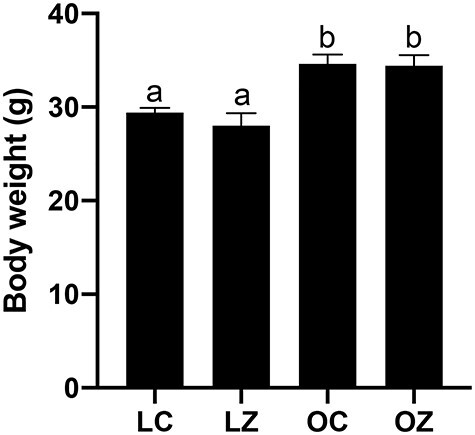
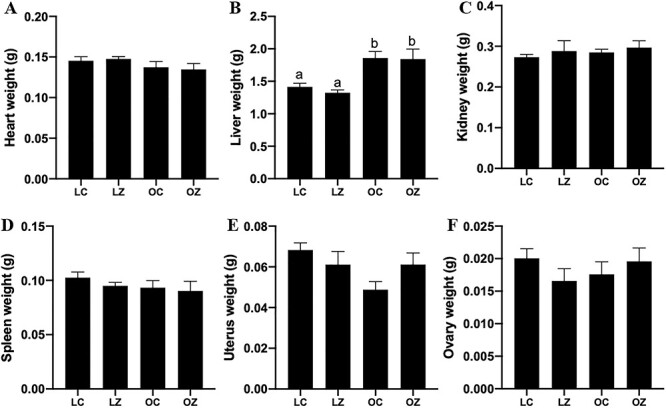
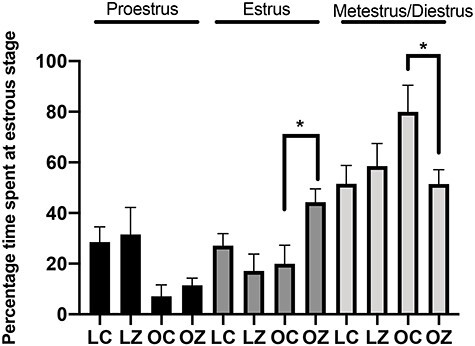
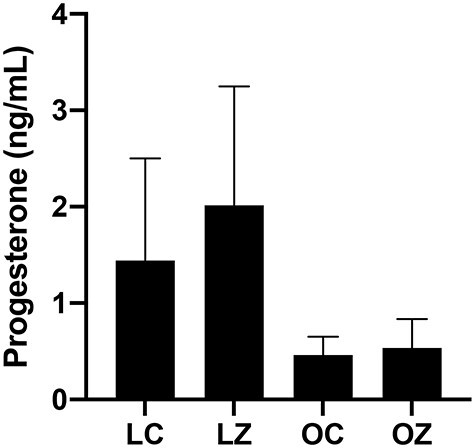
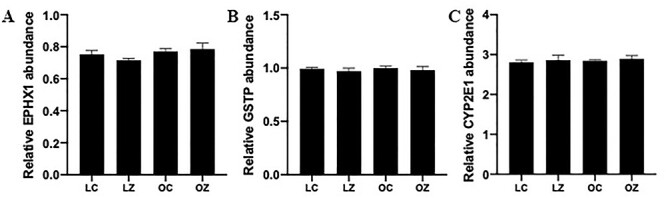
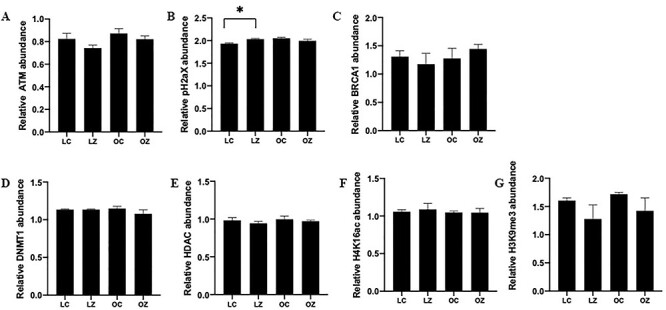
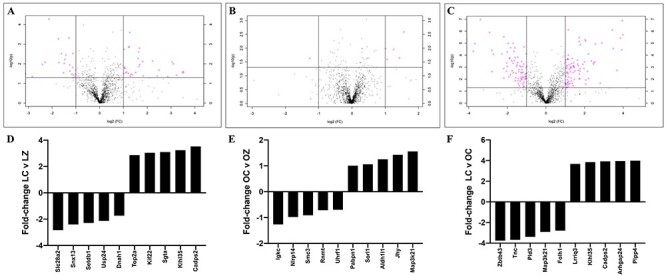
Zearalenone (ZEN), a nonsteroidal estrogenic mycotoxin, is detrimental to female reproduction. Altered chemical biotransformation, depleted primordial follicles and a blunted genotoxicant response have been discovered in obese female ovaries, thus, this study investigated the hypothesis that obesity would enhance ovarian sensitivity to ZEN exposure. Seven-week-old female wild-type nonagouti KK.Cg-a/a mice (lean) and agouti lethal yellow KK.Cg-Ay/J mice (obese) received food and water ad libitum, and either saline or ZEN (40 μg/kg) per os for 15 days. Body and organ weights, and estrous cyclicity were recorded, and ovaries collected posteuthanasia for protein analysis. Body and liver weights were increased (P < 0.05) in the obese mice, but obesity did not affect (P > 0.05) heart, kidney, spleen, uterus, or ovary weight and there was no impact (P > 0.05) of ZEN exposure on body or organ weight in lean or obese mice. Obese mice had shorter proestrus (P < 0.05) and a tendency (P = 0.055) for longer metestrus/diestrus. ZEN exposure in obese mice increased estrus but shortened metestrus/diestrus length. Neither obesity nor ZEN exposure impacted (P > 0.05) circulating progesterone, or ovarian abundance of EPHX1, GSTP1, CYP2E1, ATM, BRCA1, DNMT1, HDAC1, H4K16ac, or H3K9me3. Lean mice exposed to ZEN had a minor increase in γH2AX abundance (P < 0.05). In lean and obese mice, LC-MS/MS identified alterations to proteins involved in chemical metabolism, DNA repair and reproduction. These data identify ZEN-induced adverse ovarian modes of action and suggest that obesity is additive to ZEN-induced ovotoxicity.
Keywords: DNA damage repair; chemical metabolism; obesity; ovarian proteome; ovary; zearalenone.
© The Author(s) 2021. Published by Oxford University Press on behalf of Society for the Study of Reproduction.
Figures
References
-
- Hoyer PB. 11.16—Female reproductive toxicology. In: McQueen CA (ed.), Comprehensive Toxicology, 2nd ed. Oxford: Elsevier; 2010: 339–345.
-
- Senger PL. Pathways to pregnancy & parturition. Washington State University Research and Technology Park, Pullman WA: Current Conceptions Inc. 2012.
-
- Hoyer PB, Keating AF. Xenobiotic effects in the ovary: temporary versus permanent infertility. Expert Opin Drug Metab Toxicol 2014; 10:511–523. - PubMed
-
- Mattison DR. Clinical manifestations of ovarian toxicity. Reprod Toxicol 1985; 109:697–724.
-
- Keating AF, Hoyer PB. Mechanisms of reproductive toxicity. In: Drug Metabolism Handbook. Hoboken, NJ: John Wiley and sons, Inc. 2009: 697–736.
Publication types
MeSH terms
Substances
Grants and funding
LinkOut - more resources
Full Text Sources
Other Literature Sources
Research Materials
Miscellaneous
