


Low Self-Control: A Hidden Cause of Loneliness?
- PMID: 33855889
- PMCID: PMC8855382
- DOI: 10.1177/01461672211007228
Low Self-Control: A Hidden Cause of Loneliness?
Abstract
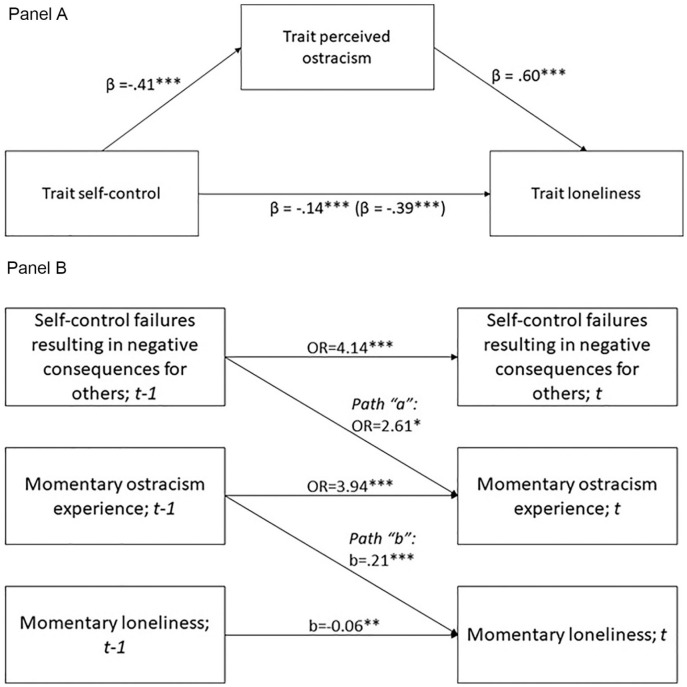
Loneliness has been associated with multiple negative outcomes. But what contributes to loneliness in the first place? Drawing from the literature on the importance of self-regulatory ability for successful social functioning, the present research explored the role of low self-control as a factor leading to loneliness. A set of four studies (and three additional studies in Supplementary Online Materials) using cross-sectional, experimental, daily diary, and experience sampling methods showed that lower self-control is associated with higher loneliness at both trait and state levels. Why does low self-control contribute to loneliness? Self-control failures that have negative implications for others lead to higher risks for being ostracized by others, which predicts increased feelings of loneliness over time. These results suggest that low self-control, which is often associated with negative intrapersonal outcomes, can have important interpersonal consequences by evoking ostracism, and consequently, loneliness.
Keywords: daily diary; experience sampling; loneliness; ostracism; self-control; social exclusion.
Conflict of interest statement
Figures
References
-
- Baumeister R. F., DeWall C. N., Ciarocco N. J., Twenge J. M. (2005). Social exclusion impairs self-regulation. Journal of Personality and Social Psychology, 88(4), 589–604. - PubMed
-
- Baumeister R. F., Exline J. J. (1999). Virtue, personality, and social relations: Self-control as the moral muscle. Journal of Personality, 67(6), 1165–1194. - PubMed
-
- Baumeister R. F., Vohs K. (2007). Self-regulation, ego depletion, and motivation. Social and Personality Psychology Compass, 1, 115–128.
-
- BBC. (2018). 16-24 year olds are the loneliest age group according to new BBC Radio 4 survey. https://www.bbc.co.uk/mediacentre/latestnews/2018/loneliest-age-group-ra...
-
- Betts L. R., Rotenberg K. J. (2007). Trustworthiness, friendships and self-control: Factors that contribute to young children’s school adjustment. Infant and Child Development, 16(5), 491–508.
MeSH terms
LinkOut - more resources
Full Text Sources
Other Literature Sources
