


Transcriptomic and proteomic analysis of putative digestive proteases in the salivary gland and gut of Empoasca (Matsumurasca) onukii Matsuda
- PMID: 33858340
- PMCID: PMC8048321
- DOI: 10.1186/s12864-021-07578-2
Transcriptomic and proteomic analysis of putative digestive proteases in the salivary gland and gut of Empoasca (Matsumurasca) onukii Matsuda
Abstract
Background: Infestation by tea green leafhoppers (Empoasca (Matsumurasca) onukii) can cause a series of biochemical changes in tea leaves. As a typical cell-rupture feeder, E. onukii secretes proteases while using its stylet to probe the tender shoots of tea plants (Camellia sinensis). This study identified and analyzed proteases expressed specifically in the salivary gland (SG) and gut of E. onukii through enzymatic activity assays complemented with an integrated analysis of transcriptomic and proteomic data.
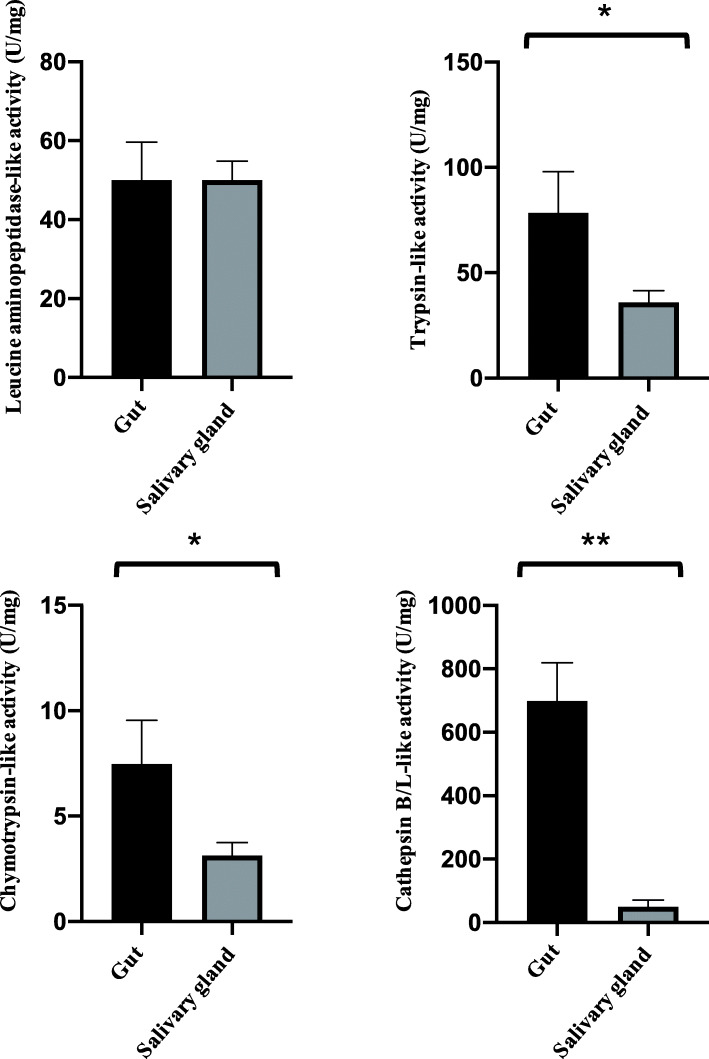
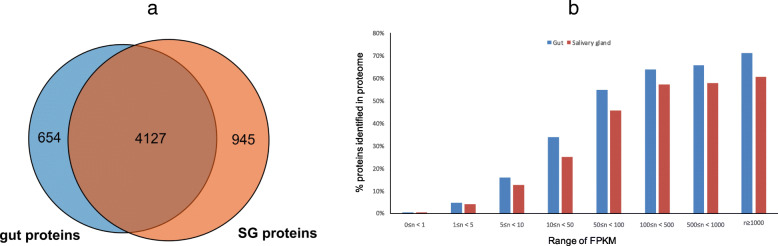
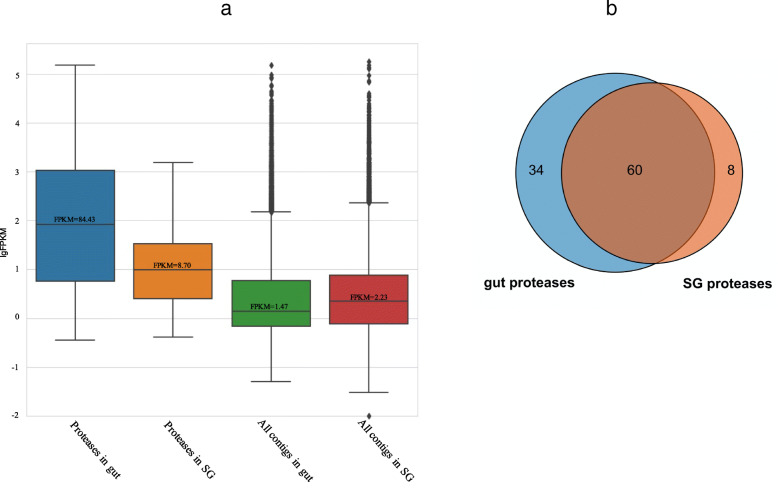
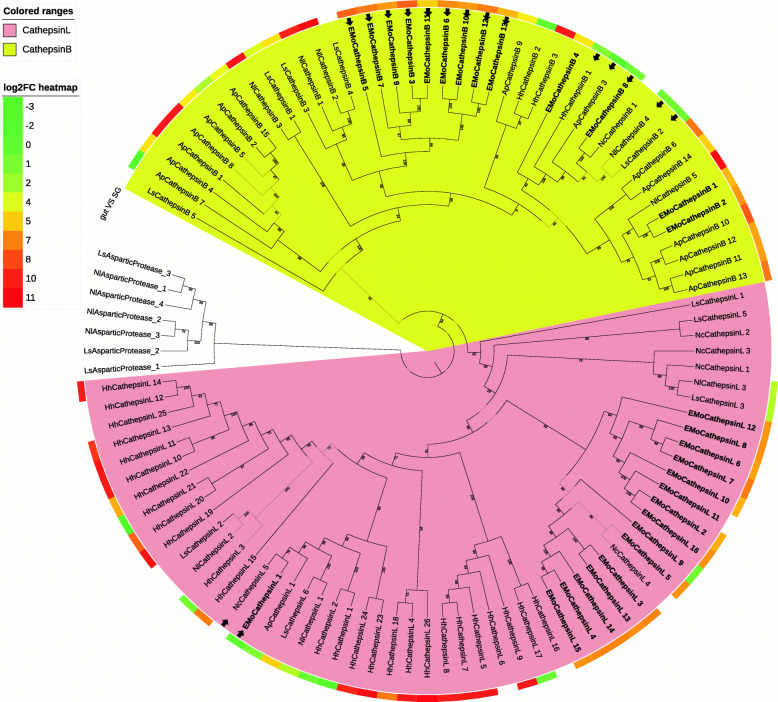
Results: In total, 129 contigs representing seven types of putative proteases were identified. Transcript abundance of digestive proteases and enzymatic activity assays showed that cathepsin B-like protease, cathepsin L-like protease, and serine proteases (trypsin- and chymotrypsin-like protease) were highly abundant in the gut but moderately abundant in the SG. The abundance pattern of digestive proteases in the SG and gut of E. onukii differed from that of other hemipterans, including Nilaparvata lugens, Laodelphax striatellus, Acyrthosiphum pisum, Halyomorpha halys and Nephotettix cincticeps. Phylogenetic analysis showed that aminopeptidase N-like proteins and serine proteases abundant in the SG or gut of hemipterans formed two distinct clusters.
Conclusions: Altogether, this study provides insightful information on the digestive system of E. onukii. Compared to five other hemipteran species, we observed different patterns of proteases abundant in the SG and gut of E. onukii. These results will be beneficial in understanding the interaction between tea plants and E. onukii.
Keywords: Enzymatic activity; Gut; Proteomics; RNA-Seq; Salivary gland; Tea green leafhopper.
Conflict of interest statement
The authors declare that they have no competing interests. The authors of this article are members of the faculties of Fujian Agriculture and Forestry University or Iowa State University. None has any involvement with any organization that could be interpreted as leading to a particular bias with respect to the subject of this study.
Figures


References
-
- Jin S, Chen ZM, Backus EA, Sun XL, Xiao B. Characterization of EPG waveforms for the tea green leafhopper, Empoasca vitis Göthe (Hemiptera: Cicadellidae), on tea plants and their correlation with stylet activities. J Insect Physiol. 2012;58(9):1235–1244. doi: 10.1016/j.jinsphys.2012.06.008. - DOI - PubMed
-
- Peng P, Tang M, Hou Y-j, Lin Q, Huang S-j, Deng M, Hu X, Zhang Y. Study on the Effect and Characters of Yellow Sticky Trap Sticking Aleurocanthus spiniferus and Empoasca vitis Gothe in Tea Garden. Southwest China J Agric Sci. 2010;1:020.
-
- Zhang Z, Luo Z, Gao Y, Bian L, Sun X, Chen Z. Volatiles from non-host aromatic plants repel tea green leafhopper Empoasca vitis. Entomologia Exp Appl. 2014;153(2):156–169. doi: 10.1111/eea.12236. - DOI
MeSH terms
Substances
Grants and funding
- 2017YFE0121700/National Key R&D Program of China
- 31772539/National Natural Science Foundation of China
- XJQ201819/FAFU Science Fund for Distinguished Young Scholars
- CXZX2018040/Science and Technology Innovation Fund of FAFU
- K1520005A03/Fujian Agriculture and Forestry University Construction Project for Technological Innovation and Service System of Tea Industry Chain
LinkOut - more resources
Full Text Sources
Other Literature Sources
Research Materials
