Review
. 2021 Oct;21(10):637-652.
doi: 10.1038/s41577-021-00529-8. Epub 2021 Apr 15.

A guide to interrogating immunometabolism

Affiliations
Review

A guide to interrogating immunometabolism

Kelsey Voss et al. Nat Rev Immunol. 2021 Oct.

Abstract

The metabolic charts memorized in early biochemistry courses, and then later forgotten, have come back to haunt many immunologists with new recognition of the importance of these pathways. Metabolites and the activity of metabolic pathways drive energy production, macromolecule synthesis, intracellular signalling, post-translational modifications and cell survival. Immunologists who identify a metabolic phenotype in their system are often left wondering where to begin and what does it mean? Here, we provide a framework for navigating and selecting the appropriate biochemical techniques to explore immunometabolism. We offer recommendations for initial approaches to develop and test metabolic hypotheses and how to avoid common mistakes. We then discuss how to take things to the next level with metabolomic approaches, such as isotope tracing and genetic approaches. By proposing strategies and evaluating the strengths and weaknesses of different methodologies, we aim to provide insight, note important considerations and discuss ways to avoid common misconceptions. Furthermore, we highlight recent studies demonstrating the power of these metabolic approaches to uncover the role of metabolism in immunology. By following the framework in this Review, neophytes and seasoned investigators alike can venture into the emerging realm of cellular metabolism and immunity with confidence and rigour.


Conflict of interest statement

Competing interests

J.C.R. holds stock equity in Sitryx and within the past 2 years has received unrelated research support, travel and honoraria from Incyte, Sitryx, Caribou, Nirogy, Kadmon, Calithera, Tempest, Merck, Mitobridge and Pfizer. The other authors declare no competing interests.

Figures

Fig. 1 |
Fig. 1 |. A general immunometabolism workflow.
The discovery phase of an immunometabolism project can originate from a multitude of techniques. Extracellular flux analysis (EFA) assays are useful to build a foundation to determine whether metabolic differences are involved in your phenotype of interest. These are especially effective when paired with normalization imaging technology. Next, metabolic phenotypes can be pursued with additional methods. Flow cytometric assays with metabolic dyes and lactate assays are user friendly and provide easily accessible options for most labs. In some instances, these assays also provide single-cell information. Some users may find flow cytometry-based methods more accessible for preliminary validations of a metabolic phenotype, followed by phenotype assessment with EFA. Next, metabolites may be assayed directly using targeted metabolomics. Flux measurements paired with metabolomics provide a detailed overview for metabolomics research and offer a wealth of mechanistic details underlying a metabolic phenotype. Finally, analysis of the phenotype in vivo using a genetic approach provides further support for the phenotype. CyTOF, cytometry by time of flight; log2FC, log2 fold change; RNA-seq, RNA sequencing.
Fig. 2 |
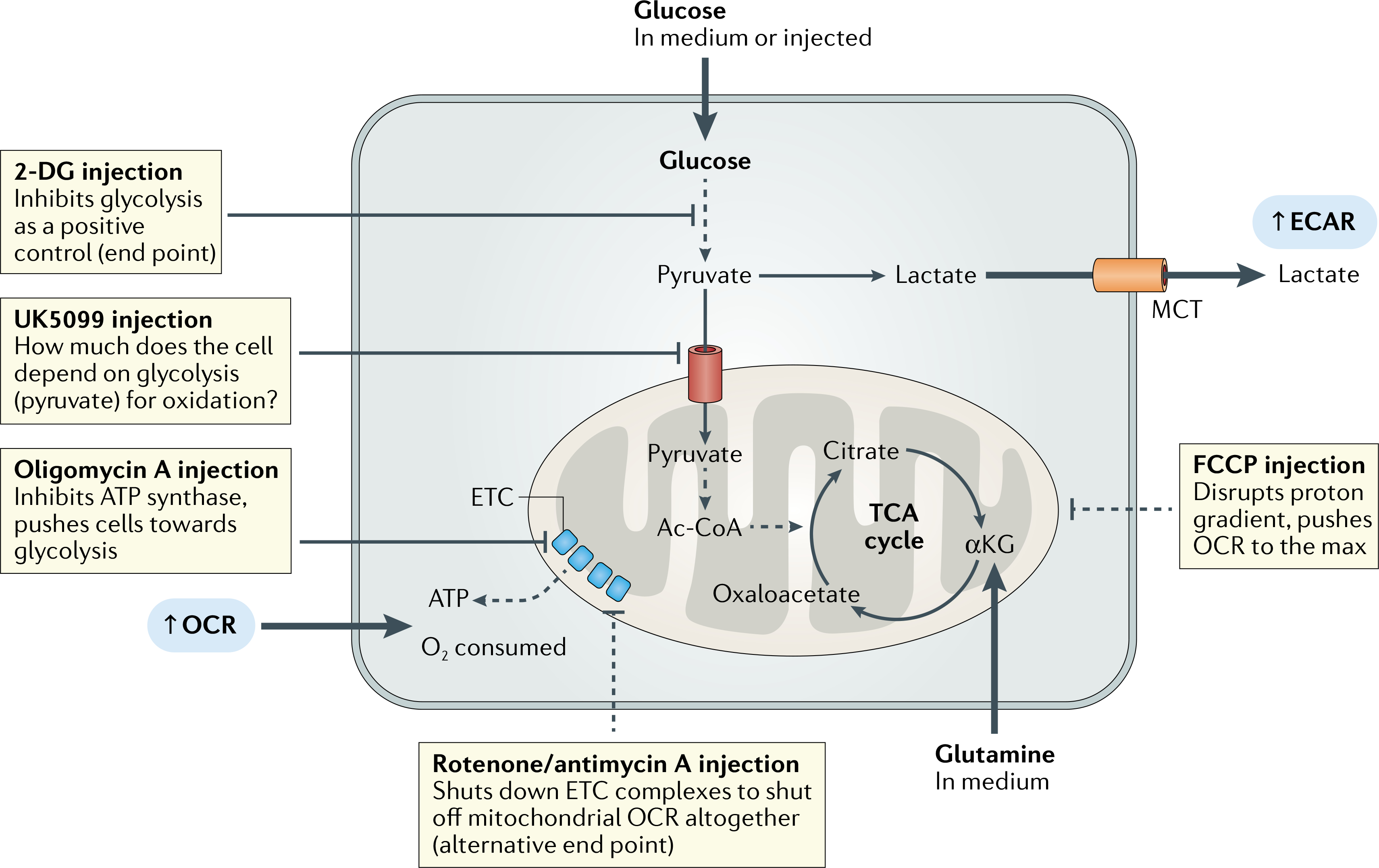
Fig. 2 |. A guide to using extracellular flux assays for glycolysis.
Glycolysis can be probed qualitatively or quantitatively and with respect to oxidative metabolism when paired with a mitochondrial stress test. If the cellular response to acute glucose availability is unknown, the extracellular acidification rate (ECAR) can be monitored after glucose is injected. Ultimately, a rise in ECAR due to lactate accumulation is dependent on lactate excretion via monocarboxylate transporters (MCTs). Glucose may be injected as a first step to monitor glucose consumption in real time, followed by an oligomycin A injection to force glycolytic function (glycolysis stress test). Next, 2-deoxy-d-giucose (2-DG) can be used as an assay end point to get a full picture of the glycolytic capacity of the cells. If the user is interested in the importance of glycolysis with respect to oxidative metabolism, UK5099 can be used to block pyruvate import through the mitochondrial pyruvate carrier (MPC), which prevents pyruvate from being converted into acetyl-CoA (Ac-CoA) and fuelling the tricarboxylic acid (TCA) cycle. Mitochondrial stress test injections in MPC-inhibited cells are used to compare rates of maximal mitochondrial respiration between UK5099-treated samples and untreated controls. αKG, α-ketoglutarate; ETC, electron transport chain; FCCP, carbonyl cyanide-4-trifluoromethoxyphenylhydrazone; OCR, oxygen consumption rate.
Fig. 3 |
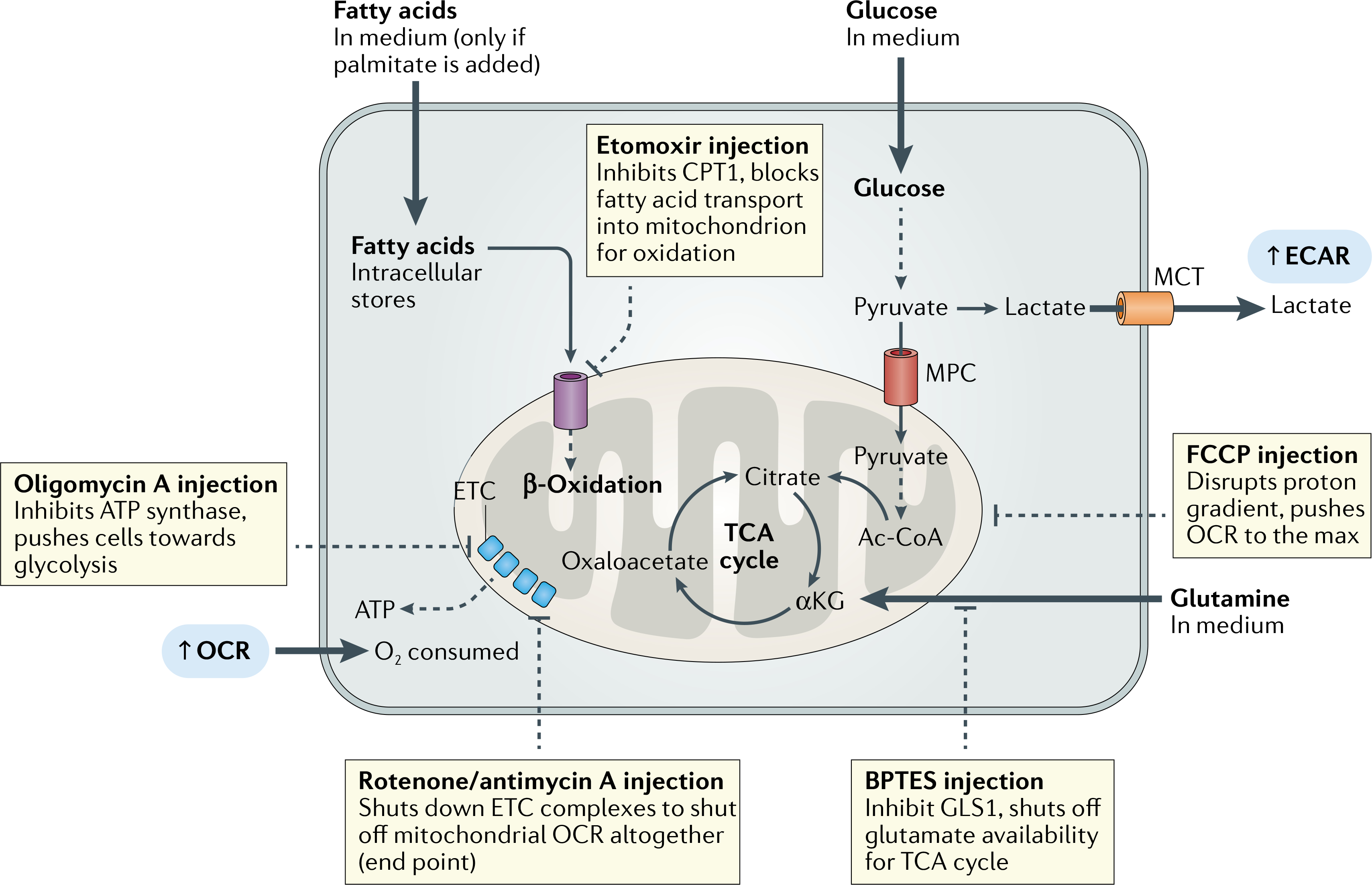
Fig. 3 |. A guide to examination of oxidative phosphorylation and mitochondrial function by extracellular flux assays.
First, the assay conditions such as the formulation of the medium should reflect the question in mind. Fatty acids will be present only in intracellular stores unless assay medium is specifically supplemented with bovine serum albumin-conjugated fatty acids (such as palmitate) or serum. To accurately measure mitochondrial fitness, cell density and inhibitor concentrations should be titrated to ensure quick responses in oxygen consumption rate (OCR) and a well-defined functional maximum if carbonyl cyanide-4-trifiuoromethoxyphenyihydrazone (FCCP) is used. Finally, the normalization strategy should be decided according to the most relevant output parameter (BOX 2). Injection strategies to answer common metabolic questions are described in the flowchart. Mitochondrial stress test injections occur in the following order: oligomycin A, FCCP, rotenone/antimycin A. To investigate the contribution of individual substrates to mitochondrial oxidation, a substrate oxidation stress test can be performed. Etomoxir, glutaminase (GLS1) inhibitor (BPTES) or UK5099 (MPC inhibitor) is injected first followed by Mito Stress Test injections. αKG, α-ketoglutarate; Ac-CoA, acetyl-CoA; CPT1, carnitine palmitoyltransferase 1; ETC, electron transport chain; MPC, mitochondrial pyruvate carrier; MCT, monocarboxylate transporter; TCA cycle, tricarboxylic acid cycle.
Fig. 4 |
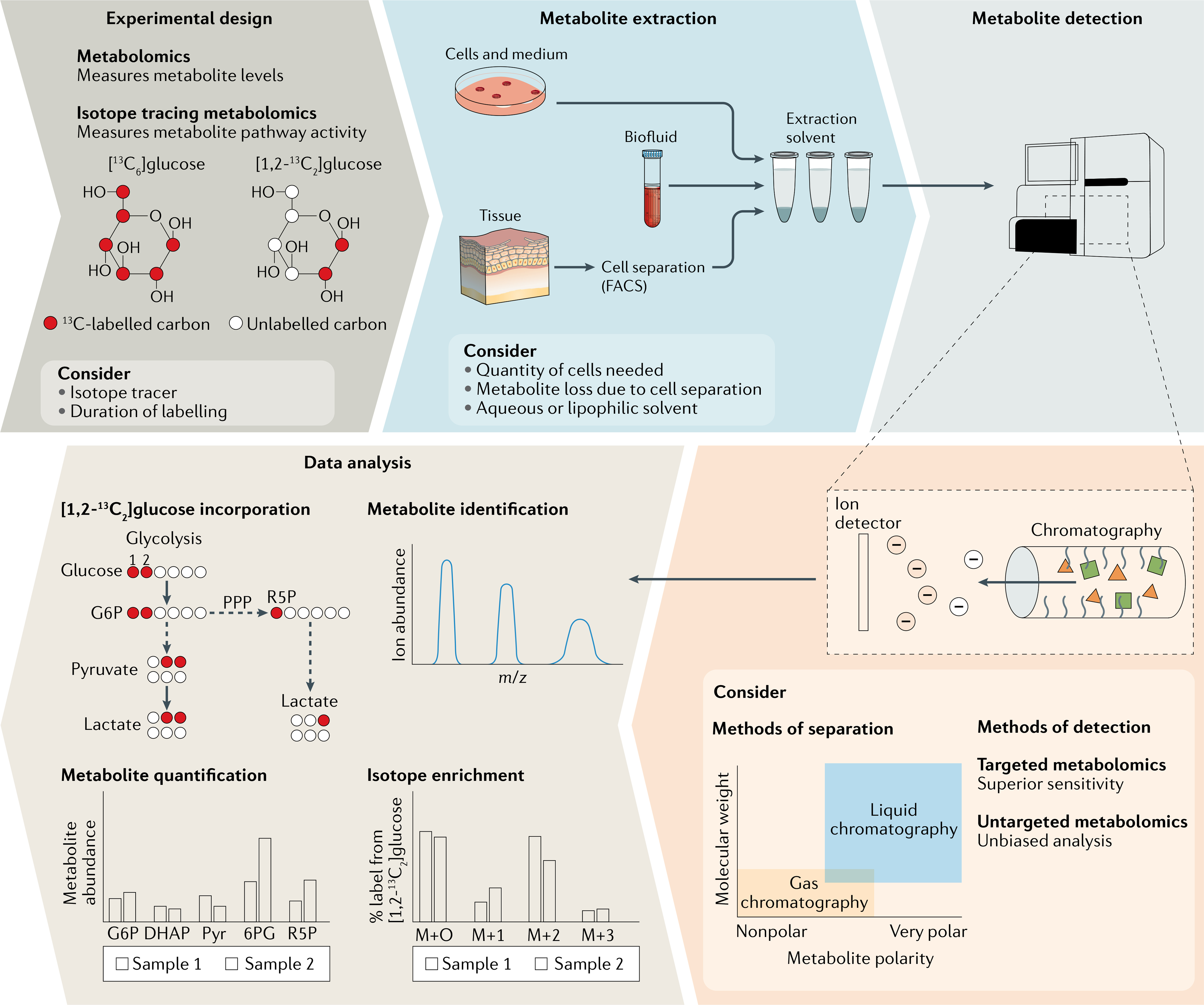
Fig. 4 |. Metabolomics workflow.
Experimental design: serial sampling or isotope tracing techniques measure pathway activities. Sample preparation and duration of isotope labelling depend on the metabolites and metabolic pathways of interest. Metabolomics at a single time point provides static metabolite levels. Flux measurements require collection of samples as a function of time. Metabolite extraction: after sample harvest, near instantaneous enzyme inactivation is crucial to achieve a representative metabolite profile. Metabolite detection: metabolite extracts are subjected to chromatography-coupled mass spectrometry to separate metabolites based on chemical properties and m/z, followed by detection and quantification. Data analysis: schematic example of [1,2-13C2]glucose incorporation into glycolysis and the pentose phosphate pathway (PPP). 13C-[abeWed carbons are depicted in red; unlabelled carbons in white. Metabolites are identified based on expected m/z. Absolute or relative quantification shows changes in metabolite levels and can reveal pathways of interest. For tracing experiments, tracer incorporation and pathway activity are assessed by the isotope labelling pattern. Glucose incorporation into glycolysis results in partially labelled lactate (M+2) whereas glucose-derived lactate from the PPP results in M+1 lactate. DHAP, dihydroxyacetone phosphate; FACS, fluorescence-activated cell sorting; G6P, glucose 6-phosphate; Pyr, pyruvate; R5P, ribose 5-phosphate; 6PG, 6-phosphogluconate.

References

    1. Murphy MP & O’Neill LAJ Krebs cycle reimagined: the emerging roles of succinate and itaconate as signal transducers. Cell 174, 780–784 (2018). - PubMed
    1. Fan J, Krautkramer KA, Feldman JL & Denu JM Metabolic regulation of histone post-translational modifications. ACS Chem. Biol. 10, 95–108 (2015). - PMC - PubMed
    1. Cameron AM, Lawless SJ & Pearce EJ Metabolism and acetylation in innate immune cell function and fate. Semin. Immunol. 28, 408–41 6 (2016). - PMC - PubMed
    1. Mason EF & Rathmell JC Cell metabolism: an essential link between cell growth and apoptosis. Biochem. Biophys. Acta 1813, 645–654 (2011). - PMC - PubMed
    1. Voss K, Larsen SE & Snow AL Metabolic reprogramming and apoptosis sensitivity: Defining the contours of a T cell response. Cancer Lett. 408, 190–196 (2017). - PMC - PubMed

Publication types

LinkOut - more resources