Oral Resveratrol supplementation attenuates exercise-induced Interleukin-6 but not Oxidative Stress after a high intensity cycling challenge in adults
- PMID: 33859520
- PMCID: PMC8040419
- DOI: 10.7150/ijms.55633
Oral Resveratrol supplementation attenuates exercise-induced Interleukin-6 but not Oxidative Stress after a high intensity cycling challenge in adults
Abstract
Previous studies demonstrated that resveratrol (RES) is able to enhance antioxidant, anti-inflammatory and insulin actions in humans. It is unclear whether RES can be used as ergogenic aids to enhance high-intensity cycling exercise performance and attenuate the high-intensity exercise-induced oxidative stress and inflammation. This study investigated the effect of RES supplementation on oxidative stress, inflammation, exercise-induced fatigue, and endurance performance. Eight male athletes participated in this single-blind crossover designed study and randomly instructed to receive four days of either oral RES (480 mg per day, totally 1920mg) or placebo supplementation. The cycling exercise challenge at 80% maximal oxygen consumption with 60 rpm was performed following 4 days of either RES or placebo supplementation. The total cycling performance time was recorded. In addition, blood samples were obtained to analyze the changes in blood glucose, plasma non-esterified fatty acid, serum lactate dehydrogenase, creatine kinase, uric acid, total antioxidant capacity, malondialdehyde, tumor necrosis factor-α, and interleukin-6. The exhausting time of cycling exercise challenge was not significantly increased in RES compared to that in placebo. However, IL-6 response was significantly decreased during exercise challenge in RES trial, and there were no differences in blood biomarkers, fatigue factors, and antioxidative response. Oral RES supplementation can attenuate exercise-induced IL-6 response but not fatigue and oxidative stress, inflammation response. However, we infer that 4-day oral RES supplementation has no ergogenic property on enhancing the high-intensity cycling exercise performance.
Keywords: antioxidant phytochemicals; cycling exercise; ergogenic property; fatigue.
© The author(s).
Conflict of interest statement
Competing Interests: The authors have declared that no competing interest exists.
Figures


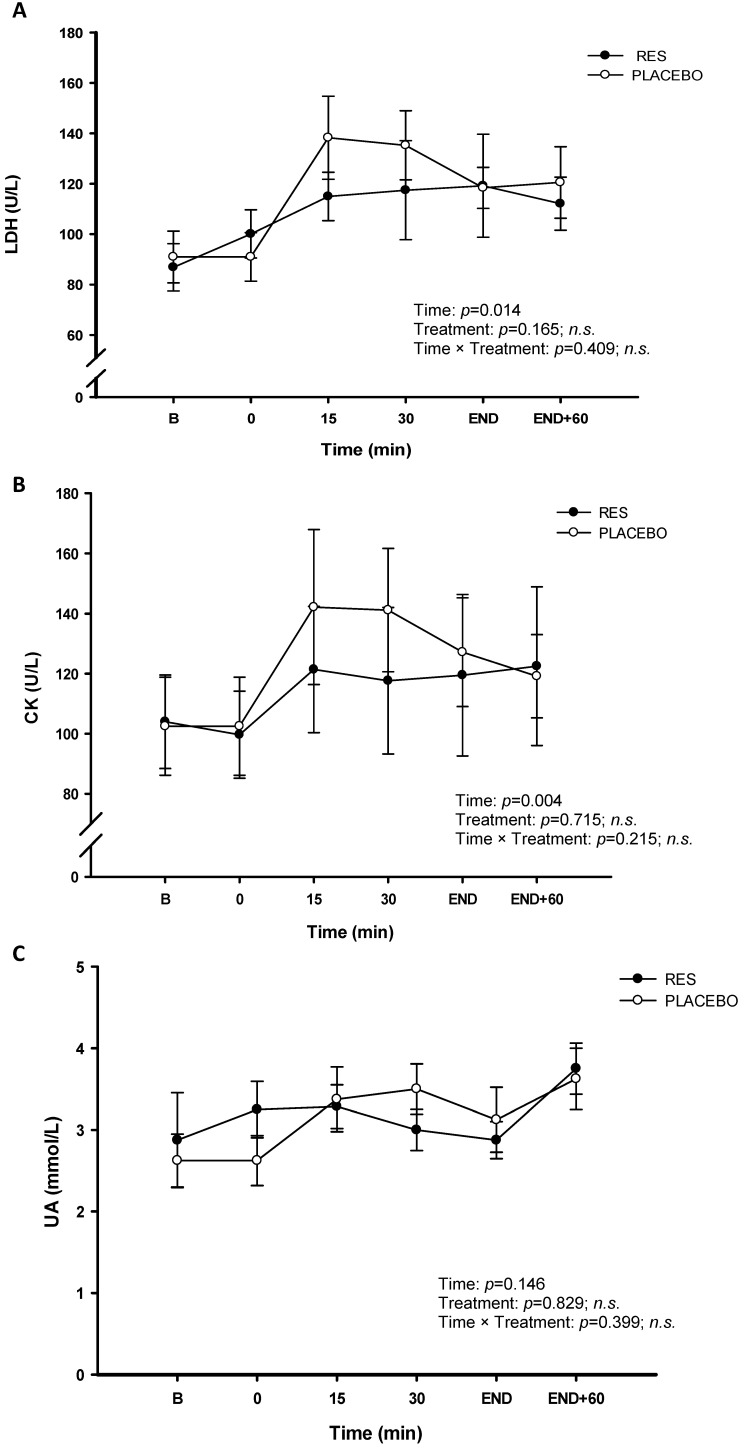
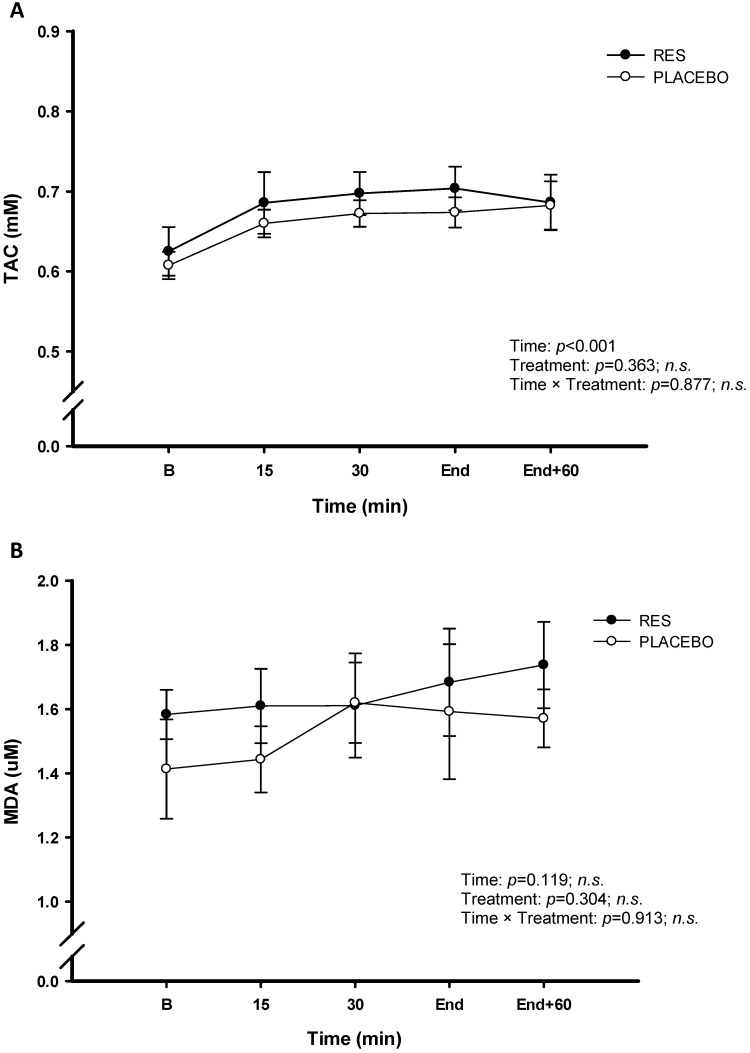
 O2max exercise challenge after placebo or resveratrol supplementation.

References
-
- Bavaresco L. Role of viticultural factors on stilbene concentrations of grapes and wine. Drugs Exp. Clin. Res. 2003;29(5-6):181–187. - PubMed
-
- De La Lastra CA, Villegas I. Resveratrol as an antioxidant and pro-oxidant agent: mechanisms and clinical implications. Biochem Soc Trans. 2007;35(5):1156–1160. - PubMed
-
- Das S, Das DK. Anti-inflammatory responses of resveratrol. Inflamm Allergy Drug Targets. 2007;6:168–173. - PubMed
-
- Brasnyó P, Molnár GA, Mohás M, Markó L, Laczy B, Cseh J. et al. Resveratrol improves insulin sensitivity, reduces oxidative stress and activates the Akt pathway in type 2 diabetic patients. Br. J. Nutr. 2011;106(3):383–389. - PubMed
MeSH terms
Substances
LinkOut - more resources
Full Text Sources
Other Literature Sources
Medical