


Thymoquinone Ameliorates Lung Inflammation and Pathological Changes Observed in Lipopolysaccharide-Induced Lung Injury
- PMID: 33859710
- PMCID: PMC8024078
- DOI: 10.1155/2021/6681729
Thymoquinone Ameliorates Lung Inflammation and Pathological Changes Observed in Lipopolysaccharide-Induced Lung Injury
Abstract
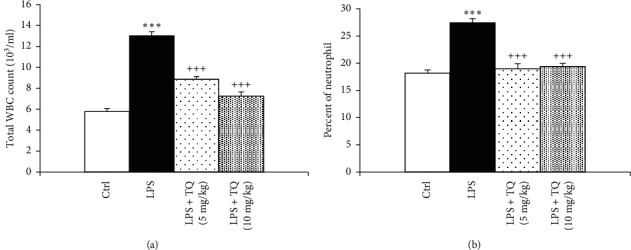
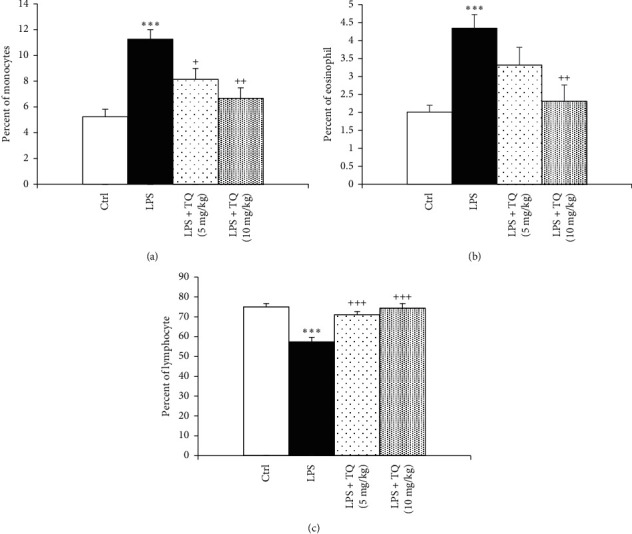
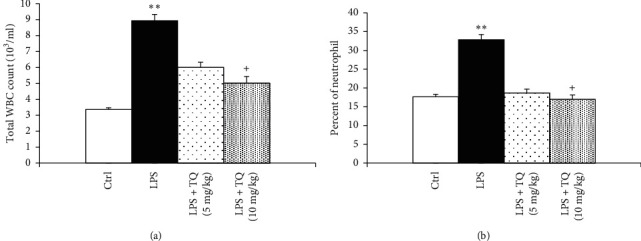
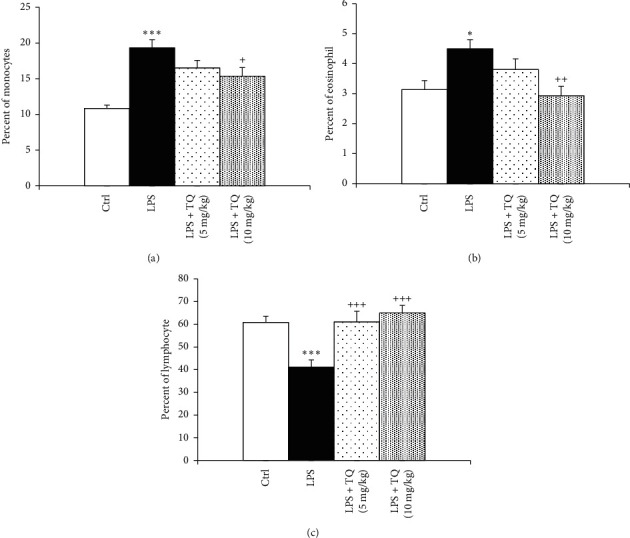
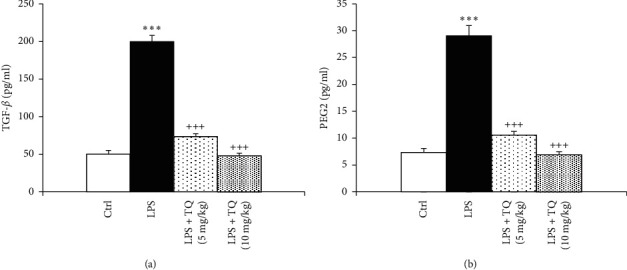
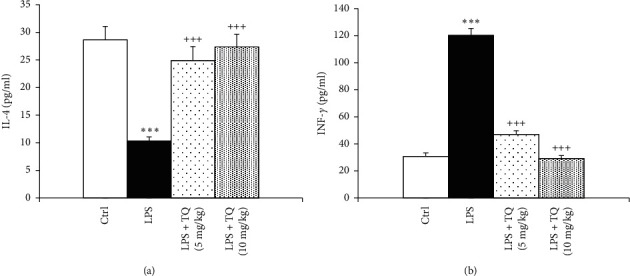
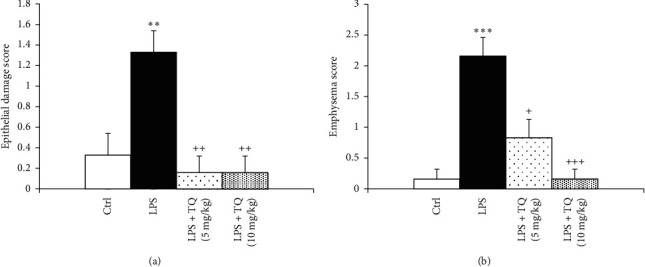
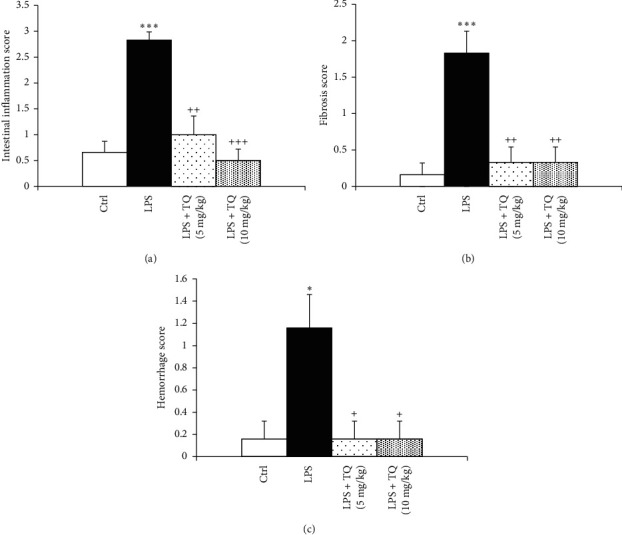
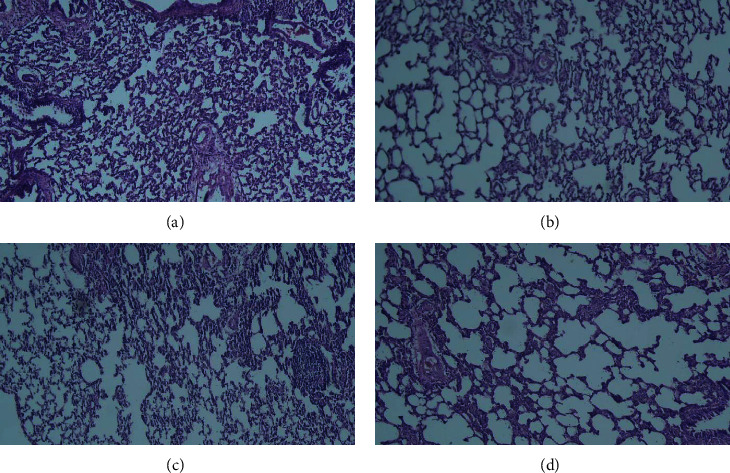
Anti-inflammatory, antioxidant, and immunomodulatory effects of thymoquinone (TQ) have been shown. The effects of TQ on lipopolysaccharide- (LPS-) induced inflammation and pathological changes in rats' lung were investigated in this study. Four groups of rats included (1) control (saline treated); (2) LPS (treated with 1 mg/kg/day i.p. for two weeks); and (3 and 4) 5 or 10 mg/kg TQ i.p. 30 min prior to LPS administration. Total and differential WBC counts in the blood and bronchoalveolar fluid (BALF), TGF-β1, INF-γ, PGE2, and IL-4 levels in the BALF and pathological changes of the lung were evaluated. Total WBC count and eosinophil, neutrophil, and monocyte percentage were increased, but the lymphocyte percentage was reduced in the blood and BALF. The BALF levels of PGE2, TGF-β1, and INF-γ were also increased, but IL-4 level was reduced due to LPS administration. LPS also induced pathological insults in the lung of rats (P < 0.05 to P < 0.001 for all changes in LPS-exposed animals). Treatment with TQ showed a significant improvement in all changes induced by LPS (P < 0.05 to P < 0.05). TQ showed a protective effect on LPS-induced lung inflammation and pathological changes in rats which suggested a therapeutic potential for TQ on lung injury.
Copyright © 2021 Mostafa Boskabady et al.
Conflict of interest statement
The authors declare that they have no conflicts of interest.
Figures
References
LinkOut - more resources
Full Text Sources
Other Literature Sources
