


PSMA Expression in Glioblastoma as a Basis for Theranostic Approaches: A Retrospective, Correlational Panel Study Including Immunohistochemistry, Clinical Parameters and PET Imaging
- PMID: 33859946
- PMCID: PMC8042319
- DOI: 10.3389/fonc.2021.646387
PSMA Expression in Glioblastoma as a Basis for Theranostic Approaches: A Retrospective, Correlational Panel Study Including Immunohistochemistry, Clinical Parameters and PET Imaging
Abstract
Aim: The aim of the current study was to enlighten the evolution of prostate-specific membrane antigen (PSMA) expression in glioblastoma between initial diagnosis and recurrence in order to provide preliminary insight for further clinical investigations into innovative PSMA-directed treatment concepts in neuro-oncology.
Methods: Patients who underwent resection for de-novo glioblastoma (GBM) and had a re-resection in case of a recurrent tumor following radiochemotherapy and subsequent chemotherapy were included (n = 16). Histological and immunohistochemical stainings were performed at initial diagnosis and at recurrence (n = 96 tissue specimens). Levels of PSMA expression both in endothelial and non-endothelial cells as well as vascular density (CD34) were quantified via immunohistochemistry and changes between initial diagnosis and recurrence were determined. Immunohistochemical findings were correlated with survival and established clinical parameters.
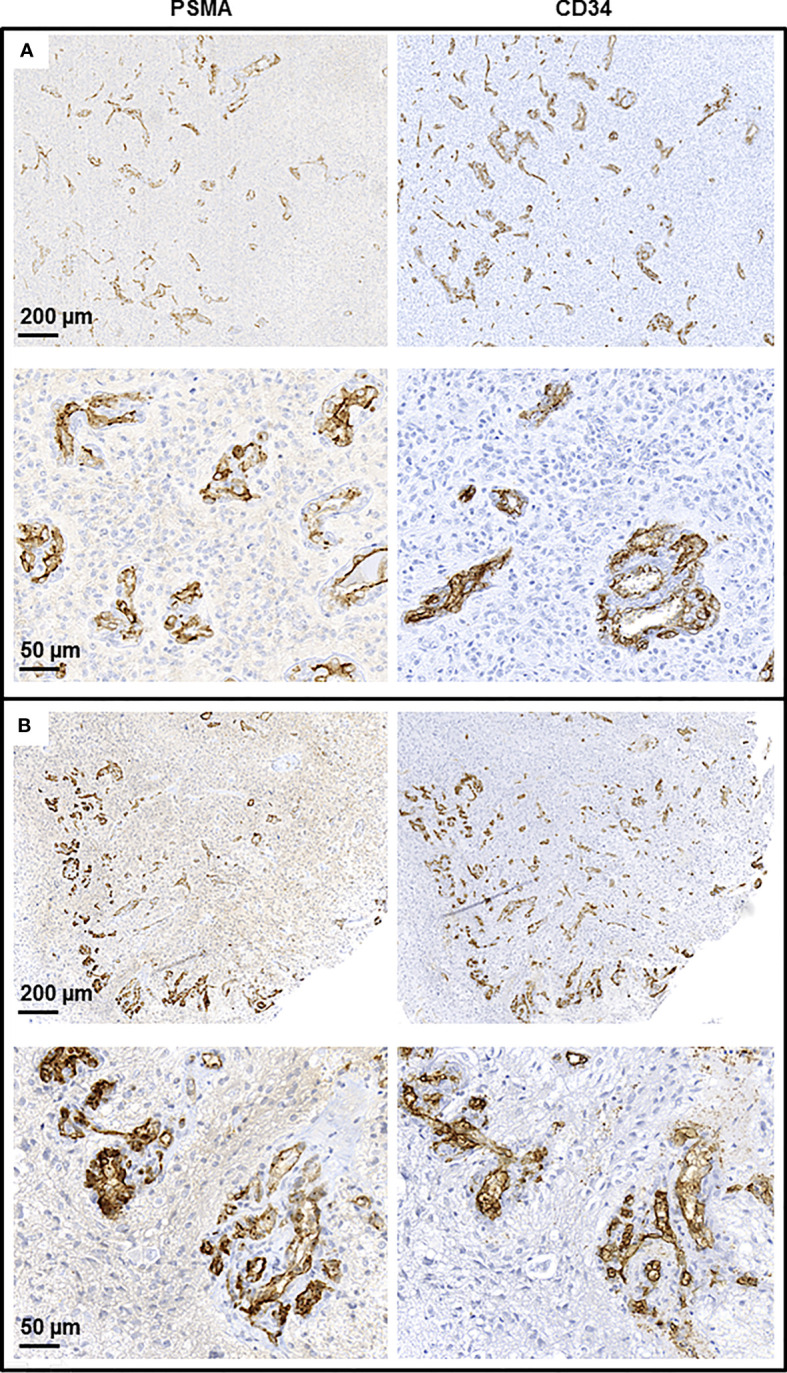
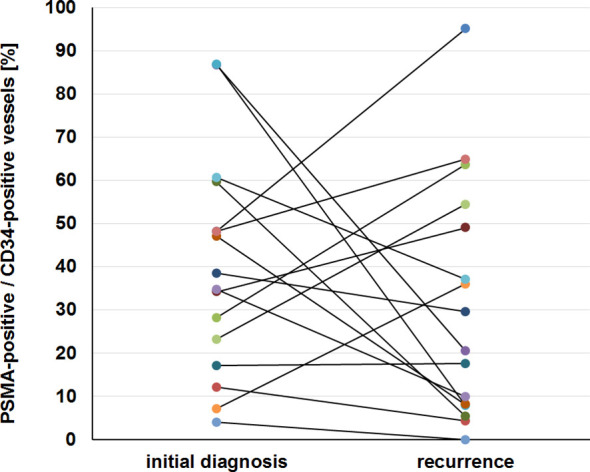
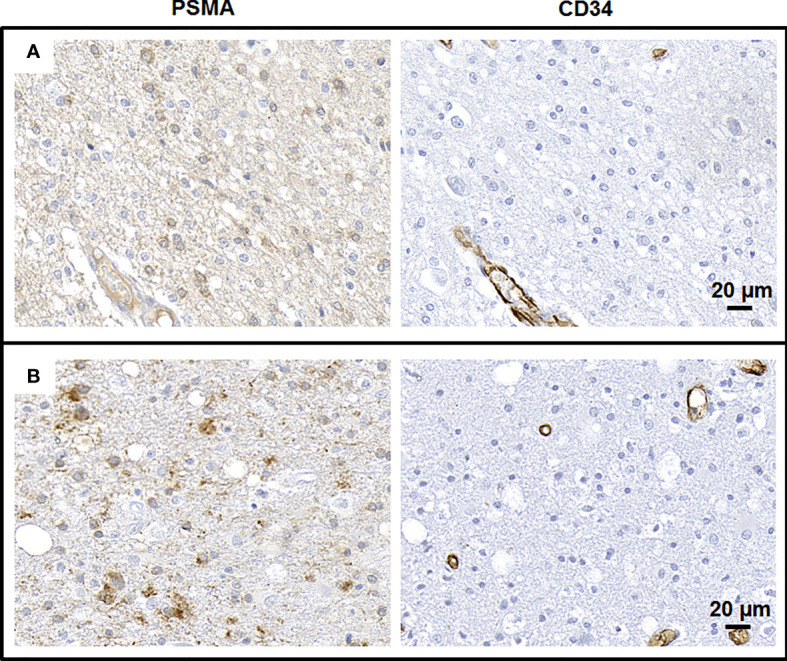
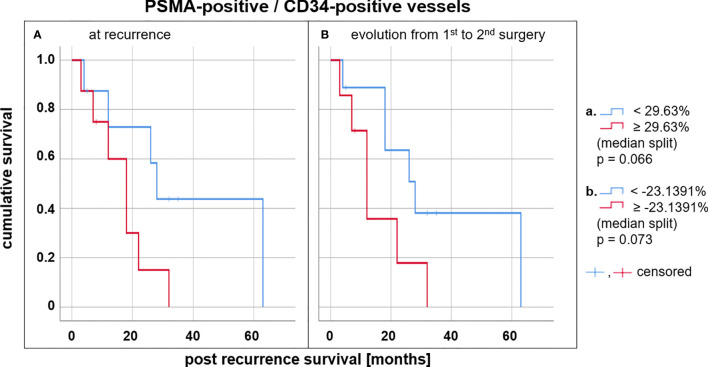
Results: PSMA expression was found to be present in all GBM tissue samples at initial diagnosis as well as in all but one case of recurrent tumor samples. The level of PSMA expression in glioblastoma varied inter-individually both in endothelial and non-endothelial cells. Likewise, the temporal evolution of PSMA expression highly varied in between patients. The level of vascular PSMA expression at recurrence and its change between initial diagnosis and recurrence was associated with post recurrence survival time: Patients with high vascular PSMA expression at recurrence as well as patients with increasing PSMA expression throughout the disease course survived shorter than patients with low vascular PSMA expression or decreasing vascular PSMA expression. There was no significant correlation of PSMA expression with MGMT promoter methylation status or Ki-67 labelling index.
Conclusion: PSMA is expressed in glioblastoma both at initial diagnosis and at recurrence. High vascular PSMA expression at recurrence seems to be a negative prognostic marker. Thus, PSMA expression in GBM might present a promising target for theranostic approaches in recurrent glioblastoma. Especially PSMA PET imaging and PSMA-directed radioligand therapy warrant further studies in brain tumor patients.
Keywords: glioblastoma (GBM); glioma; immunohistochemistry (IHC); positron emission tomography (PET); prognosis; prostate specific membrane antigen (PSMA); radionuclide therapy (PSMA-RLT); theranostic.
Copyright © 2021 Holzgreve, Biczok, Ruf, Liesche-Starnecker, Steiger, Kirchner, Unterrainer, Mittlmeier, Herms, Schlegel, Bartenstein, Tonn, Albert and Suchorska.
Conflict of interest statement
The authors declare that the research was conducted in the absence of any commercial or financial relationships that could be construed as a potential conflict of interest.
Figures
References
-
- Pinto JT, Suffoletto BP, Berzin TM, Qiao CH, Lin S, Tong WP, et al. Prostate-specific membrane antigen: a novel folate hydrolase in human prostatic carcinoma cells. Clin Cancer Res (1996) 2:1445–51. - PubMed
LinkOut - more resources
Full Text Sources
Other Literature Sources
Research Materials
Miscellaneous
