


Similarities and differences between study designs in short- and long-term outcomes of laparoscopic versus open low anterior resection for rectal cancer: A systematic review and meta-analysis of randomized, case-matched, and cohort studies
- PMID: 33860138
- PMCID: PMC8034685
- DOI: 10.1002/ags3.12409
Similarities and differences between study designs in short- and long-term outcomes of laparoscopic versus open low anterior resection for rectal cancer: A systematic review and meta-analysis of randomized, case-matched, and cohort studies
Abstract
Aim: Randomized controlled trials (RCT) are the gold standard in surgical research, and case-matched studies, such as studies with propensity score matching, are expected to serve as an alternative to RCT. Both study designs have been used to investigate the potential superiority of laparoscopic surgery to open surgery for rectal cancer, but it remains unclear whether there are any differences in the findings obtained using these study designs. We aimed to examine similarities and differences between findings from different study designs regarding laparoscopic surgery for rectal cancer.
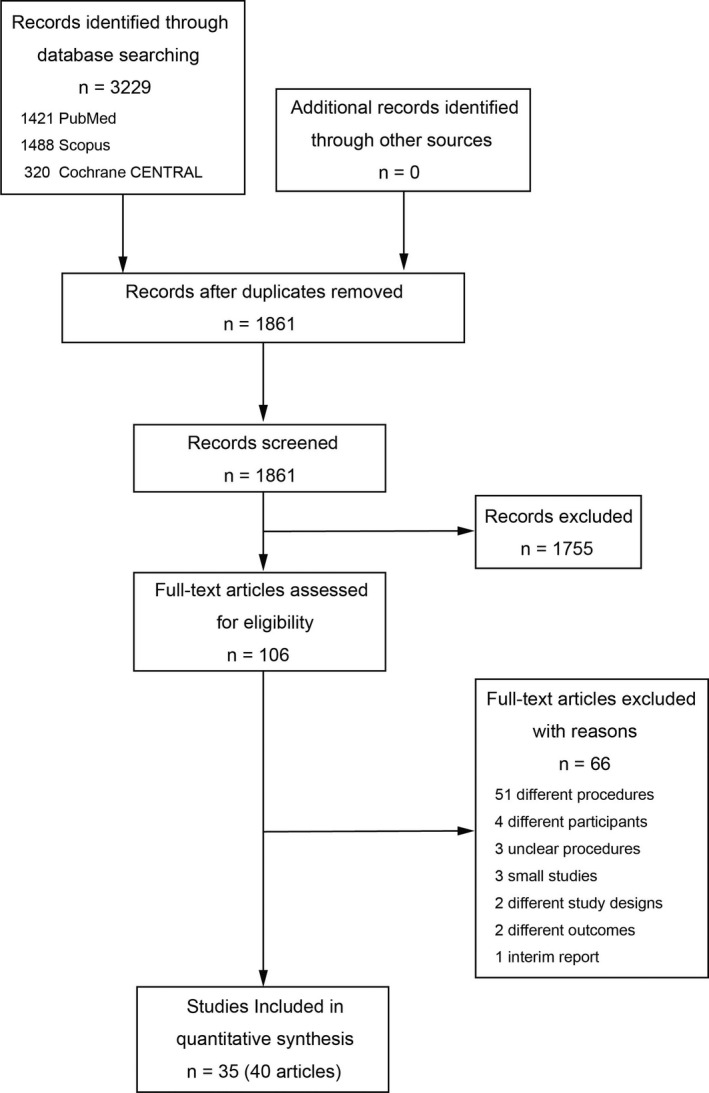
Methods: Systematic review and meta-analyses. A comprehensive literature search was conducted using PubMed, Scopus, and Cochrane. RCT, case-matched studies, and cohort studies comparing laparoscopic low anterior resection and open low anterior resection for rectal cancer were included. In total, 8 short-term outcomes and 3 long-term outcomes were assessed. Meta-analysis was conducted stratified by study design using a random-effects model.
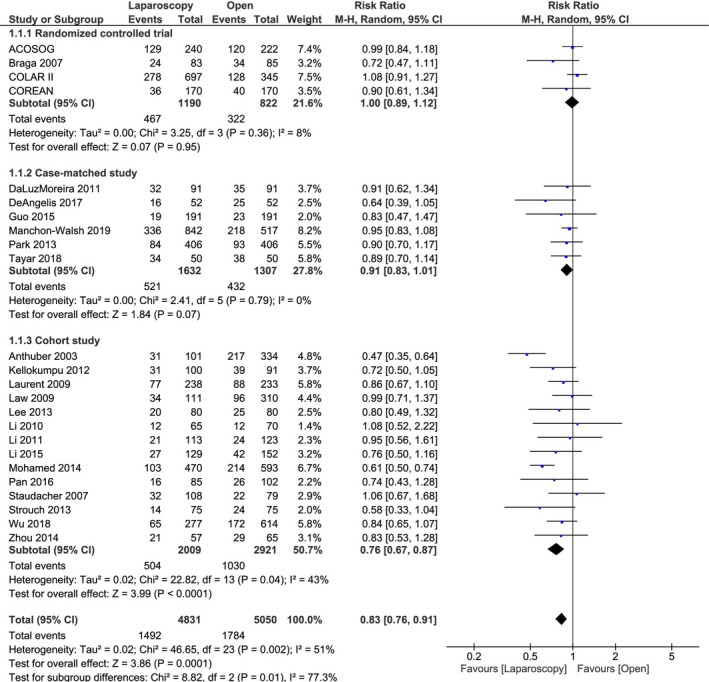
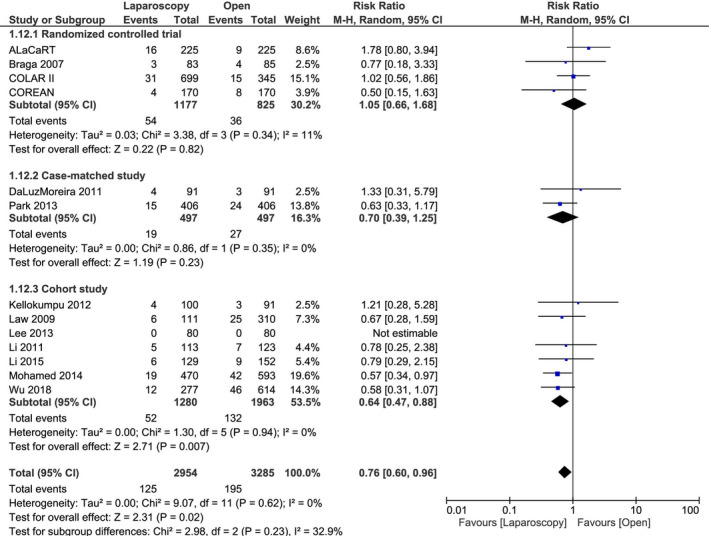
Results: Thirty-five studies were included in this review. Findings did not differ between RCT and case-matched studies for most outcomes. However, the estimated treatment effect was largest in cohort studies, intermediate in case-matched studies, and smallest in RCT for overall postoperative complications and 3-year local recurrence.
Conclusion: Findings from case-matched studies were similar to those from RCT in laparoscopic low anterior resection for rectal cancer. However, findings from case-matched studies were sometimes intermediate between those of RCT and unadjusted cohort studies, and case-matched studies and cohort studies have a potential to overestimate the treatment effect compared with RCT.
Keywords: case‐matched study; low anterior resection; randomized controlled trial; rectal cancer.
© 2020 The Authors. Annals of Gastroenterological Surgery published by John Wiley & Sons Australia, Ltd on behalf of The Japanese Society of Gastroenterology.
Conflict of interest statement
Funding: This review was supported by a grant from Kondou Kinen Medical Foundation. Conflicts of interest: The authors declare no conflicts of interest for this study. Author Contribution: All authors contributed to the study concept and design. Literature search and data collection were performed by NH and YF. Statistical analysis was conducted by NH and checked by the other authors. The first draft of manuscript was written by NH and all authors commented on previous version of the manuscript. All authors read and approved the final.
Figures
References
-
- Adamina M, Guller U, Weber WP, Oertli D. Propensity scores and the surgeon. Br J Surg. 2006;93:389–94. - PubMed
-
- Rosenbaum PR, Rubin DB. The central role of the propensity score in observational studies for causal effects. Biometrica. 1983;70:41–55.
