


Using WhatsApp messenger for health systems research: a scoping review of available literature
- PMID: 33860314
- PMCID: PMC8173666
- DOI: 10.1093/heapol/czab024
Using WhatsApp messenger for health systems research: a scoping review of available literature
Abstract
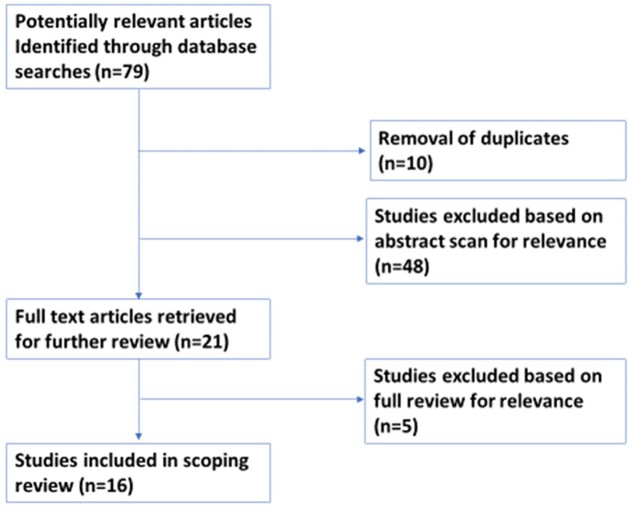
Globally, the use of mobile phones for improving access to healthcare and conducting health research has gained traction in recent years as rates of ownership increase, particularly in low- and middle-income countries (LMICs). Mobile instant messaging applications, including WhatsApp Messenger, provide new and affordable opportunities for health research across time and place, potentially addressing the challenges of maintaining contact and participation involved in research with migrant and mobile populations, for example. However, little is known about the opportunities and challenges associated with the use of WhatsApp as a tool for health research. To inform our study, we conducted a scoping review of published health research that uses WhatsApp as a data collection tool. A key reason for focusing on WhatsApp is the ability to retain contact with participants when they cross international borders. Five key public health databases were searched for articles containing the words ‘WhatsApp’ and ‘health research’ in their titles and abstracts. We identified 69 articles, 16 of which met our inclusion criteria for review. We extracted data pertaining to the characteristics of the research. Across the 16 studies—11 of which were based in LMICs—WhatsApp was primarily used in one of two ways. In the eight quantitative studies identified, seven used WhatsApp to send hyperlinks to online surveys. With one exception, the eight studies that employed a qualitative (n = 6) or mixed-method (n = 2) design analysed the WhatsApp content generated through a WhatsApp-based programmatic intervention. We found a lack of attention paid to research ethics across the studies, which is concerning given the controversies WhatsApp has faced with regard to data protection in relation to end-to-end encryption. We provide recommendations to address these issues for researchers considering using WhatsApp as a data collection tool over time and place.
Keywords: Mobile instant messaging; Sub-Saharan Africa; WhatsApp; health systems research; low- and middle-income countries; migrant and mobile populations.
© The Author(s) 2021. Published by Oxford University Press in association with The London School of Hygiene and Tropical Medicine.
Figures
References
-
- Agarwal S, Lefevre AE, Lee J, WHO mHealth Technical Evidence Review Group et al. 2016. Guidelines for reporting of health interventions using mobile phones: mobile health (mHealth) evidence reporting and assessment (mERA) checklist. BMJ (Clinical Research ed.) 352: i1174. - PubMed
-
- Ahmed A, Vandrevala T, Hendy J, Kelly C, Ala A.. 2019. An examination of how to engage migrants in the research process: building trust through an ‘insider’ perspective. Ethnicity & Health 1–20. - PubMed
-
- Alencar A. 2020. Mobile communication and refugees: an analytical review of academic literature. Sociology Compass 14: e12802.
-
- Alencar A, Kondova K, Ribbens W.. 2019. The smartphone as a lifeline: an exploration of refugees’ use of mobile communication technologies during their flight. Media, Culture & Society 41: 828–44.
-
- Almenara-Niebla S, Ascanio-Sánchez C.. 2020. Connected Sahrawi refugee diaspora in Spain: gender, social media and digital transnational gossip. European Journal of Cultural Studies 23: 768–83.
Publication types
MeSH terms
Grants and funding
LinkOut - more resources
Full Text Sources
Other Literature Sources
Miscellaneous
