


Comparative Efficacy and Acceptability of Psychotherapies for Self-harm and Suicidal Behavior Among Children and Adolescents: A Systematic Review and Network Meta-analysis
- PMID: 33861328
- PMCID: PMC8052594
- DOI: 10.1001/jamanetworkopen.2021.6614
Comparative Efficacy and Acceptability of Psychotherapies for Self-harm and Suicidal Behavior Among Children and Adolescents: A Systematic Review and Network Meta-analysis
Abstract
Importance: Self-harm and suicidal behavior are associated with substantial morbidity and mortality among children and adolescents. The comparative performance of psychotherapies for suicidality is unclear because few head-to-head clinical trials have been conducted.
Objective: To compare the efficacy of psychotherapies for the treatment of self-harm and suicidality among children and adolescents.
Data sources: Four major bibliographic databases (PubMed, MEDLINE, PsycINFO, and Embase) were searched for clinical trials comparing psychotherapy with control conditions from inception to September 2020.
Study selection: Randomized clinical trials comparing psychotherapies for suicidality and/or self-harm with control conditions among children and adolescents were included after a blinded review by 3 independent reviewers (A.B., M.P., and J.W.).
Data extraction and synthesis: The Preferred Reporting Items for Systematic Reviews and Meta-analyses (PRISMA) reporting guideline was followed for data abstraction, and the Cochrane risk of bias tool was used to evaluate study-level risk of bias. Data abstraction was performed by 1 reviewer (A.B.) and confirmed by 2 independent blinded reviewers (J.W. and M.P.). Data were analyzed from October 15, 2020, to February 15, 2021.
Main outcomes and measures: The primary outcomes were dichotomized self-harm and retention in treatment. The secondary outcomes were dichotomized all-cause treatment discontinuation and scores on instruments measuring suicidal ideation and depressive symptoms. Effect sizes were pooled using frequentist random-effects network meta-analysis models to generate summary odds ratios (ORs) and Cohen d standardized mean differences (SMDs). Negative Cohen d SMDs or ORs less than 1 indicated that the treatment reduced the parameter of interest relative to the control condition (eg, signifying a beneficial association with suicidal ideation).
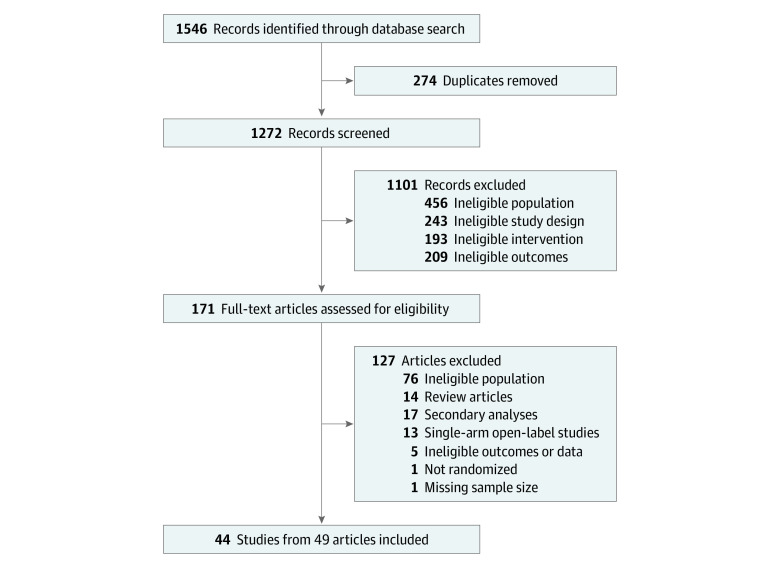
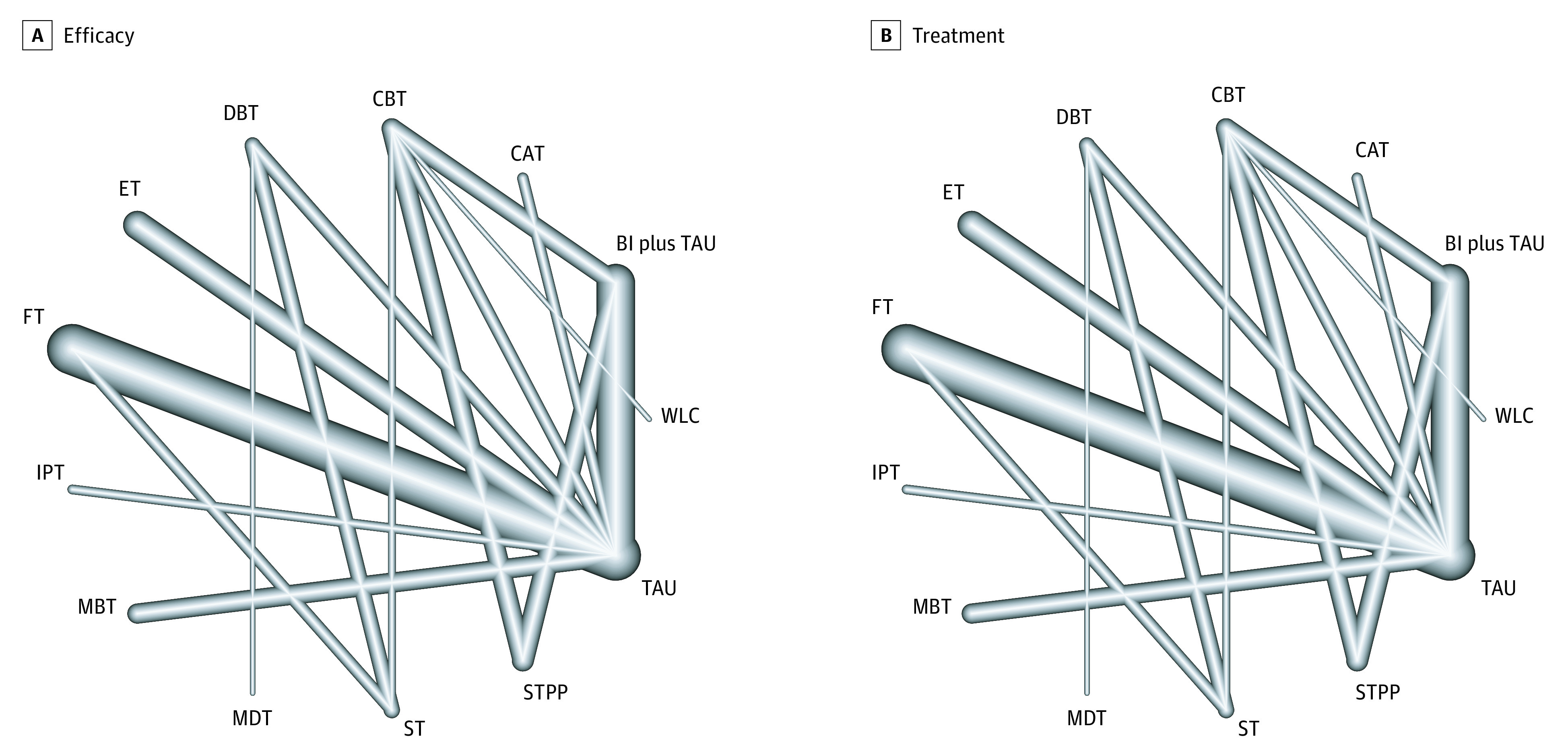
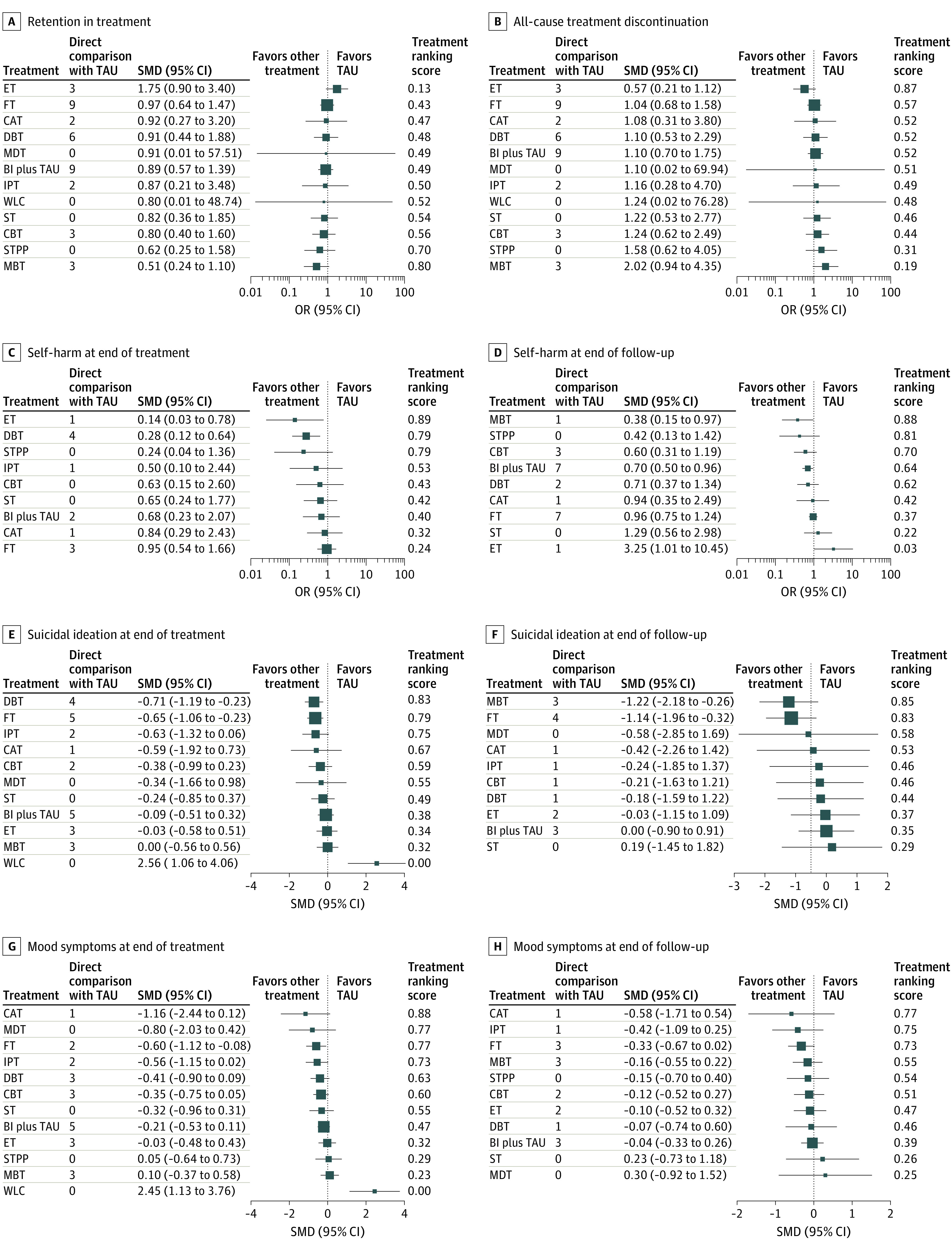
Results: The systematic search generated 1272 unique records. Of those, 44 randomized clinical trials (5406 total participants; 4109 female participants [76.0%]) from 49 articles were selected (5 follow-up studies were merged with their primary clinical trials to avoid publication bias). The selected clinical trials spanned January 1, 1995, to December 31, 2020. The median duration of treatment was 3 months (range, 0.25-12.00 months), and the median follow-up period was 12 months (range, 1-36 months). None of the investigated psychotherapies were associated with increases in study withdrawals or improvements in retention in treatment compared with treatment as usual. Dialectical behavioral therapies were associated with reductions in self-harm (OR, 0.28; 95% CI, 0.12-0.64) and suicidal ideation (Cohen d SMD, -0.71; 95% CI, -1.19 to -0.23) at the end of treatment, while mentalization-based therapies were associated with decreases in self-harm (OR, 0.38; 95% CI, 0.15-0.97) and suicidal ideation (Cohen d SMD, -1.22; 95% CI, -2.18 to -0.26) at the end of follow-up. The quality of evidence was downgraded because of high risk of bias overall, heterogeneity, publication bias, inconsistency, and imprecision.
Conclusions and relevance: Although some psychotherapeutic modalities appear to be acceptable and efficacious for reducing self-harm and suicidality among children and adolescents, methodological issues and high risk of bias prevent a consistent estimate of their comparative performance.
Conflict of interest statement
Figures
References
-
- Kothgassner OD, Robinson K, Goreis A, Ougrin D, Plener PL. Does treatment method matter? a meta-analysis of the past 20 years of research on therapeutic interventions for self-harm and suicidal ideation in adolescents. Borderline Personal Disord Emot Dysregul. 2020;7(1):9. doi: 10.1186/s40479-020-00123-9 - DOI - PMC - PubMed
Publication types
MeSH terms
LinkOut - more resources
Full Text Sources
Other Literature Sources
Medical
