


Critical carE Database for Advanced Research (CEDAR): An automated method to support intensive care units with electronic health record data
- PMID: 33862230
- PMCID: PMC8187305
- DOI: 10.1016/j.jbi.2021.103789
Critical carE Database for Advanced Research (CEDAR): An automated method to support intensive care units with electronic health record data
Abstract
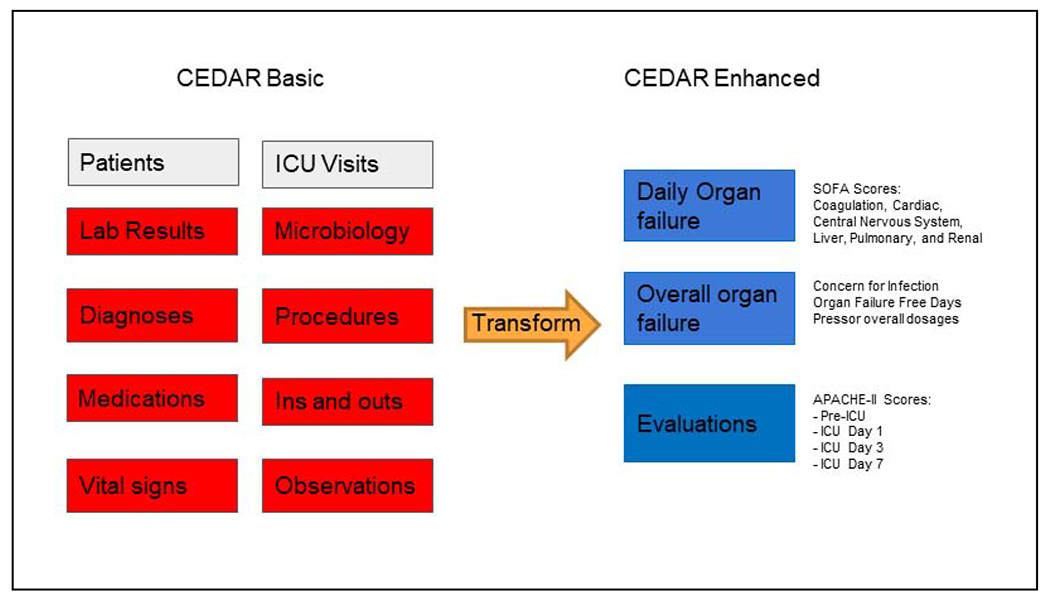
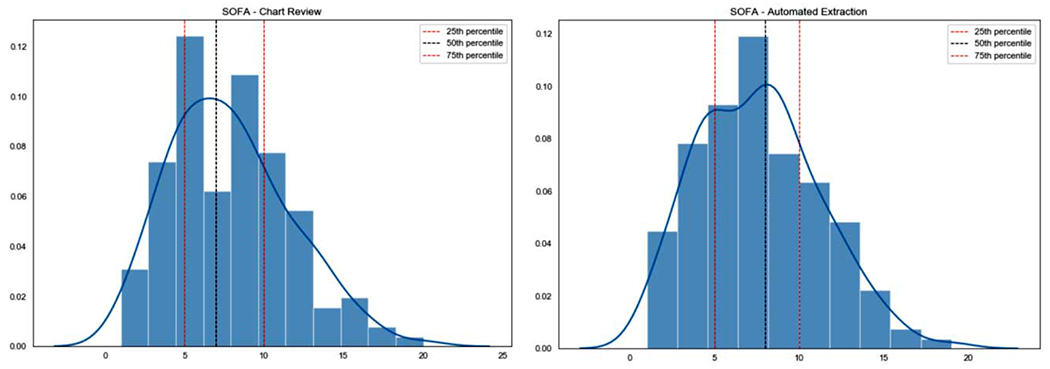
Patients treated in an intensive care unit (ICU) are critically ill and require life-sustaining organ failure support. Existing critical care data resources are limited to a select number of institutions, contain only ICU data, and do not enable the study of local changes in care patterns. To address these limitations, we developed the Critical carE Database for Advanced Research (CEDAR), a method for automating extraction and transformation of data from an electronic health record (EHR) system. Compared to an existing gold standard of manually collected data at our institution, CEDAR was statistically similar in most measures, including patient demographics and sepsis-related organ failure assessment (SOFA) scores. Additionally, CEDAR automated data extraction obviated the need for manual collection of 550 variables. Critically, during the spring 2020 COVID-19 surge in New York City, a modified version of CEDAR supported pandemic response efforts, including clinical operations and research. Other academic medical centers may find value in using the CEDAR method to automate data extraction from EHR systems to support ICU activities.
Keywords: COVID-19; Intensive care unit; Secondary use of electronic health record data.
Copyright © 2021 Elsevier Inc. All rights reserved.
Conflict of interest statement
Declaration of interests
The authors declare that they have no known competing financial interests or personal relationships that could have appeared to influence the work reported in this paper.
Figures
References
Publication types
MeSH terms
Grants and funding
LinkOut - more resources
Full Text Sources
Other Literature Sources
Medical
