Identification of a novel subset of alveolar type 2 cells enriched in PD-L1 and expanded following pneumonectomy
- PMID: 33863742
- PMCID: PMC8859978
- DOI: 10.1183/13993003.04168-2020
Identification of a novel subset of alveolar type 2 cells enriched in PD-L1 and expanded following pneumonectomy
Abstract
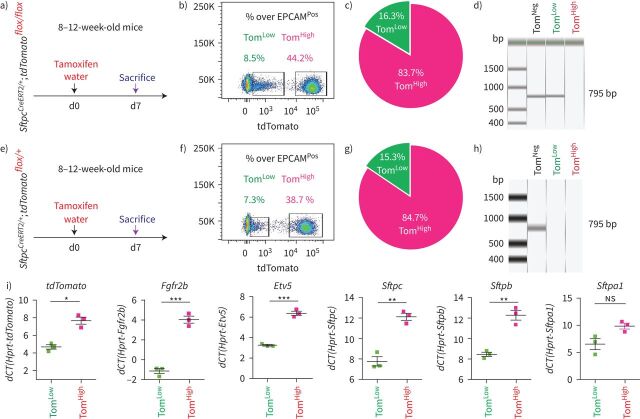
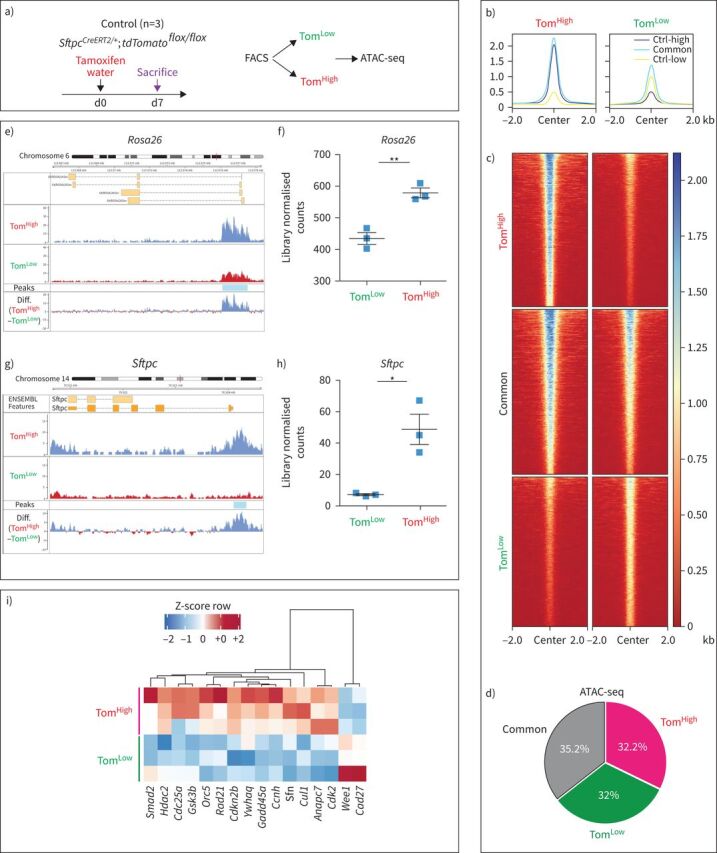
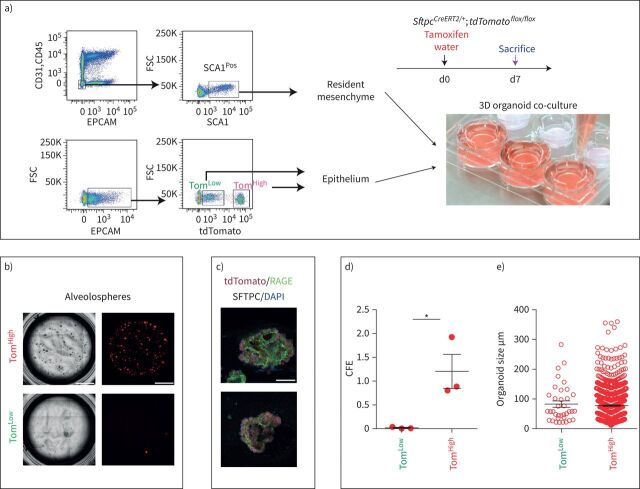
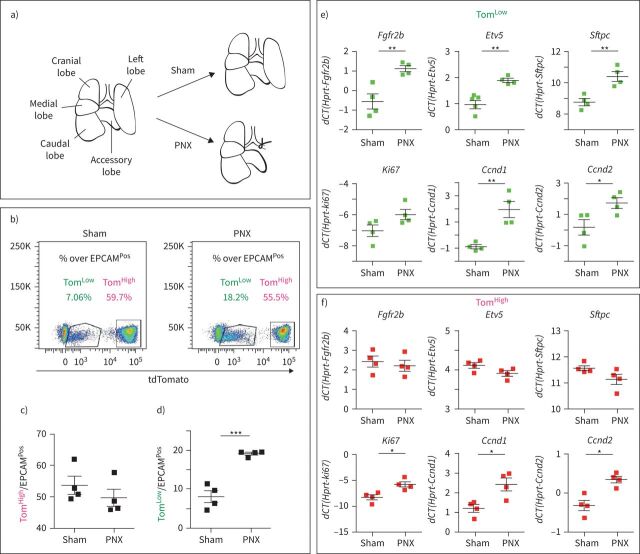
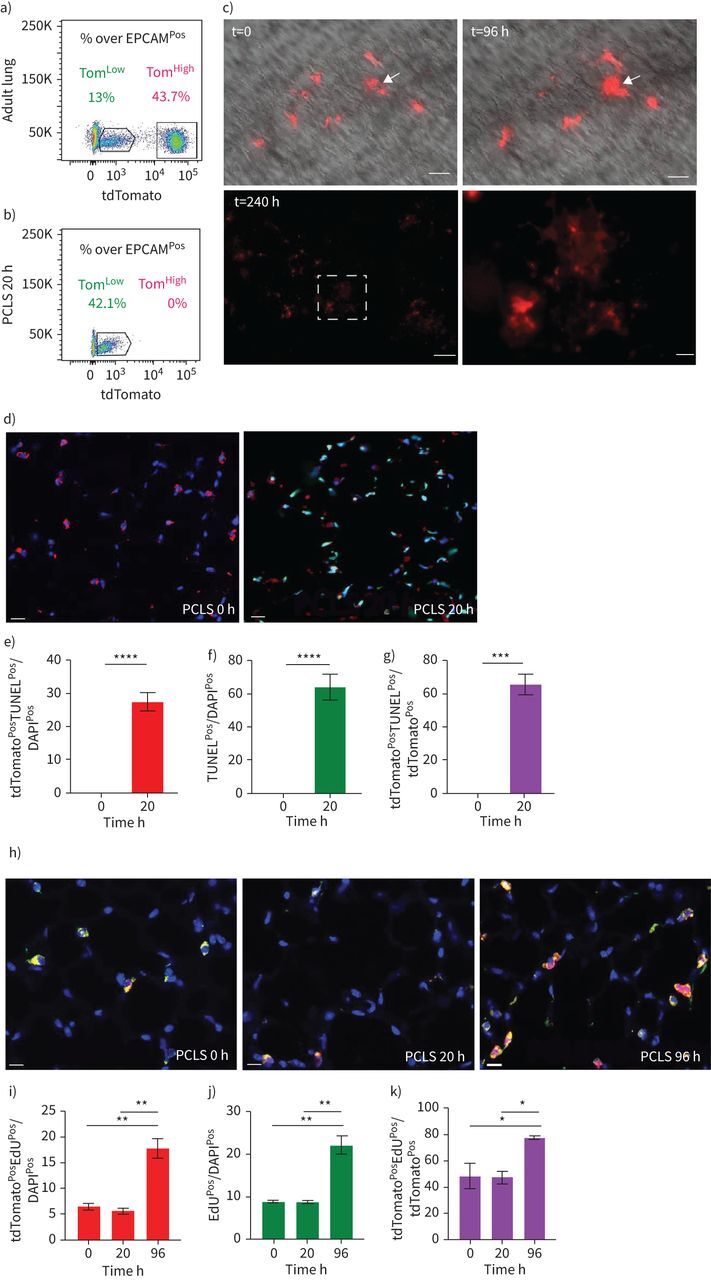
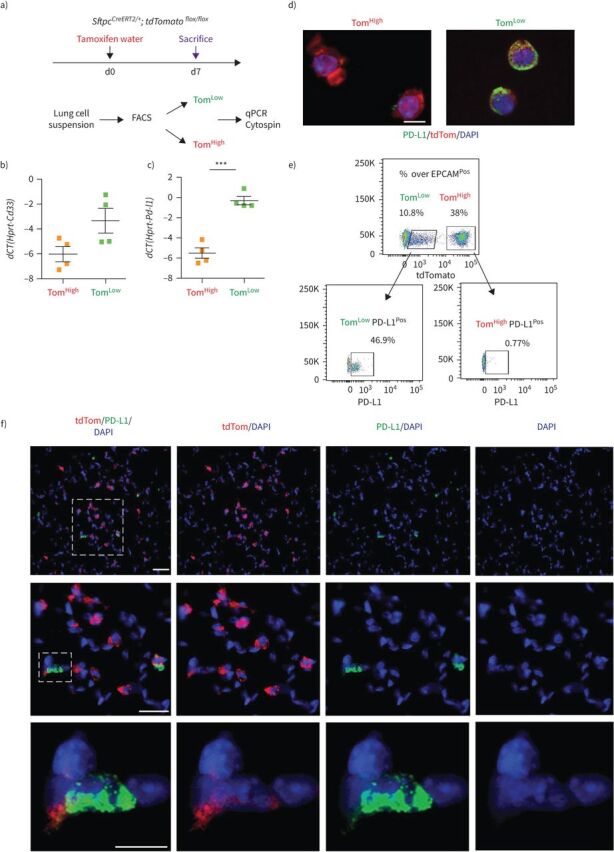
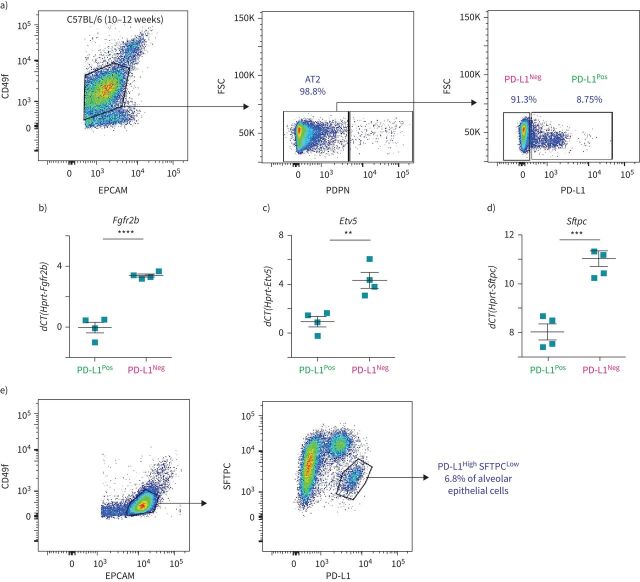
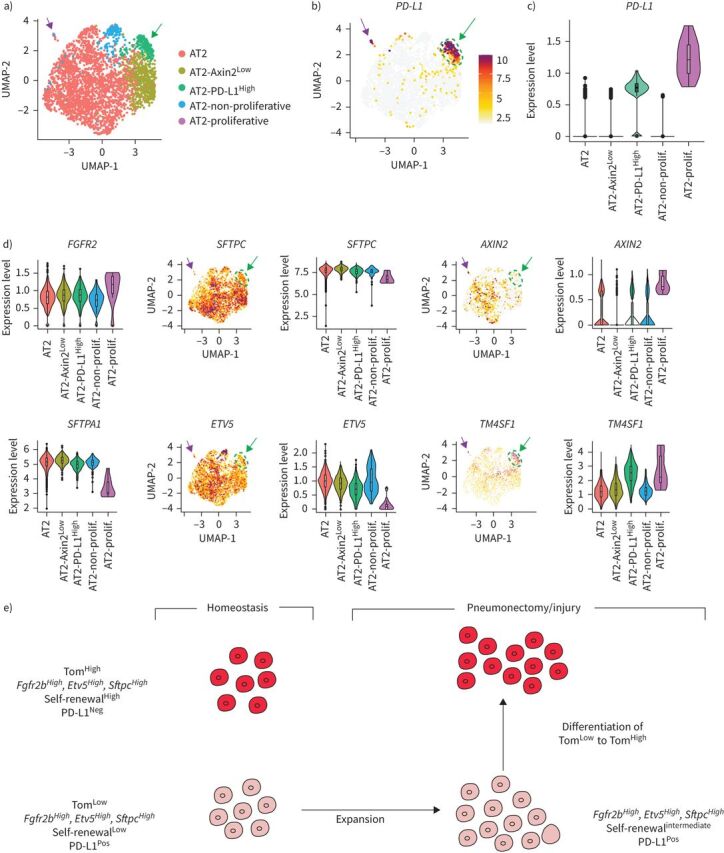
Alveolar type 2 (AT2) cells are heterogeneous cells, with specialised AT2 subpopulations within this lineage exhibiting stem cell properties. However, the existence of quiescent, immature cells within the AT2 lineage that are activated during lung regeneration is unknown.SftpcCreERT2/+;tdTomatoflox/flox mice were used for the labelling of AT2 cells and labelled subpopulations were analysed by flow cytometry, quantitative PCR, assay for transposase-accessible chromatin using sequencing (ATAC-seq), gene arrays, pneumonectomy and culture of precision-cut lung slices. Single-cell RNA-sequencing (scRNA-seq) data from human lungs were analysed.In mice, we detected two distinct AT2 subpopulations, with low tdTomato level (TomLow) and high tdTomato level (TomHigh). TomLow cells express lower levels of the AT2 differentiation markers Fgfr2b and Etv5, while TomHigh, as bona fide mature AT2 cells, show higher levels of Sftpc, Sftpb, Sftpa1, Fgfr2b and Etv5 expression. ATAC-seq analysis indicates that TomLow and TomHigh cells constitute two distinct cell populations, with specific silencing of Sftpc, Rosa26 and cell cycle gene loci in the TomLow population. Upon pneumonectomy, the number of TomLow but not TomHigh cells increases and TomLow cells show upregulated expression of Fgfr2b, Etv5, Sftpc, Ccnd1 and Ccnd2 compared to Sham. TomLow cells overexpress programmed cell death 1 ligand 1 (PD-L1), an immune inhibitory membrane receptor ligand, which is used by flow cytometry to differentially isolate these two subpopulations. In the human lung, data mining of a recent scRNA-seq AT2 data set demonstrates the existence of a PD-L1 Pos population. Therefore, we have identified a novel population of AT2 quiescent, immature progenitor cells in mouse that expand upon pneumonectomy and we have provided evidence for the existence of such cells in human.
Copyright ©The authors 2021.
Conflict of interest statement
Conflict of interest: N. Ahmadvand has nothing to disclose. Conflict of interest: F. Khosravi has nothing to disclose. Conflict of interest: A. Lingampally has nothing to disclose. Conflict of interest: R. Wasnick has nothing to disclose. Conflict of interest: I. Vasquez-Armendariz has nothing to disclose. Conflict of interest: G. Carraro has nothing to disclose. Conflict of interest: M. Heiner has nothing to disclose. Conflict of interest: S. Rivetti has nothing to disclose. Conflict of interest: Y. Lv has nothing to disclose. Conflict of interest: J. Wilhelm has nothing to disclose. Conflict of interest: A. Gunther has nothing to disclose. Conflict of interest: S. Herold has nothing to disclose. Conflict of interest: D. Al Alam has nothing to disclose. Conflict of interest: C. Chen has nothing to disclose. Conflict of interest: P. Minoo has nothing to disclose. Conflict of interest: J-S. Zhang has nothing to disclose. Conflict of interest: S. Bellusci has nothing to disclose.
Figures
Comment in
-
PD-L1high AT2 cells: a new player for alveoli regeneration.Eur Respir J. 2021 Nov 4;58(5):2101417. doi: 10.1183/13993003.01417-2021. Print 2021 Oct. Eur Respir J. 2021. PMID: 34737193 No abstract available.
References
Publication types
MeSH terms
Substances
Grants and funding
LinkOut - more resources
Full Text Sources
Other Literature Sources
Molecular Biology Databases
Research Materials
Miscellaneous