


Habitat loss and the risk of disease outbreak
- PMID: 33867599
- PMCID: PMC8041730
- DOI: 10.1016/j.jeem.2021.102451
Habitat loss and the risk of disease outbreak
Abstract
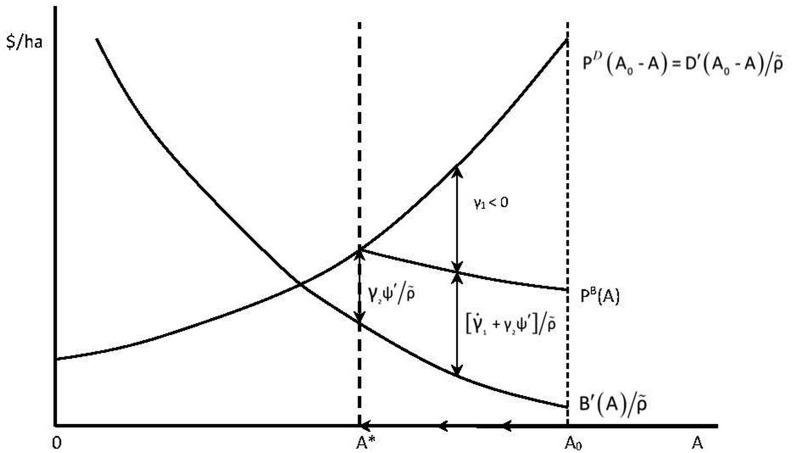
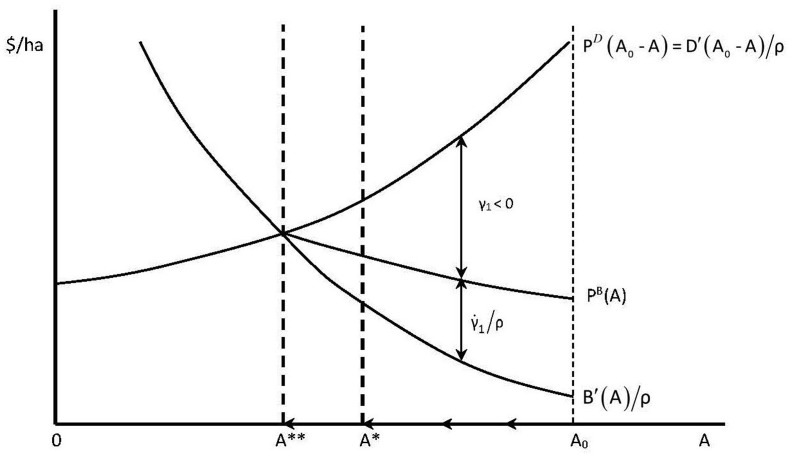
Evidence suggests that emerging infectious diseases, such as COVID-19, originate from wildlife species, and that land-use change is an important pathway for pathogen transmission to humans. We first focus on zoonotic disease spillover and the rate at which primary human cases appear, demonstrating that a potential outbreak is directly related to the area of wildlife habitat. We then develop a model of the costs and benefits of land conversion that includes the effect of habitat size on the risk of disease outbreak. Our model and numerical simulations show that incorporating this risk requires more wildlife habitat conservation in the long run, and how much more should be conserved will depend on the initial habitat size. If the area is too small, then no conversion should take place. Any policy to control habitat loss, such as a tax imposed on the rents from converted land, should also vary with habitat area.
Keywords: COVID-19; Disease; Habitat conversion; Land use; Risk; Wildlife; Zoonosis.
© 2021 Elsevier Inc. All rights reserved.
Conflict of interest statement
The author declares no conflict of interest. There are also no funding sources associated with this paper that need to be disclosed.
Figures
References
-
- Augeraud-Véron E., Fabbri G., Schubert K. Prevention and mitigation of epidemics: biodiversity conservation and confinement policies. J. Math. Econ. 2021;93:102484.
-
- Barbier E.B. Cambridge University Press; Cambridge and New York: 2011. Capitalizing on Nature: Ecosystems as Natural Assets.
-
- Barbier E.B., Burgess J.C. The economics of tropical forest land use options. Land Econ. 1997;73:174–195.
LinkOut - more resources
Full Text Sources
Other Literature Sources