


An epidemiological model with voluntary quarantine strategies governed by evolutionary game dynamics
- PMID: 33867699
- PMCID: PMC8044925
- DOI: 10.1016/j.chaos.2020.110616
An epidemiological model with voluntary quarantine strategies governed by evolutionary game dynamics
Abstract
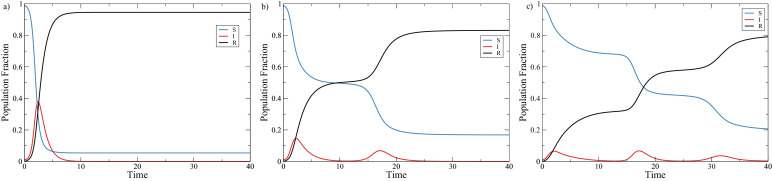
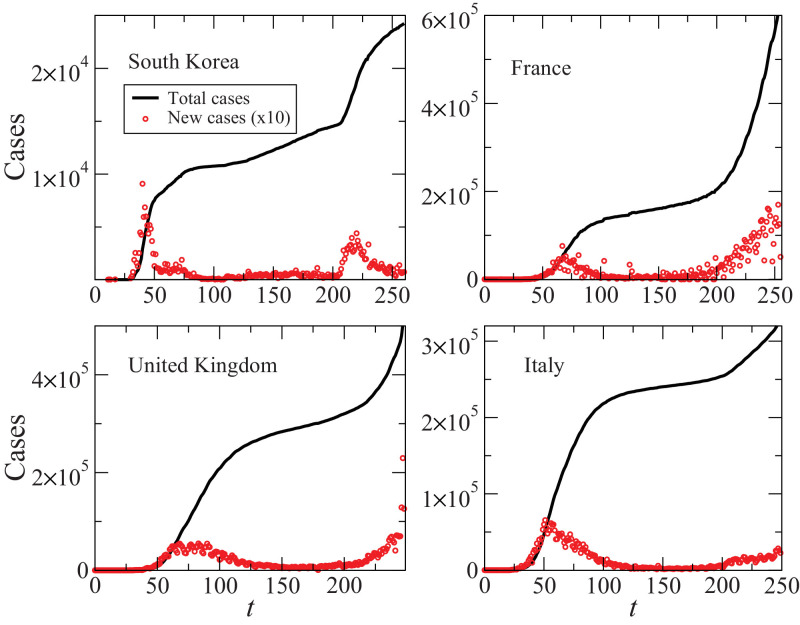
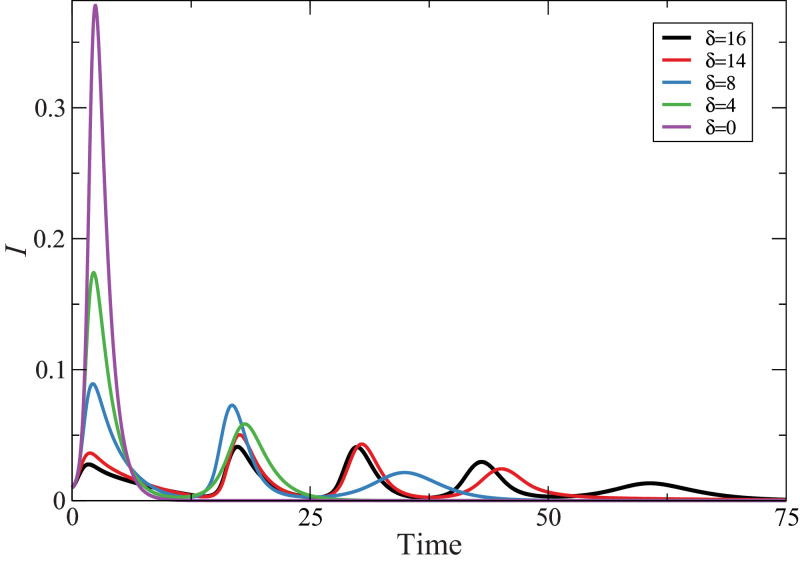
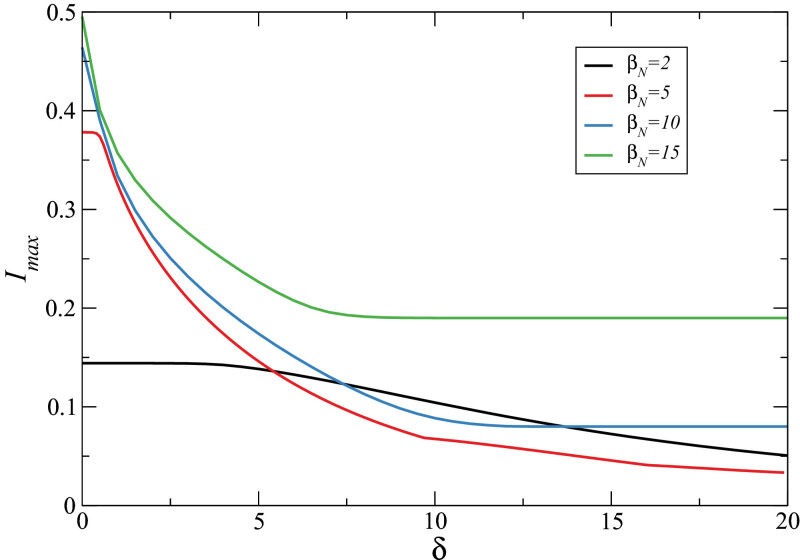
During pandemic events, strategies such as social distancing can be fundamental to reduce simultaneous infections and mitigate the disease spreading, which is very relevant to the risk of a healthcare system collapse. Although these strategies can be recommended, or even imposed, their actual implementation may depend on the population perception of the risks associated with a potential infection. The current COVID-19 crisis, for instance, is showing that some individuals are much more prone than others to remain isolated. To better understand these dynamics, we propose an epidemiological SIR model that uses evolutionary game theory for combining in a single process social strategies, individual risk perception, and viral spreading. In particular, we consider a disease spreading through a population, whose agents can choose between self-isolation and a lifestyle careless of any epidemic risk. The strategy adoption is individual and depends on the perceived disease risk compared to the quarantine cost. The game payoff governs the strategy adoption, while the epidemic process governs the agent's health state. At the same time, the infection rate depends on the agent's strategy while the perceived disease risk depends on the fraction of infected agents. Our results show recurrent infection waves, which are usually seen in previous historic epidemic scenarios with voluntary quarantine. In particular, such waves re-occur as the population reduces disease awareness. Notably, the risk perception is found to be fundamental for controlling the magnitude of the infection peak, while the final infection size is mainly dictated by the infection rates. Low awareness leads to a single and strong infection peak, while a greater disease risk leads to shorter, although more frequent, peaks. The proposed model spontaneously captures relevant aspects of a pandemic event, highlighting the fundamental role of social strategies.
Keywords: Epidemic spreading; Game theory; SIR model; Voluntary quarantine.
© 2020 Elsevier Ltd. All rights reserved.
Conflict of interest statement
The authors declare that they have no known competing financial interests or personal relationships that could have appeared to influence the work reported in this paper.
Figures
References
-
- Manfredi P., D’Onofrio A. Springer; New York, New York, NY: 2013. Modeling the interplay between human behavior and the spread of infectious diseases. - DOI
-
- Keeling M.J., Rohani P. Princeton University Press; 2011. Modeling infectious diseases in humans and animals. - DOI
-
- University J.H.. Coronavirus resource center. 2020. https://coronavirus.jhu.edu/map.html, [Online; accessed 22-June-2020].
LinkOut - more resources
Full Text Sources
Other Literature Sources
