Natural Recovery by the Liver and Other Organs after Chronic Alcohol Use
- PMID: 33868869
- PMCID: PMC8041137
- DOI: 10.35946/arcr.v41.1.05
Natural Recovery by the Liver and Other Organs after Chronic Alcohol Use
Abstract
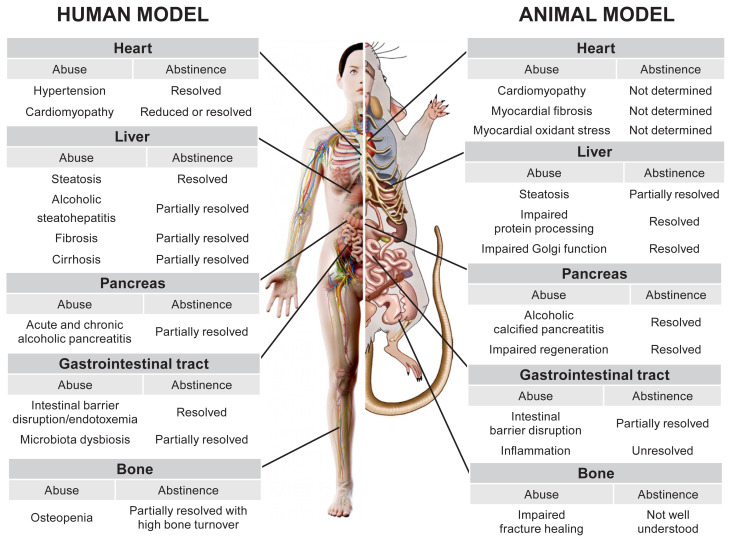
Chronic, heavy alcohol consumption disrupts normal organ function and causes structural damage in virtually every tissue of the body. Current diagnostic terminology states that a person who drinks alcohol excessively has alcohol use disorder. The liver is especially susceptible to alcohol-induced damage. This review summarizes and describes the effects of chronic alcohol use not only on the liver, but also on other selected organs and systems affected by continual heavy drinking-including the gastrointestinal tract, pancreas, heart, and bone. Most significantly, the recovery process after cessation of alcohol consumption (abstinence) is explored. Depending on the organ and whether there is relapse, functional recovery is possible. Even after years of heavy alcohol use, the liver has a remarkable regenerative capacity and, following alcohol removal, can recover a significant portion of its original mass and function. Other organs show recovery after abstinence as well. Data on studies of both heavy alcohol use among humans and animal models of chronic ethanol feeding are discussed. This review describes how (or whether) each organ/tissue metabolizes ethanol, as metabolism influences the organ's degree of injury. Damage sustained by the organ/tissue is reviewed, and evidence for recovery during abstinence is presented.
Keywords: alcohol; alcohol abstinence; alcohol cessation; alcohol use disorder; alcohol-associated liver disease; alcoholic cardiomyopathy; alcoholic pancreatitis.
Conflict of interest statement
Financial Disclosures The authors declare no competing financial or nonfinancial interests.
Figures
References
Publication types
MeSH terms
Substances
Grants and funding
LinkOut - more resources
Full Text Sources
Other Literature Sources
Medical