


Child Mental Health in HIV-Impacted Low-Resource Settings in Developing Countries-Global Research Fellowship: A Research Training Program Protocol
- PMID: 33869129
- PMCID: PMC8046935
- DOI: 10.3389/fpubh.2021.632800
Child Mental Health in HIV-Impacted Low-Resource Settings in Developing Countries-Global Research Fellowship: A Research Training Program Protocol
Abstract
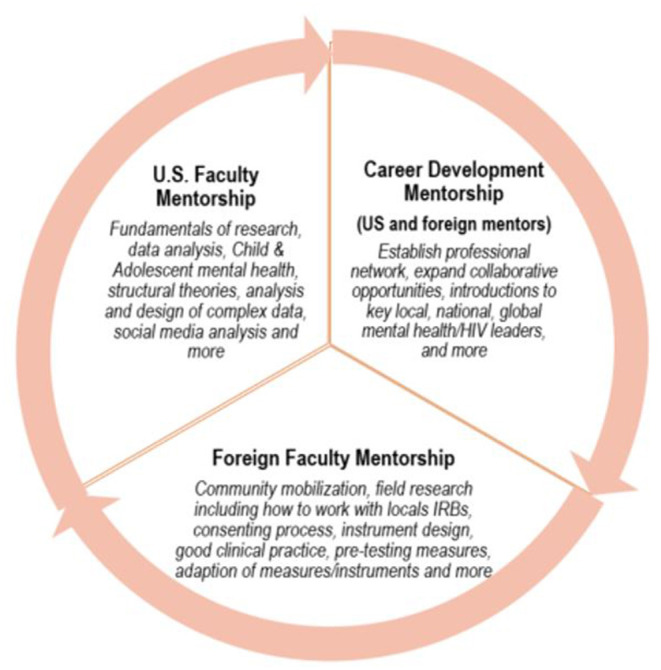
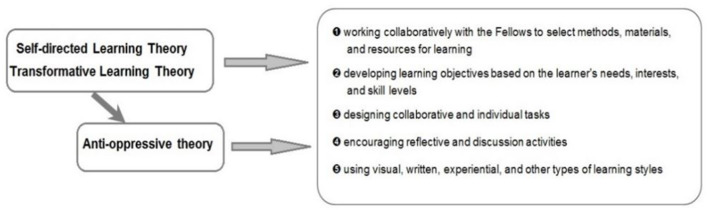
Background: Uganda has one of the highest HIV/AIDS rates and poor mental health services. Children and adolescents in communities with persistent poverty, disease (including HIV/AIDS), and violence, are more likely to suffer from chronic mental health problems. Combined, these characteristics negatively impact communities' response to HIV and mental health beginning with children, adolescents, and young adults. Yet, there is limited research capacity in child and adolescent mental health (CAMH), especially in the HIV/AIDS context in Uganda. Hence, this NIH-funded research training program aims to: (1) train three cohorts of early-career investigators at universities or research institutions in Uganda; (2) connect fellows with committed mentors; and (3) define key factors for successful mentorship and training of new investigators. Methods: CHILD-GRF is a multi-component program that engages selected young investigators in year-round activities for 3 years. Paired with mentors from Washington University in St. Louis and academic institutions in Uganda, fellows participate in a 6-week intensive summer training each year. Year 1 focuses on didactic learning and mentorship. In Year 2, fellows design and conduct their pilot study. Year 3 is devoted to presenting pilot study findings, manuscript preparation/ submission and extramural grant writing. Discussion: CHILD-GRF seeks to provide a solid foundation for the development and implementation of evidence-based HIV prevention and mental health interventions for youth and families impacted by HIV/AIDS. By producing a sustainable network of well-trained individuals in key research institutions, this program contributes to improving CAMH and HIV prevention efforts, both of which have public health implications.
Keywords: HIV; Sub-Saharan Africa; mental health; research capacity; training.
Copyright © 2021 Ssewamala, Sensoy Bahar, Nakasujja, Abente, Nabunya, Peer, Zmachinski, Fragale and McKay.
Conflict of interest statement
The authors declare that the research was conducted in the absence of any commercial or financial relationships that could be construed as a potential conflict of interest.
Figures
References
-
- UNAIDS . Gap report. Geneva: Joint United Nations Programme on HIV/AIDS. (2014). Available online at: http://www.unaids.org/en/resources/campaigns/2014/2014gapreport/gapreport
-
- UNAIDS . Global Report: UNAIDS Report on the Global AIDS Epidemic 2013. Geneva: Joint United Nations Programme on HIV/AIDS; (2013).
-
- Uganda AIDS Commission . HIV and AIDS Uganda Country Progress Report 2013. Kampala: Uganda AIDS Commission; (2015).
Publication types
MeSH terms
Grants and funding
LinkOut - more resources
Full Text Sources
Other Literature Sources
Medical
