


Bone morphogenic protein signaling in spinal cord injury
- PMID: 33869676
- PMCID: PMC8052099
- DOI: 10.20517/2347-8659.2020.34
Bone morphogenic protein signaling in spinal cord injury
Abstract
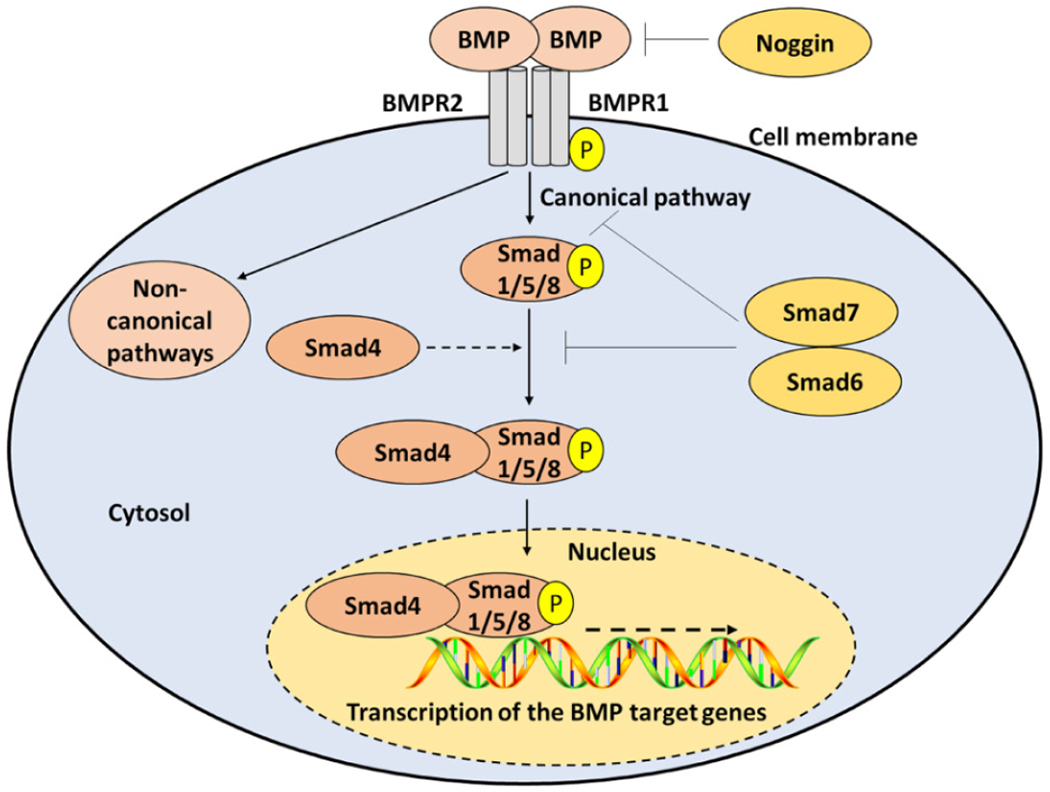
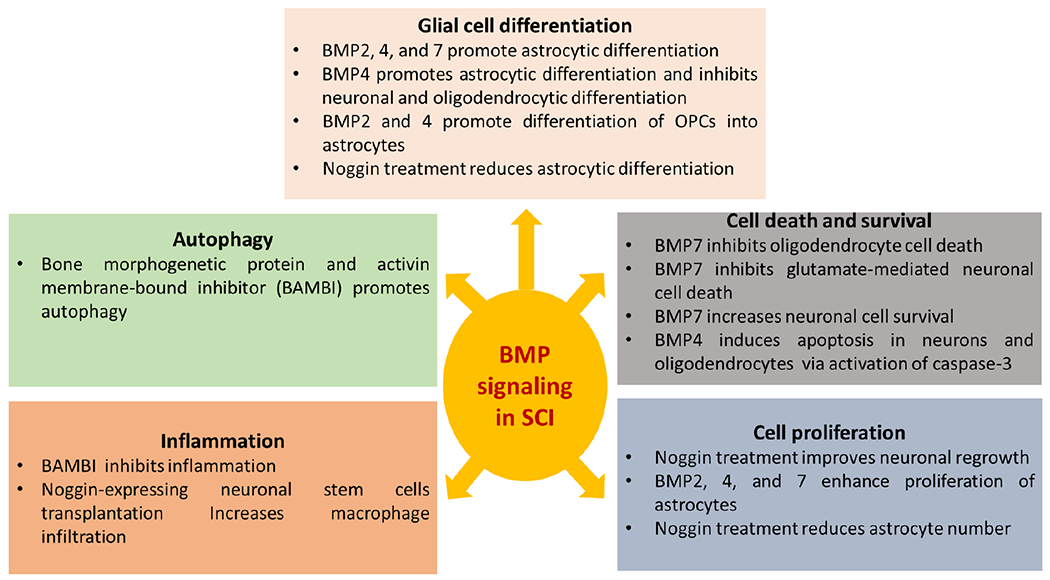
Spinal cord injury (SCI) is a debilitating injury that results from traumatic or non-traumatic insults to the spinal cord, causing significant impairment of the patient's activity and quality of life. Bone morphogenic proteins (BMPs) are a group of polyfunctional cytokines belonging to the transforming growth factor beta superfamily that regulates a wide variety of cellular functions in healthy and disease states. Recent studies suggest that dysregulation of BMP signaling is involved in neuronal demyelination and death after traumatic SCI. The focus of this article is to describe our current understanding of the role of BMP signaling in the regulation of cell fate, proliferation, apoptosis, autophagy, and inflammation in traumatic SCI. First, we will describe the expression of BMPs and pattern of BMP signaling before and after traumatic SCI in rodent models and in vitro. Next, we will discuss the role of BMP in the regulation of neuronal and glial cell differentiation, survival, functional recovery from traumatic SCI, and the gap in knowledge in this area that requires further investigation to improve SCI prognosis.
Keywords: Spinal cord injury; apoptosis; autophagy; bone morphogenic protein; differentiation; inflammation; proliferation.
Conflict of interest statement
Conflicts of interest Both authors declared that there are no conflicts of interest.
Figures
References
-
- Hagen EM, Rekand T, Gilhus NE, Grønning M. Traumatic spinal cord injuries - incidence, mechanisms and course. Tidsskr Nor Laegeforen 2012;132:831–7. - PubMed
Grants and funding
LinkOut - more resources
Full Text Sources
Miscellaneous