


Hidden suppressive interactions are common in higher-order drug combinations
- PMID: 33870144
- PMCID: PMC8044428
- DOI: 10.1016/j.isci.2021.102355
Hidden suppressive interactions are common in higher-order drug combinations
Abstract
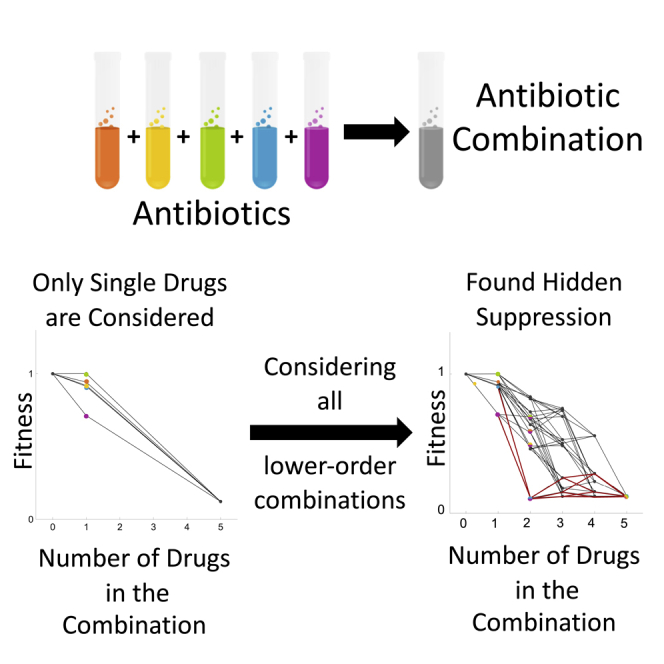
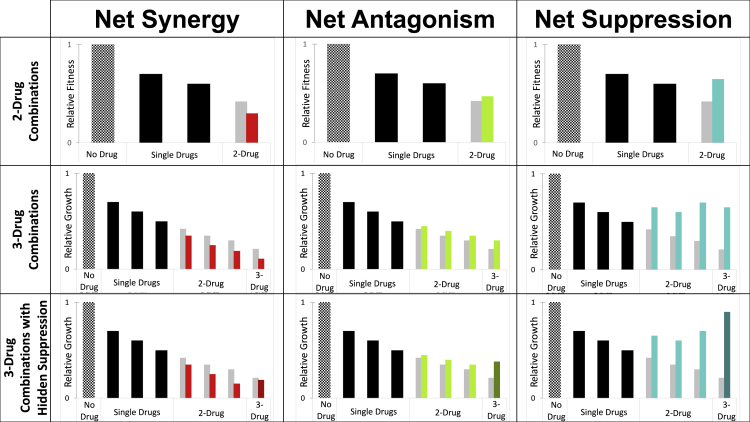
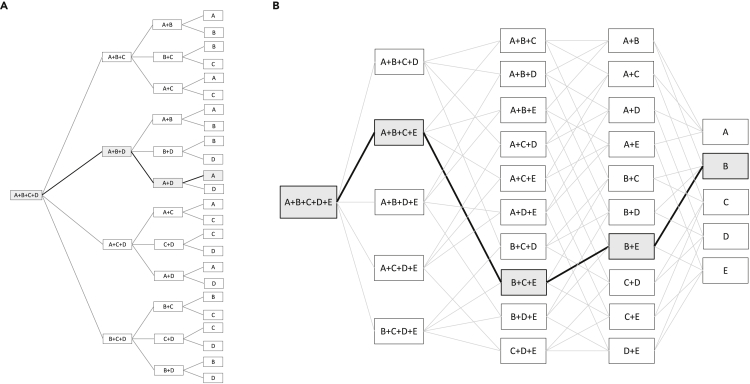
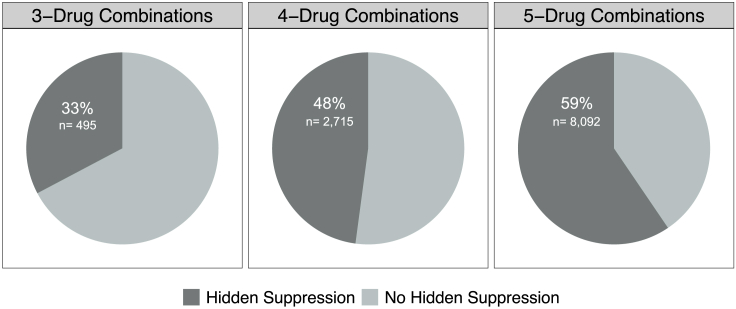
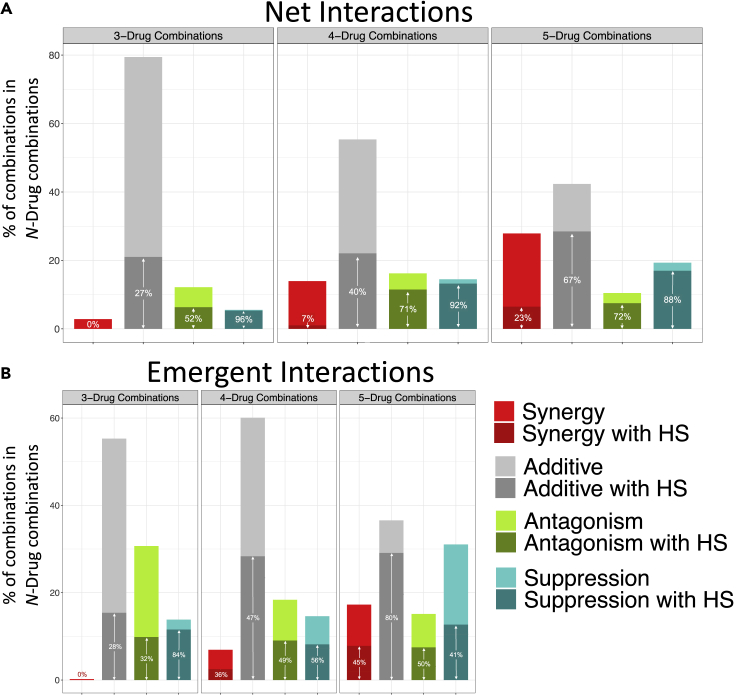
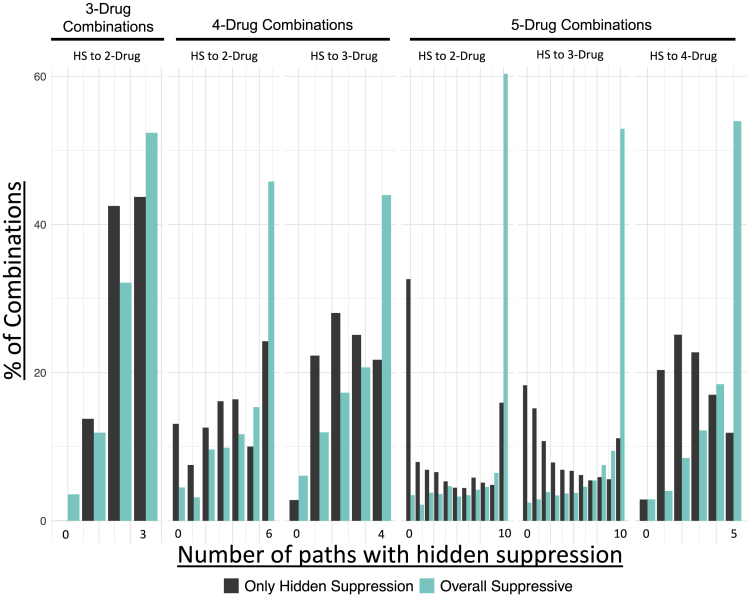
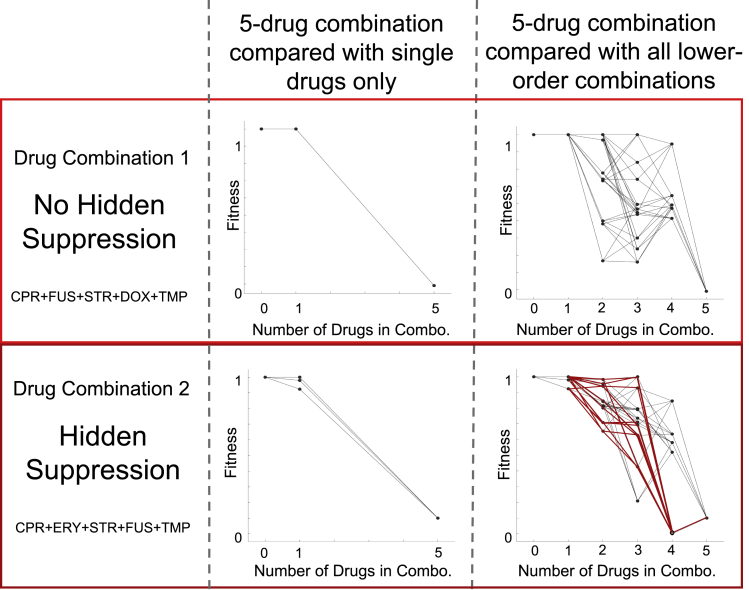
The rapid increase of multi-drug resistant bacteria has led to a greater emphasis on multi-drug combination treatments. However, some combinations can be suppressive-that is, bacteria grow faster in some drug combinations than when treated with a single drug. Typically, when studying interactions, the overall effect of the combination is only compared with the single-drug effects. However, doing so could miss "hidden" cases of suppression, which occur when the highest order is suppressive compared with a lower-order combination but not to a single drug. We examined an extensive dataset of 5-drug combinations and all lower-order-single, 2-, 3-, and 4-drug-combinations. We found that a majority of all combinations-54%-contain hidden suppression. Examining hidden interactions is critical to understanding the architecture of higher-order interactions and can substantially affect our understanding and predictions of the evolution of antibiotic resistance under multi-drug treatments.
Keywords: Microbiology; Systems Biology.
© 2021 The Author(s).
Conflict of interest statement
The authors declare no competing interests.
Figures

References
-
- Arya D., Chowdhury S., Chawla R., Das A., Ganie M.A., Kumar K.P., Nadkar M.Y., Rajput R. Clinical benefits of fixed dose combinations translated to improved patient compliance. J. Assoc. Physicians India. 2019;67:58. - PubMed
-
- Bendixsen D.P., Østman B., Hayden E.J. Negative epistasis in experimental RNA fitness landscapes. J. Mol. Evol. 2017;85:159–168. - PubMed
-
- Bliss C. The toxicity of poisons applied jointly. Ann. Appl. Biol. 1939;26:585–615.
Grants and funding
LinkOut - more resources
Full Text Sources
Other Literature Sources
