. 2021 Jun:133:104380.
doi: 10.1016/j.compbiomed.2021.104380. Epub 2021 Apr 15.

A unique view of SARS-CoV-2 through the lens of ORF8 protein

Affiliations

A unique view of SARS-CoV-2 through the lens of ORF8 protein

Sk Sarif Hassan et al. Comput Biol Med. 2021 Jun.

Abstract

Immune evasion is one of the unique characteristics of severe acute respiratory syndrome coronavirus 2 (SARS-CoV-2) attributed to its ORF8 protein. This protein modulates the adaptive host immunity through down-regulation of MHC-1 (Major Histocompatibility Complex) molecules and innate immune responses by surpassing the host's interferon-mediated antiviral response. To understand the host's immune perspective in reference to the ORF8 protein, a comprehensive study of the ORF8 protein and mutations possessed by it have been performed. Chemical and structural properties of ORF8 proteins from different hosts, such as human, bat, and pangolin, suggest that the ORF8 of SARS-CoV-2 is much closer to ORF8 of Bat RaTG13-CoV than to that of Pangolin-CoV. Eighty-seven mutations across unique variants of ORF8 in SARS-CoV-2 can be grouped into four classes based on their predicted effects (Hussain et al., 2021) [1]. Based on the geo-locations and timescale of sample collection, a possible flow of mutations was built. Furthermore, conclusive flows of amalgamation of mutations were found upon sequence similarity analyses and consideration of the amino acid conservation phylogenies. Therefore, this study seeks to highlight the uniqueness of the rapidly evolving SARS-CoV-2 through the ORF8.

Keywords: Mutational hotspots; ORF8; ORF8 evolution; Phylogenetics; Physicochemical properties; SARS-CoV-2.


Conflict of interest statement

All authors declare no conflict of interest.

Figures
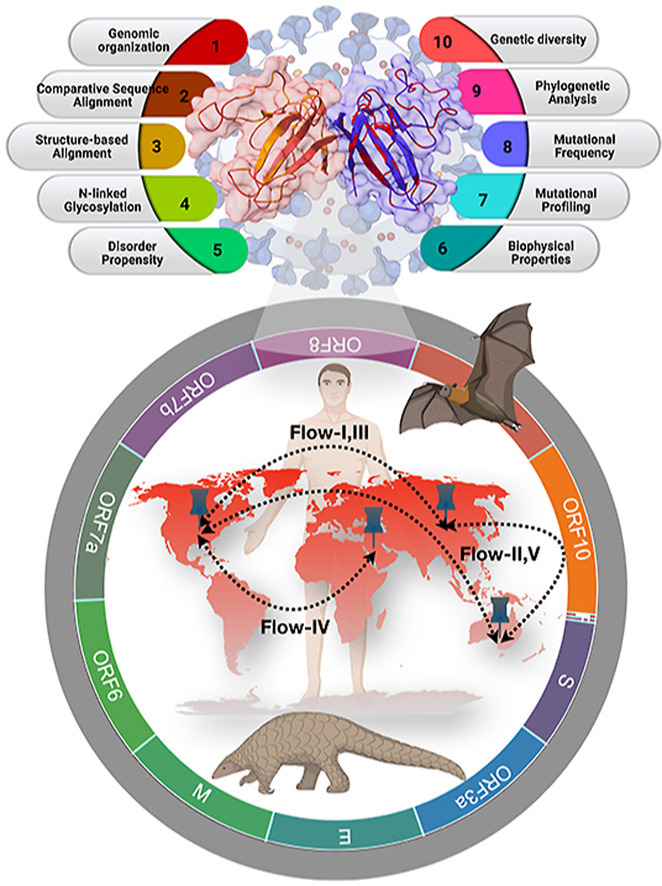
Image 1
Graphical abstract
Fig. 1
Fig. 1
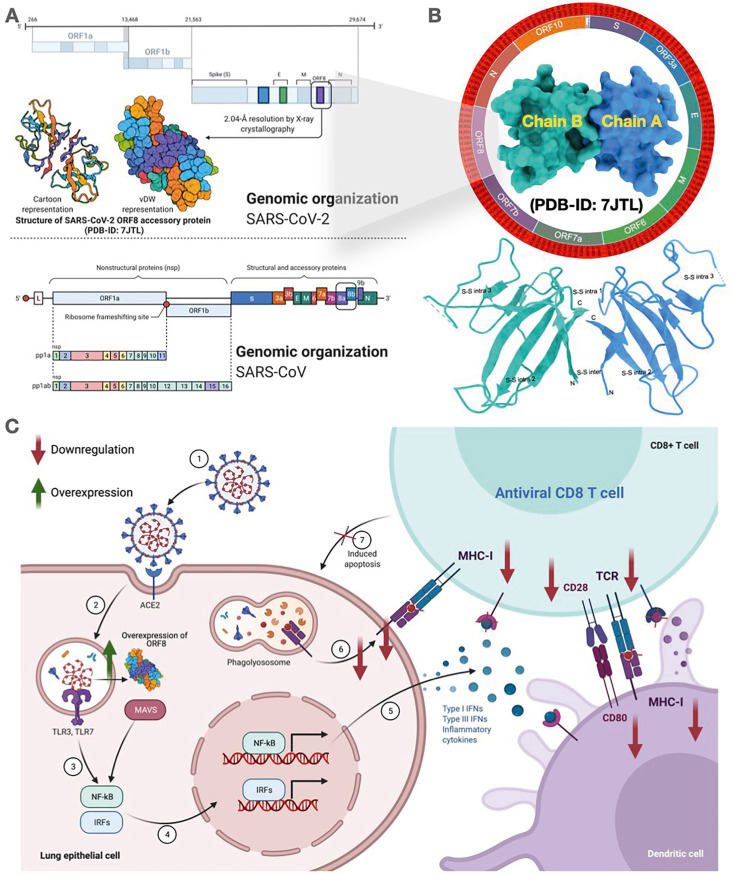
Landscape of ORF8 protein. (A) Genomic organization of SARS-CoV-2 genome highlighting the ORF8 region with vdW and cartoon representation of the ORF8 structure. (B) The SARS-CoV-2 ORF8 protein structure (surface representation) showing 2.04 Å resolution by X-ray crystallography bearing PDB ID: 7JTL. (Below) Schematic illustration of the ORF8 dimer structure (Chain A (blue) and B (turquoise)) depicting disulfide bonds showing both intermolecular and intramolecular bond pairing. (C) Schematic illustration of immune invasion mechanism of ORF8 overexpression that modulates downregulation MHC-1 complex. This figure was created with Biorender.com.
Fig. 2
Fig. 2
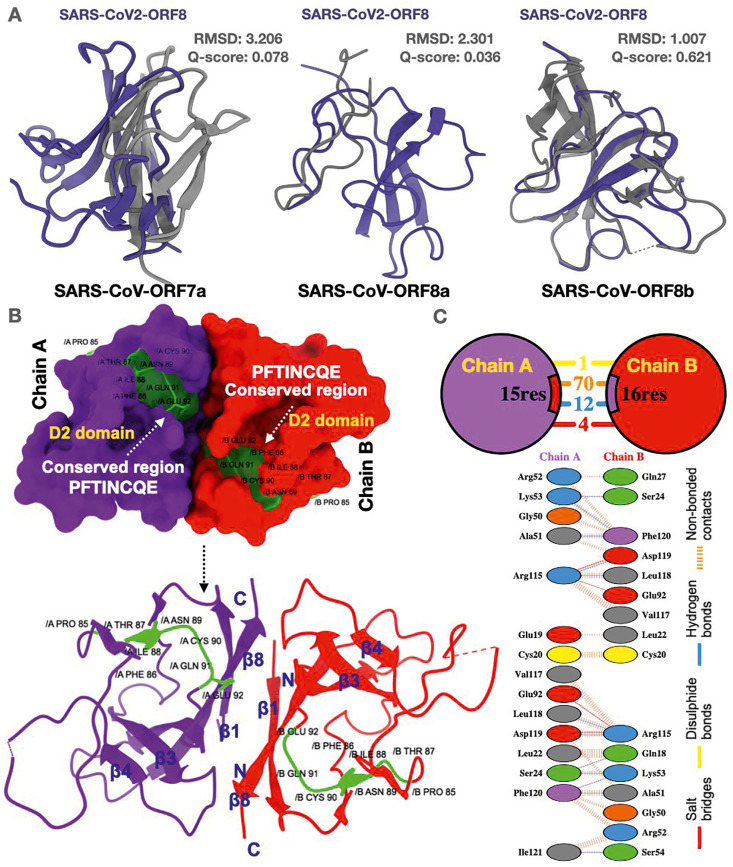
Structure-based alignment of SARS-CoV-2 ORF8. (A) Superimposition of SARS-CoV-2 ORF8 with SARS-CoV ORF7a, SARS-CoV ORF8a and SARS-CoV ORF8b protein structures illustrating Q score and RMSD. (B) SARS-CoV-2 ORF8 surface structure bearing conserved region and D2 domain (protein dimer chains A (violet) and B (red)). (Below) Schematic illustration of the SARS-CoV-2 ORF8 structure depicting anti-parallel β sheets (β1-β8). N and C termini are labeled accordingly. The green color shows the conserved region of the SARS-CoV-2 ORF8 protein. (C) Interaction between the interface residues between the two chains A and B (ORF8 dimer) showing bonding patterns.
Fig. 3
Fig. 3
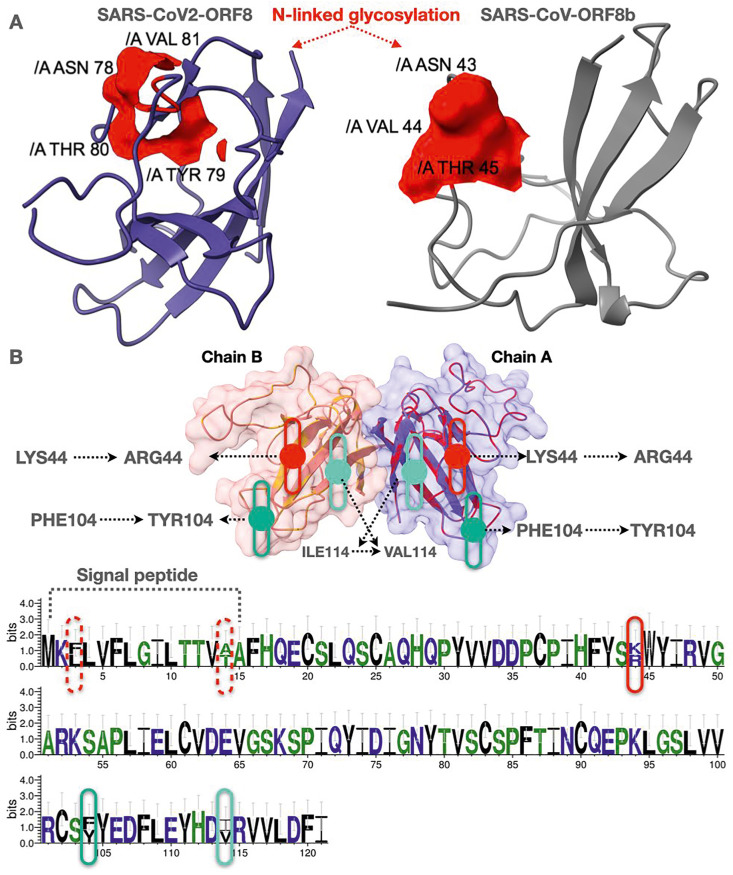
(A) SARS-CoV-2 ORF8 monomer and SARS-CoV ORF8b showing N-linked glycosylation sites analyzed through NetNGlyc 1.0. The N-linked glycosylation sites are marked red. (B) Structural alignment of two ORF8 sequences (116 among 121 residues was identical) of Bat-RaTG13-CoV QHR63307.1 and AVP78048.1,illustrating mutations at particular sites. The same presentation using Web Logo server.
Fig. 4
Fig. 4
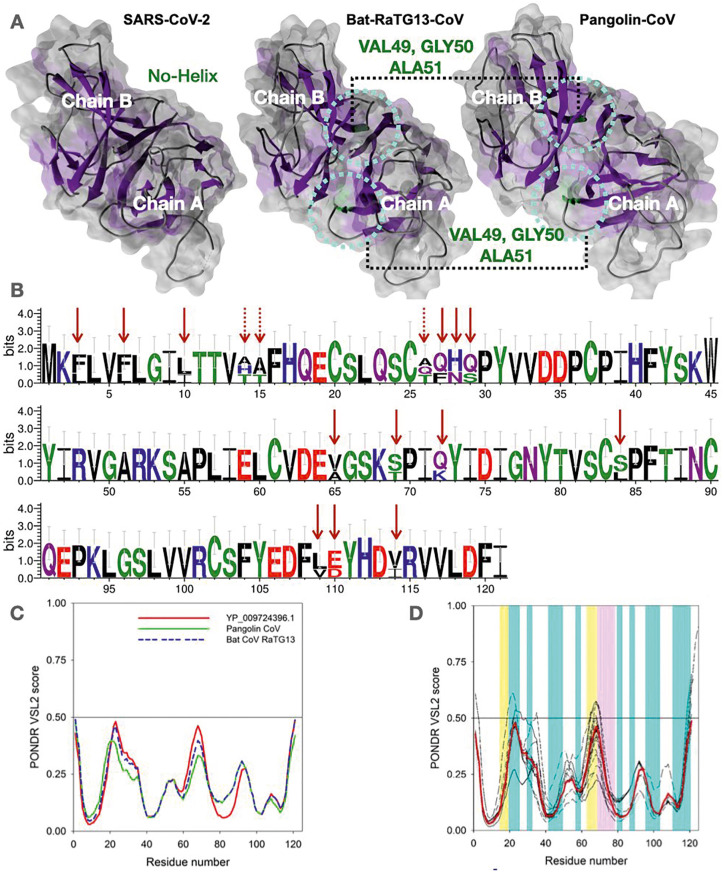
Comparative sequence and structural analysis of SARS-CoV-2, Bat-CoV-RaTG13, and Pangolin-CoV ORF8. (A) Secondary structure analysis of ORF8 protein structures. Rounded circle represents the helix region (green color). The β sheets are illustrated using ChimeraX (violet color). (B) Web logo presentation of the species' aligned sequences mentioned above of ORF8 amino acid sequences depicting the mismatches (arrows). The dotted arrows indicates all mismatches across the aligned sequences. (C) Comparison of the intrinsic disorder predisposition of the reference ORF8 protein (YP 009724396.1) of the NC 045512 SARS-CoV-2 genome from Wuhan, China (bold red curve) with disorder predispositions of ORF8 from the Pangolin-CoV (QIA48620.1) and Bat-RaTG13-CoV (QHR63307.1). (D). Analysis of the intrinsic disorder predisposition of the unique variants of the SARS-CoV-2 ORF8 in comparison with the reference ORF8 protein (YP 009724396.1) from the NC 045512 SARS-CoV-2 genome from Wuhan, China (bold red curve). Analysis was conducted using the PONDR® VSL2 algorithm [37], one of the more accurate standalone disorder predictors [[37], [38], [39], [40]]. A disorder threshold is indicated as a thin line (at score = 0.5). Residues/regions with disorder scores >0.5 are considered as disordered. Light cyan vertical bars represent positions of β-strands, whereas light pink and light-yellow vertical bars show regions with missing electron density in the crystal structures of the ORF8 protein from SARS-CoV-2 (PDB ID: 7JILB and 7JX6, respectively).
Fig. 5
Fig. 5
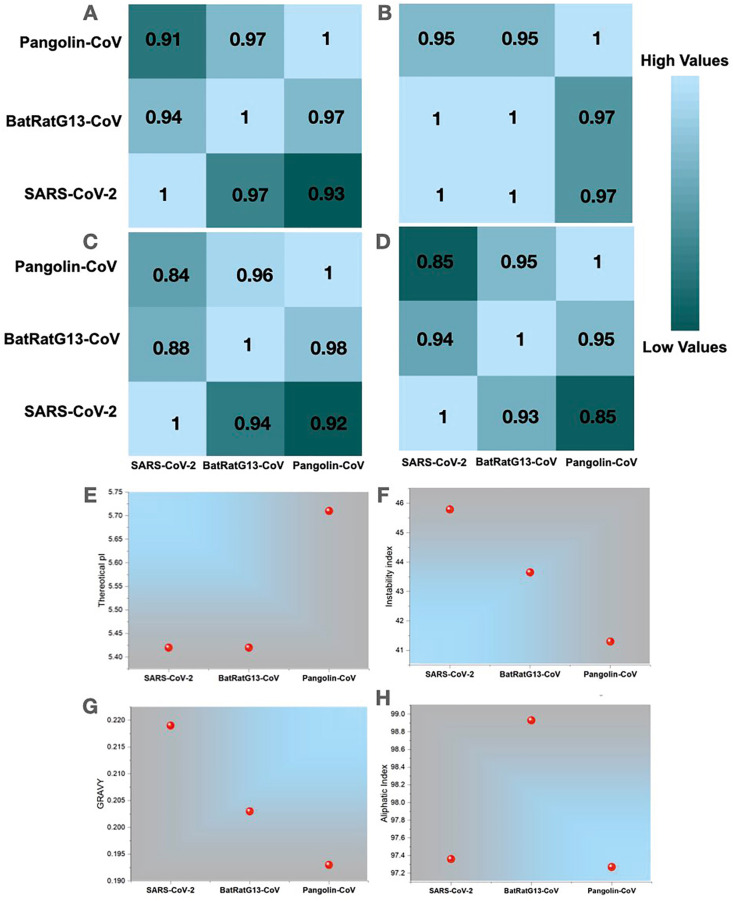
Comparison of global biophysical properties of ORF8 proteins of SARS-CoV-2, Bat-RaTG13-CoV, and Pangolin-CoV. (AD) A pairwise matrix of correlation coefficients between SARS-CoV-2 ORF8, Bat-RaTG13-CoV ORF8, and Pangolin-CoV ORF8 has been illustrated based on default parameters, the Pearson correlation coefficient R and the Spearman rank correlation coefficient using VOLPES in terms of the level of similarity between physicochemical properties i.e., hydrophobicity, pH7.0, beta propensity, and relative mutability, respectively. High values (cyan) and lower values (green) color represent correlation coefficient values. The individual panel across rows was compared against each other, and the coefficients were calculated. Similarly, each panel across rows was calculated. For instance, in Fig. 5A, R = 1 represents the hydrophobicity correlation of SARS-CoV-2 ORF8 with SARS-CoV-2 ORF8. Similarly, R = 0.97 represents the similarity between SARS-CoV-2 ORF8 with BatRatG13-CoV ORF8 across the same row. (EH) Physicochemical properties, i.e., Theoretical pI, Instability Index, GRAVY, and Aliphatic index of ORF8, were calculated using ProtParam, respectively.
Fig. 6
Fig. 6
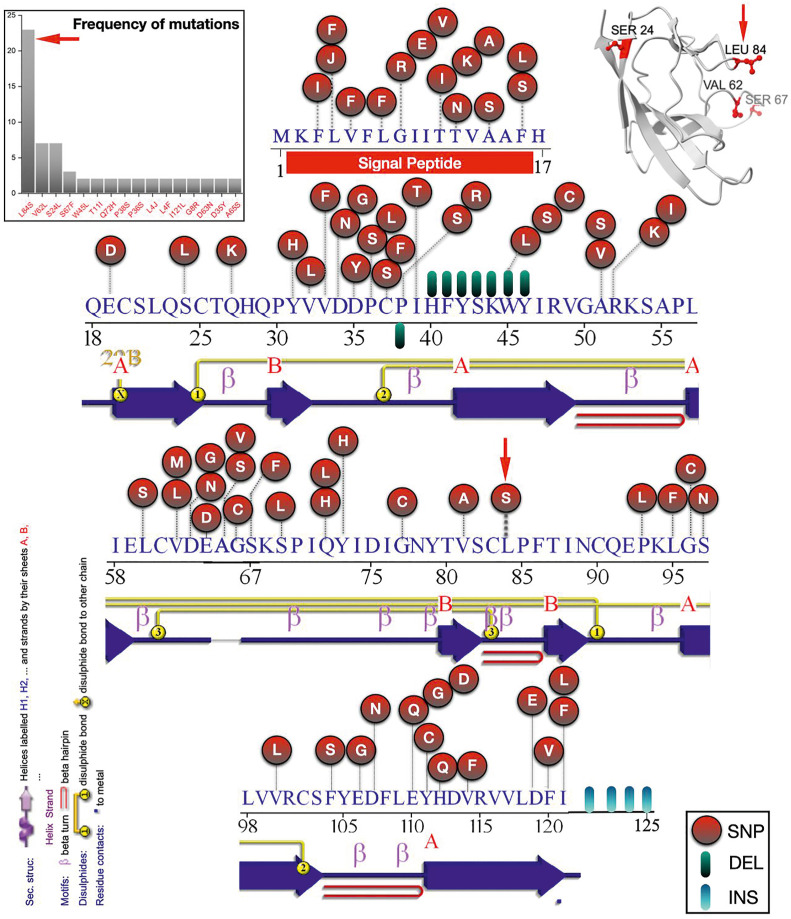
Mutational profiling and their amino acid positions in ORF8 proteins of SARS-CoV-2 (96 variants). (Upper left) Frequency distribution of various mutations in the ORF8 protein variants (96 variants) of SARS-CoV-2. A red circle marked the mutations (Single Nucleotide Polymorphism (SNP)), Deletions with green/black, and Insertions with cyan/blue. (Upper left) Structural representation of SARS-CoV-2 ORF8 monomer showing high-frequency mutations. Below each sequence, a 2D presentation of the secondary structure plot has been depicted using PDBsum. (β Strands are presented in blue with naming convention as A (long β strands) and B (short β strands)).
Fig. 7
Fig. 7
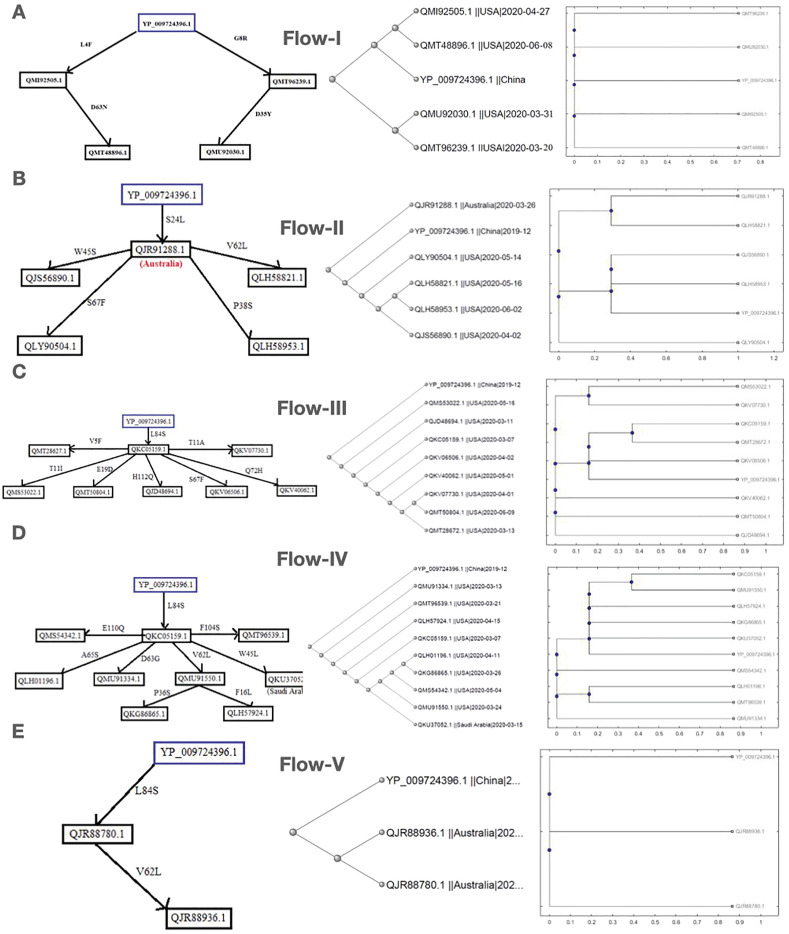
Possible flow of mutations in ORF8 evolution. (AE) The possible flow of mutations in the ORF8 (SARS-CoV-2) sequences isolated in the US, Australia, US, US and Saudi Arabia, Australia. (Right panel) Phylogenetic relationship based on amino acid sequence similarity and amino acid composition (right) of ORF8 proteins of SARS-CoV-2 in US, Australia, US, US and Saudi Arabia, Australia.

References

    1. Hussain M., Shabbir S., Amnaullah A., Raza F., Imdad M.J., S.J.J.o.M.V. Zahid . vol. 7. 2021. (Immunoinformatic Analysis of Structural and Epitope Variations in Spike and Orf8 Proteins of SARS‐CoV‐2/B. 1.1). - PMC - PubMed
    1. Rothan H.A., Byrareddy S.N. The epidemiology and pathogenesis of coronavirus disease (COVID-19) outbreak. J. Autoimmun. 2020;109:102433. - PMC - PubMed
    1. Kraemer M.U.G., Yang C.H., Gutierrez B., Wu C.H., Klein B., Pigott D.M., Open C.-D.W.G., du Plessis L., Faria N.R., Li R., Hanage W.P., Brownstein J.S., Layan M., Vespignani A., Tian H., Dye C., Pybus O.G., Scarpino S.V. The effect of human mobility and control measures on the COVID-19 epidemic in China. Science. 2020;368:493–497. - PMC - PubMed
    1. Zumla A., Niederman M.S., Editorial The explosive epidemic outbreak of novel coronavirus disease 2019 (COVID-19) and the persistent threat of respiratory tract infectious diseases to global health security. Curr. Opin. Pulm. Med. 2020;26:193–196. - PMC - PubMed
    1. Amawi H., Abu Deiab G.a.I., Aljabali A.A.A., Dua K., Tambuwala M.M.J.T.d. COVID-19 pandemic: an overview of epidemiology, pathogenesis. diagnostics and potential vaccines and therapeutics. 2020;11:245–268. - PMC - PubMed