


Critical illness polyneuropathy, myopathy and neuronal biomarkers in COVID-19 patients: A prospective study
- PMID: 33875374
- PMCID: PMC8012169
- DOI: 10.1016/j.clinph.2021.03.016
Critical illness polyneuropathy, myopathy and neuronal biomarkers in COVID-19 patients: A prospective study
Abstract
Objective: The aim was to characterize the electrophysiological features and plasma biomarkers of critical illness polyneuropathy (CIN) and myopathy (CIM) in coronavirus disease 2019 (COVID-19) patients with intensive care unit acquired weakness (ICUAW).
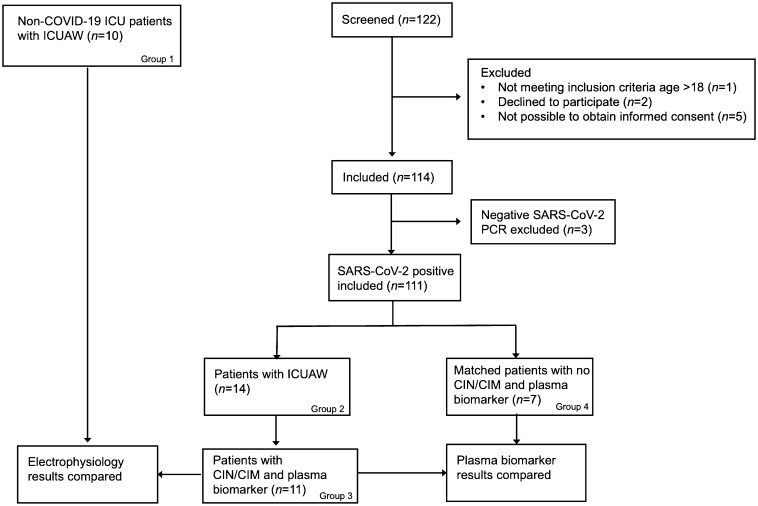
Methods: An observational ICU cohort study including adult patients admitted to the ICU at Uppsala University Hospital, Uppsala, Sweden, from March 13th to June 8th 2020. We compared the clinical, electrophysiological and plasma biomarker data between COVID-19 patients who developed CIN/CIM and those who did not. Electrophysiological characteristics were also compared between COVID-19 and non-COVID-19 ICU patients.
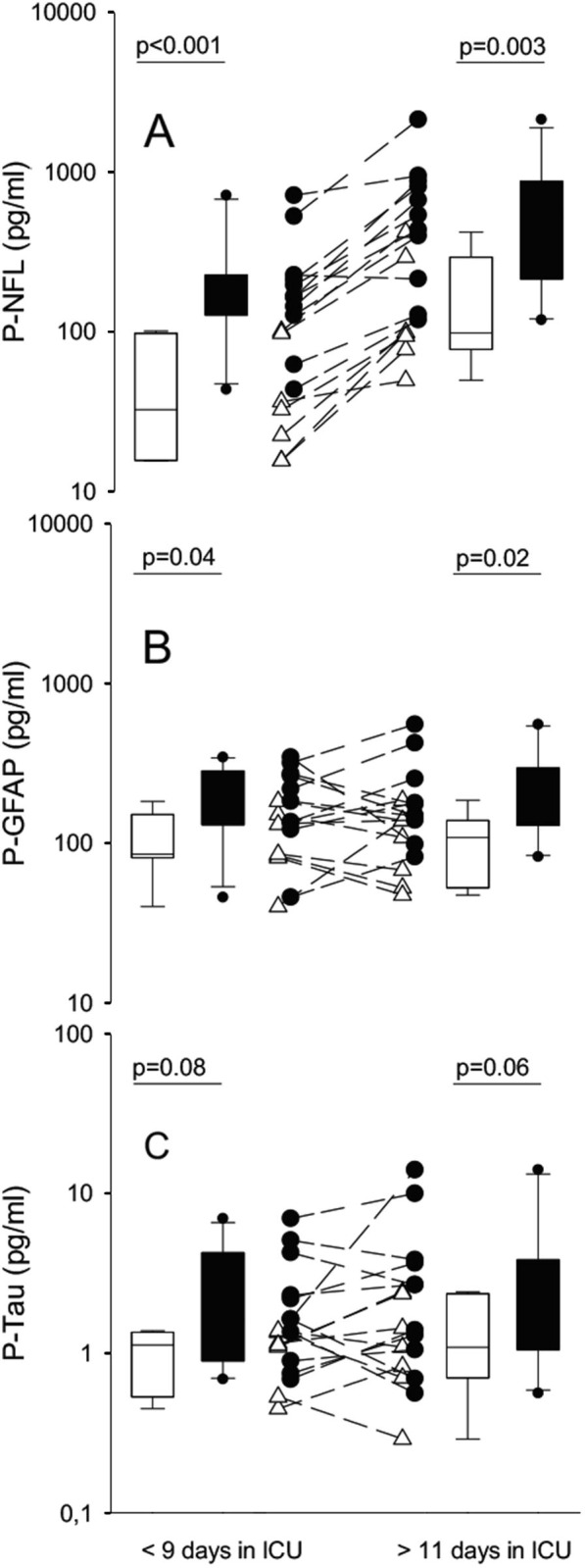
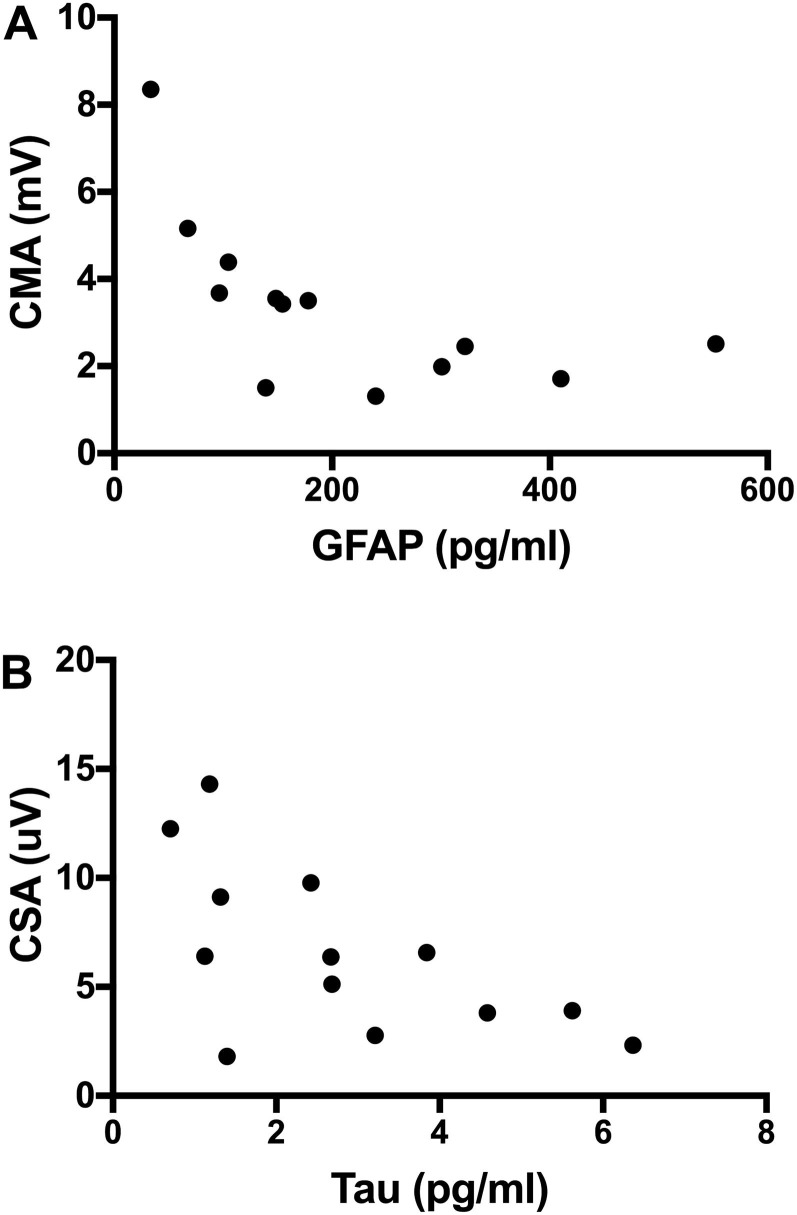
Results: 111 COVID-19 patients were included, 11 of whom developed CIN/CIM. Patients with CIN/CIM had more severe illness; longer ICU stay, more thromboembolic events and were more frequently treated with invasive ventilation for longer than 2 weeks. In particular CIN was more frequent among COVID-19 patients with ICUAW (50%) compared with a non-COVID-19 cohort (0%, p = 0.008). Neurofilament light chain (NfL) and glial fibrillary acidic protein (GFAp) levels were higher in the CIN/CIM group compared with those that did not develop CIN/CIM (both p = 0.001) and correlated with nerve amplitudes.
Conclusions: CIN/CIM was more prevalent among COVID-19 ICU patients with severe illness.
Significance: COVID-19 patients who later developed CIN/CIM had significantly higher NfL and GFAp in the early phase of ICU care, suggesting their potential as predictive biomarkers for CIN/CIM.
Keywords: COVID-19; Critical illness neuropathy; Myopathy; NFL; SARS-CoV-2.
Copyright © 2021 International Federation of Clinical Neurophysiology. Published by Elsevier B.V. All rights reserved.
Conflict of interest statement
Declaration of Competing Interest The authors declare the following financial interests/personal relationships which may be considered as potential competing interests: KB has served as a consultant, at advisory boards, or at data monitoring committees for Abcam, Axon, Biogen, Julius Clinical, Lilly, MagQu, Novartis, Roche Diagnostics, and Siemens Healthineers, and is a co-founder of Brain Biomarker Solutions in Gothenburg AB (BBS), which is a part of the GU Ventures Incubator Program (outside submitted work). HZ has served at scientific advisory boards for Denali, Roche Diagnostics, Wave, Samumed, Siemens Healthineers, Pinteon Therapeutics and CogRx, has given lectures in symposia sponsored by Fujirebio, Alzecure and Biogen, and is a co-founder of Brain Biomarker Solutions in Gothenburg AB (BBS), which is a part of the GU Ventures Incubator Program (all outside submitted work). The other authors report no disclosures.
Figures

Comment in
-
Critical illness myopathy and polyneuropathy in Covid-19: Is it a distinct entity?Clin Neurophysiol. 2021 Jul;132(7):1716-1717. doi: 10.1016/j.clinph.2021.04.001. Epub 2021 Apr 20. Clin Neurophysiol. 2021. PMID: 33934968 Free PMC article. No abstract available.
References
-
- Bolton C.F. Neuromuscular manifestations of critical illness. Muscle Nerve. 2005;32(2):140–163. - PubMed
Publication types
MeSH terms
Substances
LinkOut - more resources
Full Text Sources
Other Literature Sources
Medical
Molecular Biology Databases
Miscellaneous
