


Microbial evolution and transitions along the parasite-mutualist continuum
- PMID: 33875863
- PMCID: PMC8054256
- DOI: 10.1038/s41579-021-00550-7
Microbial evolution and transitions along the parasite-mutualist continuum
Abstract
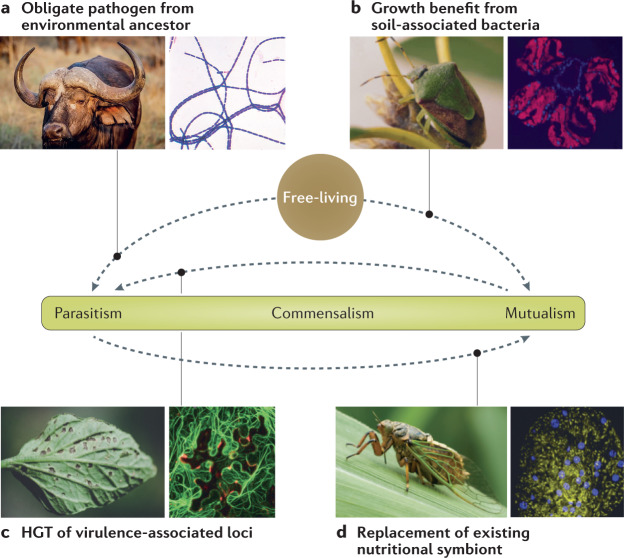
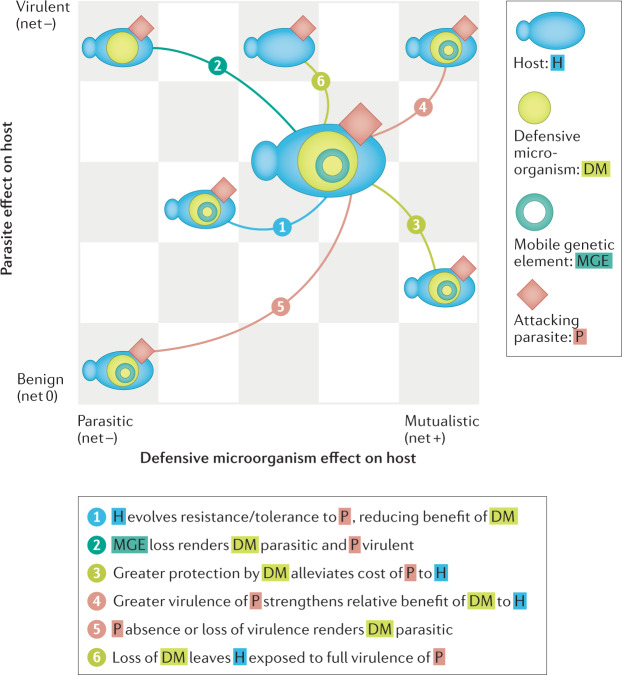
Virtually all plants and animals, including humans, are home to symbiotic microorganisms. Symbiotic interactions can be neutral, harmful or have beneficial effects on the host organism. However, growing evidence suggests that microbial symbionts can evolve rapidly, resulting in drastic transitions along the parasite-mutualist continuum. In this Review, we integrate theoretical and empirical findings to discuss the mechanisms underpinning these evolutionary shifts, as well as the ecological drivers and why some host-microorganism interactions may be stuck at the end of the continuum. In addition to having biomedical consequences, understanding the dynamic life of microorganisms reveals how symbioses can shape an organism's biology and the entire community, particularly in a changing world.
© 2021. Springer Nature Limited.
Conflict of interest statement
The authors declare no competing interests.
Figures
References
-
- Law R, Dieckmann U. Symbiosis through exploitation and the merger of lineages in evolution. Proc. Biol. Sci. 1998;265:1245–1253.
-
- Wooldridge SA. Is the coral-algae symbiosis really ‘mutually beneficial’ for the partners? BioEssays. 2010;32:615–625. - PubMed
-
- Mushegian AA, Ebert D. Rethinking ‘mutualism’ in diverse host-symbiont communities. BioEssays. 2016;38:100–108. - PubMed
Publication types
MeSH terms
LinkOut - more resources
Full Text Sources
Other Literature Sources
