


Impact of prenatal maternal cytokine exposure on sex differences in brain circuitry regulating stress in offspring 45 years later
- PMID: 33876747
- PMCID: PMC8054010
- DOI: 10.1073/pnas.2014464118
Impact of prenatal maternal cytokine exposure on sex differences in brain circuitry regulating stress in offspring 45 years later
Abstract
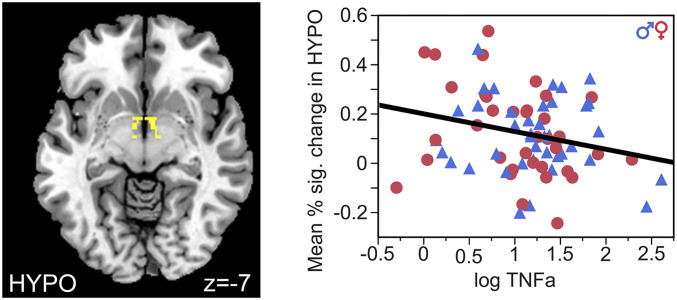
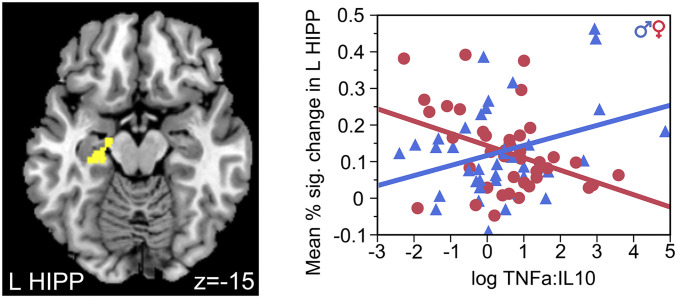
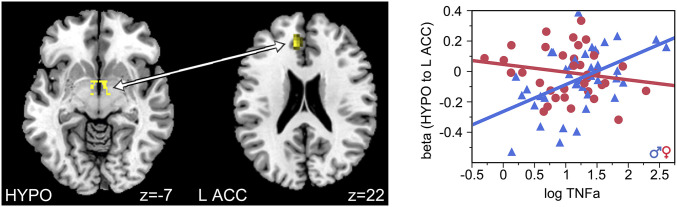
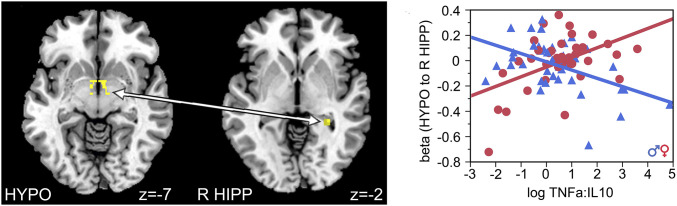
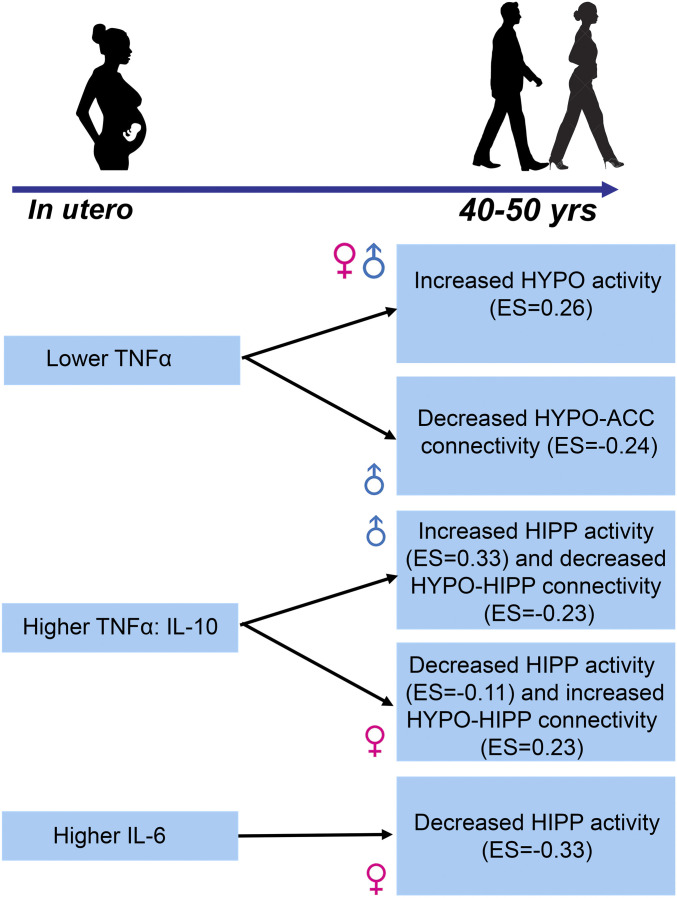
Stress is associated with numerous chronic diseases, beginning in fetal development with in utero exposures (prenatal stress) impacting offspring's risk for disorders later in life. In previous studies, we demonstrated adverse maternal in utero immune activity on sex differences in offspring neurodevelopment at age seven and adult risk for major depression and psychoses. Here, we hypothesized that in utero exposure to maternal proinflammatory cytokines has sex-dependent effects on specific brain circuitry regulating stress and immune function in the offspring that are retained across the lifespan. Using a unique prenatal cohort, we tested this hypothesis in 80 adult offspring, equally divided by sex, followed from in utero development to midlife. Functional MRI results showed that exposure to proinflammatory cytokines in utero was significantly associated with sex differences in brain activity and connectivity during response to negative stressful stimuli 45 y later. Lower maternal TNF-α levels were significantly associated with higher hypothalamic activity in both sexes and higher functional connectivity between hypothalamus and anterior cingulate only in men. Higher prenatal levels of IL-6 were significantly associated with higher hippocampal activity in women alone. When examined in relation to the anti-inflammatory effects of IL-10, the ratio TNF-α:IL-10 was associated with sex-dependent effects on hippocampal activity and functional connectivity with the hypothalamus. Collectively, results suggested that adverse levels of maternal in utero proinflammatory cytokines and the balance of pro- to anti-inflammatory cytokines impact brain development of offspring in a sexually dimorphic manner that persists across the lifespan.
Keywords: functional brain imaging; prenatal immune programming; prenatal stress; sex; stress circuitry.
Conflict of interest statement
Competing interest statement: J.M.G. is on the scientific advisory board for, and has equity interest in, Cala Health (a neuromodulation company). J.M.G.’s interests are managed by Massachusetts General Hospital and Mass General Brigham HealthCare in accordance with their conflict of interest policies. However, the work in the study presented here was conducted prior to that relationship, so there is no conflict of interest.
Figures
References
-
- Barker D. J., Intrauterine programming of adult disease. Mol. Med. Today 1, 418–423 (1995). - PubMed
-
- McEwen B. S., Gonadal steroid influences on brain development and sexual differentiation. Int. Rev. Physiol. 27, 99–145 (1983). - PubMed
-
- Weinstock M., The long-term behavioural consequences of prenatal stress. Neurosci. Biobehav. Rev. 32, 1073–1086 (2008). - PubMed
-
- Bale T. L., Neuroendocrine and immune influences on the CNS: It’s a matter of sex. Neuron 64, 13–16 (2009). - PubMed
-
- Goldstein J. M., Impact of prenatal stress on offspring psychopathology and comorbidity with general medicine later in life. Biol. Psychiatry 85, 94–96 (2019). - PubMed
Publication types
MeSH terms
Substances
Grants and funding
LinkOut - more resources
Full Text Sources
Other Literature Sources
Medical
