


Predicting Sex-Specific Nonfatal Suicide Attempt Risk Using Machine Learning and Data From Danish National Registries
- PMID: 33877265
- PMCID: PMC8796814
- DOI: 10.1093/aje/kwab112
Predicting Sex-Specific Nonfatal Suicide Attempt Risk Using Machine Learning and Data From Danish National Registries
Abstract
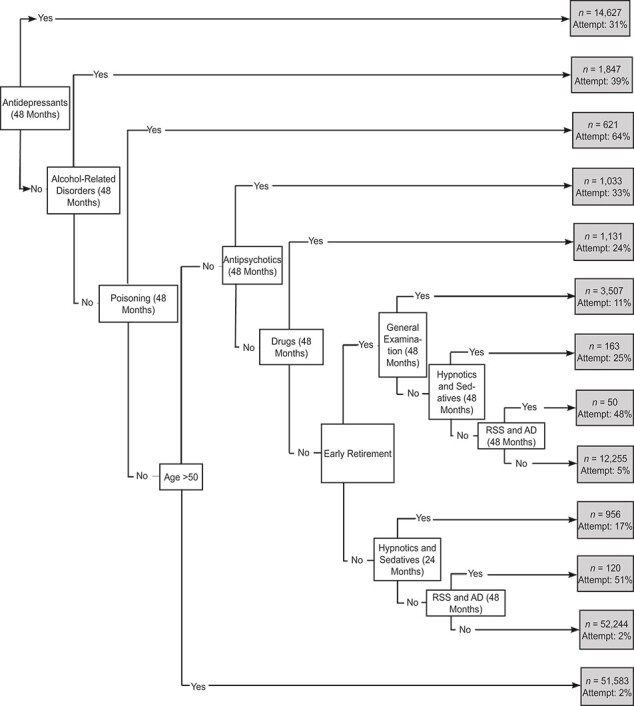
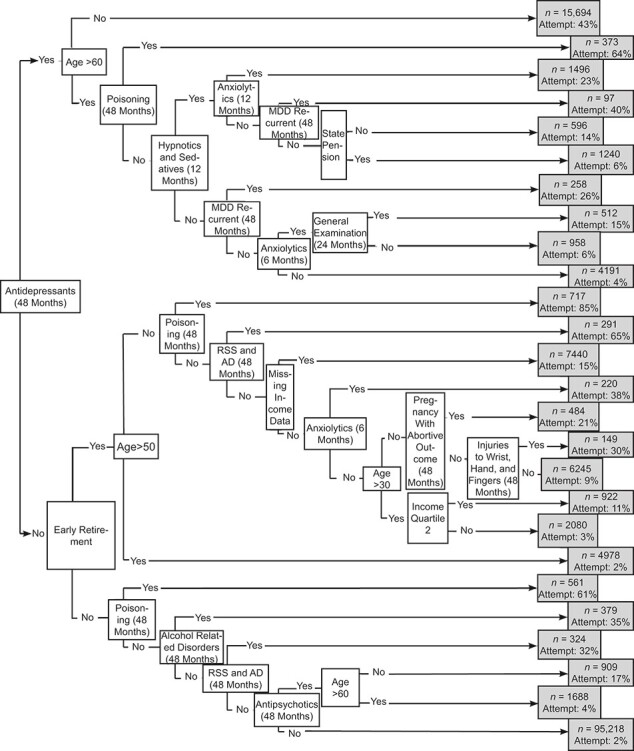
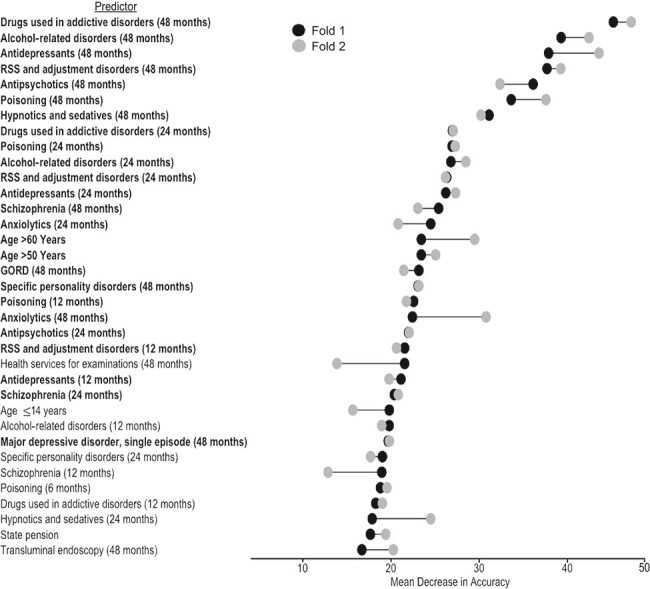
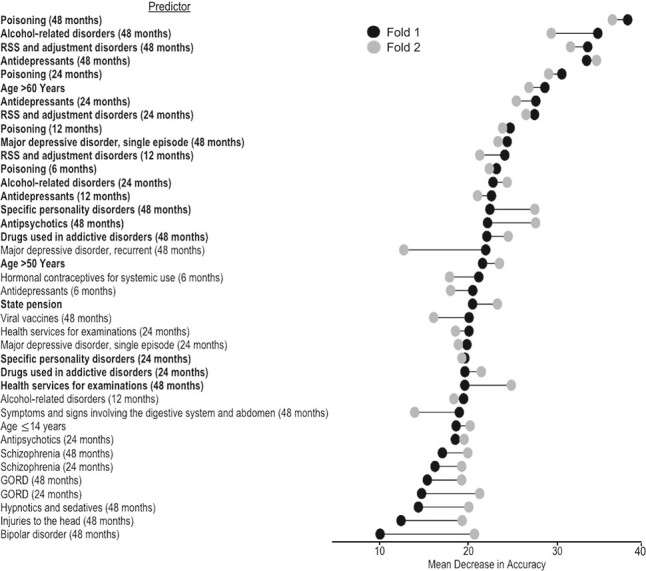
Suicide attempts are a leading cause of injury globally. Accurate prediction of suicide attempts might offer opportunities for prevention. This case-cohort study used machine learning to examine sex-specific risk profiles for suicide attempts in Danish nationwide registry data. Cases were all persons who made a nonfatal suicide attempt between 1995 and 2015 (n = 22,974); the subcohort was a 5% random sample of the population at risk on January 1, 1995 (n = 265,183). We developed sex-stratified classification trees and random forests using 1,458 predictors, including demographic factors, family histories, psychiatric and physical health diagnoses, surgery, and prescribed medications. We found that substance use disorders/treatment, prescribed psychiatric medications, previous poisoning diagnoses, and stress disorders were important factors for predicting suicide attempts among men and women. Individuals in the top 5% of predicted risk accounted for 44.7% of all suicide attempts among men and 43.2% of all attempts among women. Our findings illuminate novel risk factors and interactions that are most predictive of nonfatal suicide attempts, while consistency between our findings and previous work in this area adds to the call to move machine learning suicide research toward the examination of high-risk subpopulations.
Keywords: Denmark; National Registry; machine learning; prediction; suicide attempts.
© The Author(s) 2021. Published by Oxford University Press on behalf of the Johns Hopkins Bloomberg School of Public Health. All rights reserved. For permissions, please e-mail: journals.permissions@oup.com.
Figures
Comment in
-
Invited Commentary: New Directions in Machine Learning Analyses of Administrative Data to Prevent Suicide-Related Behaviors.Am J Epidemiol. 2021 Dec 1;190(12):2528-2533. doi: 10.1093/aje/kwab111. Am J Epidemiol. 2021. PMID: 33877322 Free PMC article.
-
Gradus et al. Respond to "Machine Learning and Suicide Prevention: New Directions".Am J Epidemiol. 2021 Dec 1;190(12):2534-2535. doi: 10.1093/aje/kwab113. Am J Epidemiol. 2021. PMID: 33878158 Free PMC article. No abstract available.
References
-
- World Health Organization . Mental Health and substance abuse: suicide data. World Health Organization. http://www.who.int/mental_health/prevention/suicide/suicideprevent/en/. Accessed August 20, 2019.
-
- Biering-Sørensen F, Pedersen W, Müller PG. Spinal cord injury due to suicide attempts. Paraplegia. 1992;30(2):139–144. - PubMed
-
- Han B, Kott PS, Hughes A, et al. Estimating the rates of deaths by suicide among adults who attempt suicide in the United States. J Psychiatr Res. 2016;77:125–133. - PubMed
Publication types
MeSH terms
Grants and funding
LinkOut - more resources
Full Text Sources
Other Literature Sources
Miscellaneous
