


Physeal-Sparing Rigid Intramedullary Nailing in Adolescent Tibial Shaft Fractures: A Pilot Study
- PMID: 33880249
- PMCID: PMC8046697
- DOI: 10.7759/cureus.13893
Physeal-Sparing Rigid Intramedullary Nailing in Adolescent Tibial Shaft Fractures: A Pilot Study
Abstract
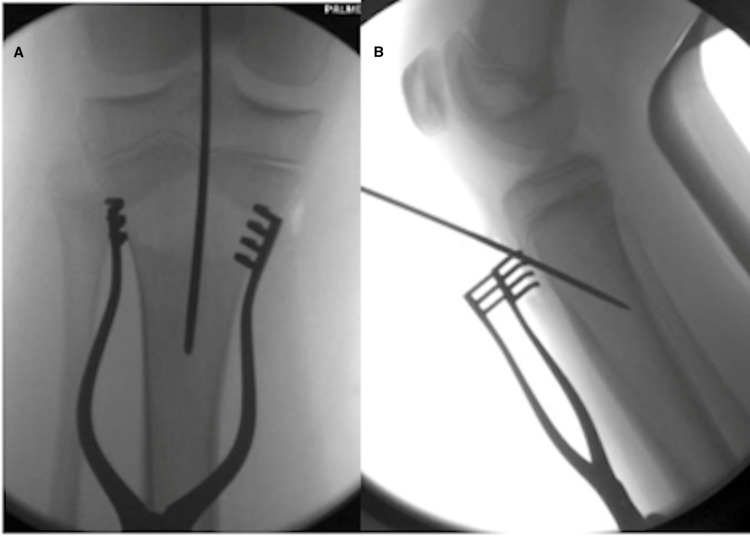
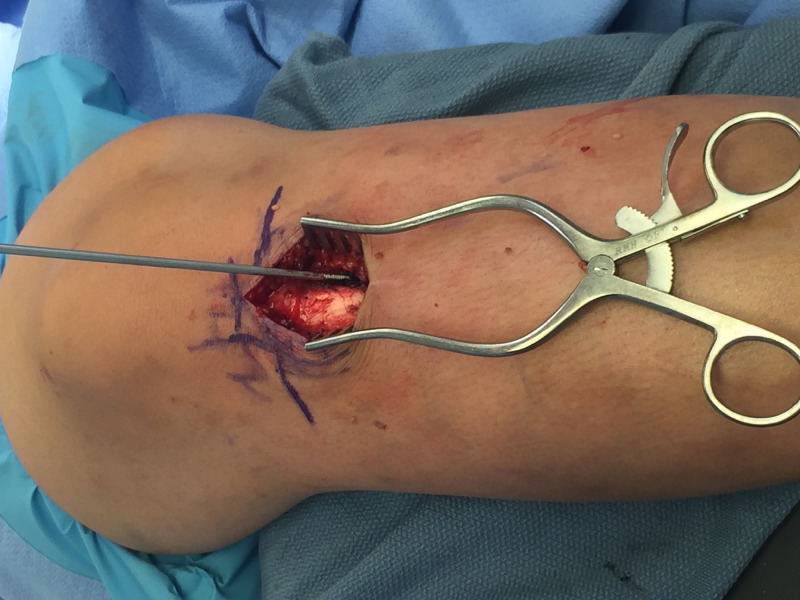
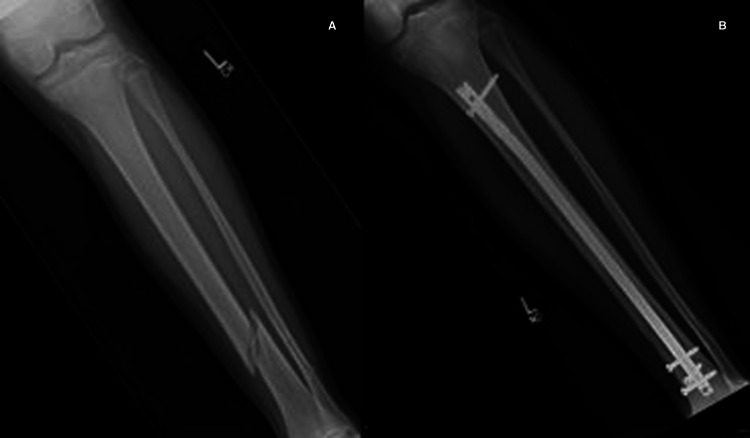
Purpose: Elastic stable intramedullary nailing (ESIN) and open reduction internal fixation (ORIF) are literature-supported operative treatments for displaced tibial shaft fractures in skeletally immature patients. Very little is written about rigid intramedullary nails (RIMNs) in adolescents. Our purpose is to describe a physeal-sparing, reamed, locked RIMN technique for adolescent tibial shaft fractures and report its safety.
Methods: Adolescent patients with tibial shaft fractures indicated for operative intervention at one institution were retrospectively identified from 2011-2018. Patients were classified based on method of fracture fixation. Primary outcomes included fracture union, reoperation, and complication rates.
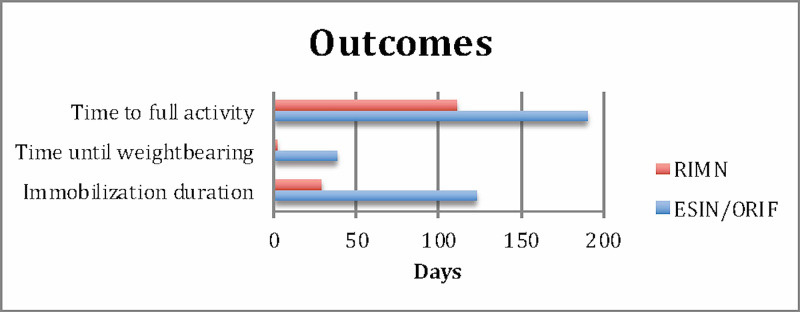
Results: Thirteen patients were included in the RIMN arm, with an average age of 13.8 years. Two patients in the observational group underwent ESIN and seven patients underwent ORIF, with an average age of 11.5 years. Significant differences were found between time of immobilization (28 days vs 121 days), time to touch down weight bearing release (1 day vs 34 days), and hardware pain (2/13 vs 7/9). The RIMN group sustained fewer reoperations (2/13 vs 5/9). No differences were found in rates of complications or fixation failure between groups.
Conclusions: Based on our small pilot study, RIMNs in adolescents should be considered as a potential treatment option when a physeal-sparing distal start point is utilized. Additionally, short-term follow-up suggests safety. Patients who underwent the RIMN procedure required fewer reoperations compared with the observational group. Overall, fracture healing was similar across the two groups. The benefits of RIMN include early immobilization and improved weight-bearing profile.
Level of evidence: IV.
Keywords: adolescent tibial fracture; intramedullary nailing; trauma pediatric.
Copyright © 2021, Williams et al.
Conflict of interest statement
The authors have declared that no competing interests exist.
Figures
References
-
- Management of pediatric tibial shaft fractures. Hogue GD, Wilkins KE, Kim IS. J Am Acad Orthop Surg. 2019;27:769–778. - PubMed
-
- Operative treatment of tibial fractures in children: are elastic stable intramedullary nails an improvement over external fixation? Kubiak EN, Egol K, Scher D, et al. https://journals.lww.com/jbjsjournal/Abstract/2005/08000/Operative_Treat.... J Bone Joint Surg. 2005;87:1761–1768. - PubMed
-
- Tibial shaft fractures in children and adolescents. Mashru RP, Herman MJ, Pizzutillo PD. https://journals.lww.com/jaaos/Fulltext/2005/09000/Tibial_Shaft_Fracture.... J Am Acad Orthop Surg. 2005;13:345–352. - PubMed
-
- Titanium elastic nailing of fractures of the femur in children: predictors of complications and poor outcome. Moroz L, Launay F, Kocher MS, Newton PO, Frick SL, Sponseller PD, Flynn JM. J Bone Joint Surg Br. 2006;88:1361–1366. - PubMed
LinkOut - more resources
Full Text Sources
Other Literature Sources
Research Materials