


A systematic review to identify biomarkers of intake for fermented food products
- PMID: 33882831
- PMCID: PMC8058972
- DOI: 10.1186/s12263-021-00686-4
A systematic review to identify biomarkers of intake for fermented food products
Abstract
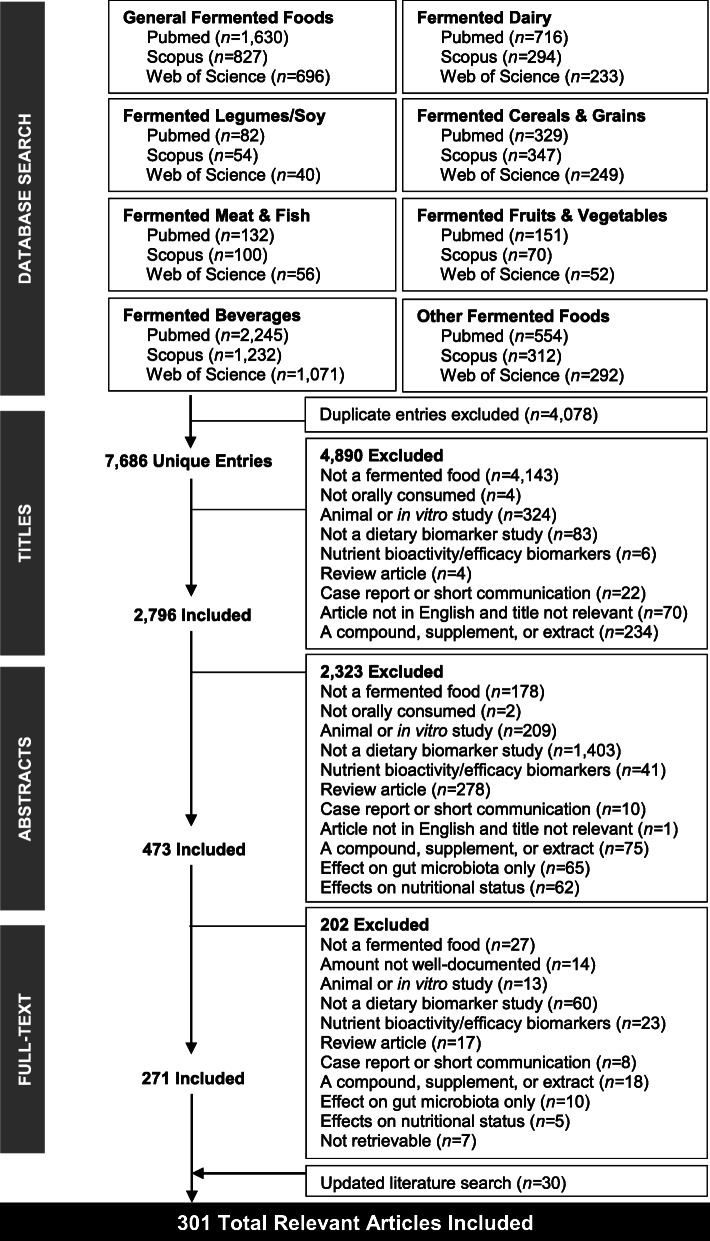
Background: Fermented foods are ubiquitous in human diets and often lauded for their sensory, nutritious, and health-promoting qualities. However, precise associations between the intake of fermented foods and health have not been well-established. This is in part due to the limitations of current dietary assessment tools that rely on subjective reporting, making them prone to memory-related errors and reporting bias. The identification of food intake biomarkers (FIBs) bypasses this challenge by providing an objective measure of intake. Despite numerous studies reporting on FIBs for various types of fermented foods and drinks, unique biomarkers associated with the fermentation process ("fermentation-dependent" biomarkers) have not been well documented. We therefore conducted a comprehensive, systematic review of the literature to identify biomarkers of fermented foods commonly consumed in diets across the world.
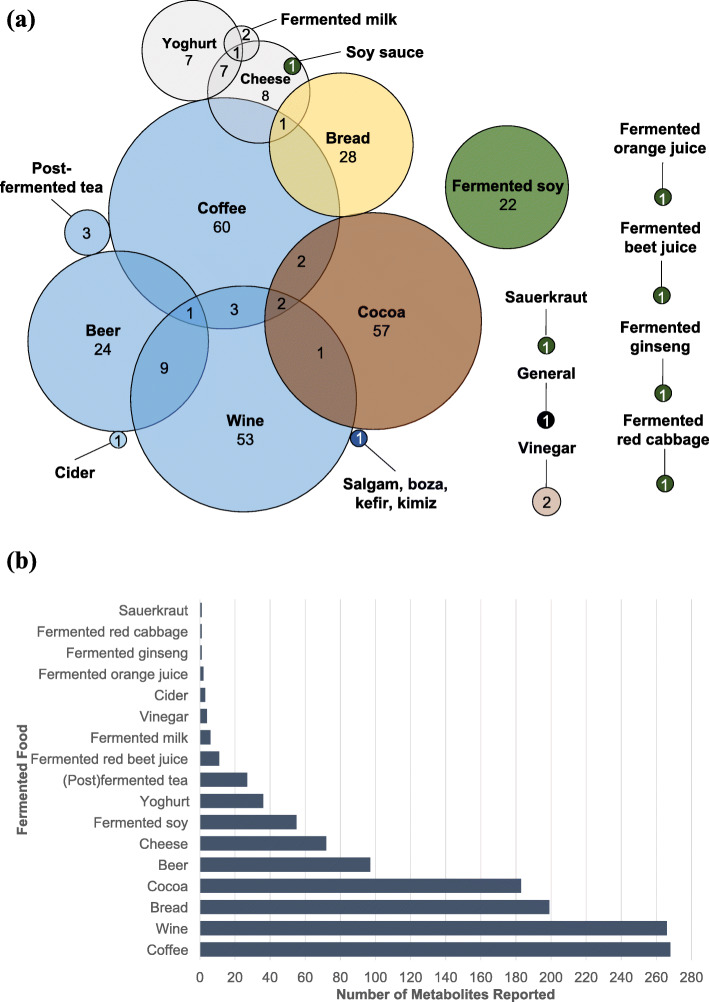
Results: After title, abstract, and full-text screening, extraction of data from 301 articles resulted in an extensive list of compounds that were detected in human biofluids following the consumption of various fermented foods, with the majority of articles focusing on coffee (69), wine (69 articles), cocoa (62), beer (34), and bread (29). The identified compounds from all included papers were consolidated and sorted into FIBs proposed for a specific food, for a food group, or for the fermentation process. Alongside food-specific markers (e.g., trigonelline for coffee), and food-group markers (e.g., pentadecanoic acid for dairy intake), several fermentation-dependent markers were revealed. These comprised compounds related to the fermentation process of a particular food, such as mannitol (wine), 2-ethylmalate (beer), methionine (sourdough bread, cheese), theabrownins (tea), and gallic acid (tea, wine), while others were indicative of more general fermentation processes (e.g., ethanol from alcoholic fermentation, 3-phenyllactic acid from lactic fermentation).
Conclusions: Fermented foods comprise a heterogeneous group of foods. While many of the candidate FIBs identified were found to be non-specific, greater specificity may be observed when considering a combination of compounds identified for individual fermented foods, food groups, and from fermentation processes. Future studies that focus on how fermentation impacts the composition and nutritional quality of food substrates could help to identify novel biomarkers of fermented food intake.
Keywords: Dietary assessment; Dietary biomarkers; Fermented foods; Food intake biomarkers; Metabolites.
Conflict of interest statement
The authors declare that they have no competing interests.
Figures
References
-
- Bourdichon F, Casaregola S, Farrokh C, Frisvad JC, Gerds ML, Hammes WP, Harnett J, Huys G, Laulund S, Ouwehand A, Powell IB, Prajapati JB, Seto Y, ter Schure E, van Boven A, Vankerckhoven V, Zgoda A, Tuijtelaars S, Hansen EB. Food fermentations: microorganisms with technological beneficial use. Int J Food Microbiol. 2012;154(3):87–97. doi: 10.1016/j.ijfoodmicro.2011.12.030. - DOI - PubMed
-
- Anal AK. Quality ingredients and safety concerns for traditional fermented foods and beverages from Asia: a review. Fermentation. 2019;5(8). 10.3390/fermentation5010008
-
- Prakash J. Chapter 14 - safety of fermented cereals and legumes. In: Prakash V, Martin-Belloso O, Keener L, Astley S, Braun S, McMahon H, Lelieveld H, editors. Regulating safety of traditional and ethnic foods. Amsterdam: Elsevier; 2016. pp. 283–310.
Publication types
LinkOut - more resources
Full Text Sources
Other Literature Sources
