. 2021 Jun 1;32(6):1513-1526.
doi: 10.1681/ASN.2020081215. Epub 2021 Apr 21.

Exploring the Complexity of Death-Censored Kidney Allograft Failure

Affiliations

Exploring the Complexity of Death-Censored Kidney Allograft Failure

Manuel Mayrdorfer et al. J Am Soc Nephrol. .

Abstract

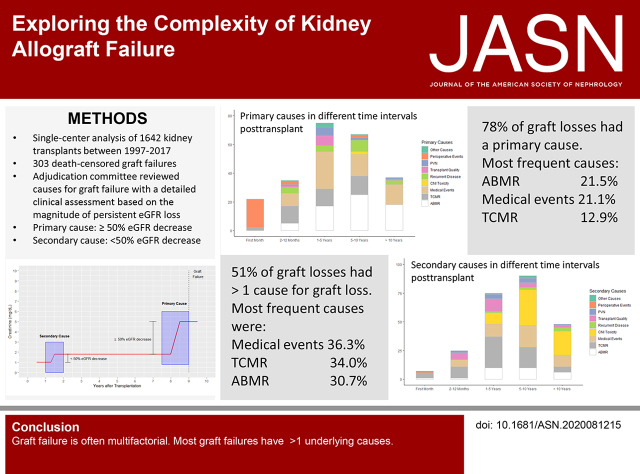
Background: Few studies have thoroughly investigated the causes of kidney graft loss (GL), despite its importance.

Methods: A novel approach assigns each persistent and relevant decline in renal function over the lifetime of a renal allograft to a standardized category, hypothesizing that singular or multiple events finally lead to GL. An adjudication committee of three physicians retrospectively evaluated indication biopsies, laboratory testing, and medical history of all 303 GLs among all 1642 recipients of transplants between January 1, 1997 and December 31, 2017 at a large university hospital to assign primary and/or secondary causes of GL.

Results: In 51.2% of the patients, more than one cause contributed to GL. The most frequent primary or secondary causes leading to graft failure were intercurrent medical events in 36.3% of graft failures followed by T cell-mediated rejection (TCMR) in 34% and antibody-mediated rejection (ABMR) in 30.7%. In 77.9%, a primary cause could be attributed to GL, of which ABMR was most frequent (21.5%). Many causes for GL were identified, and predominant causes for GL varied over time.

Conclusions: GL is often multifactorial and more complex than previously thought.

Keywords: chronic allograft failure; clinical nephrology; transplant outcomes; transplant pathology; transplantation.


Figures

None
Graphical abstract
Figure 1.
Figure 1.
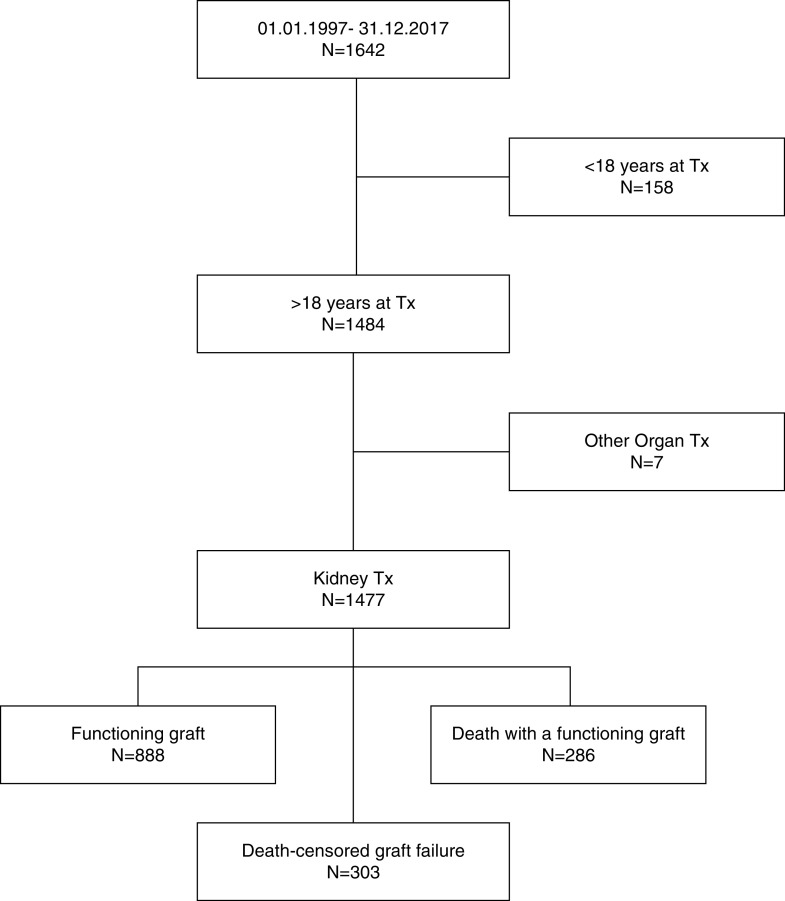
Flowchart showing patient enrollment. End of observation was December 31, 2019. Tx, transplantation.
Figure 2.
Figure 2.
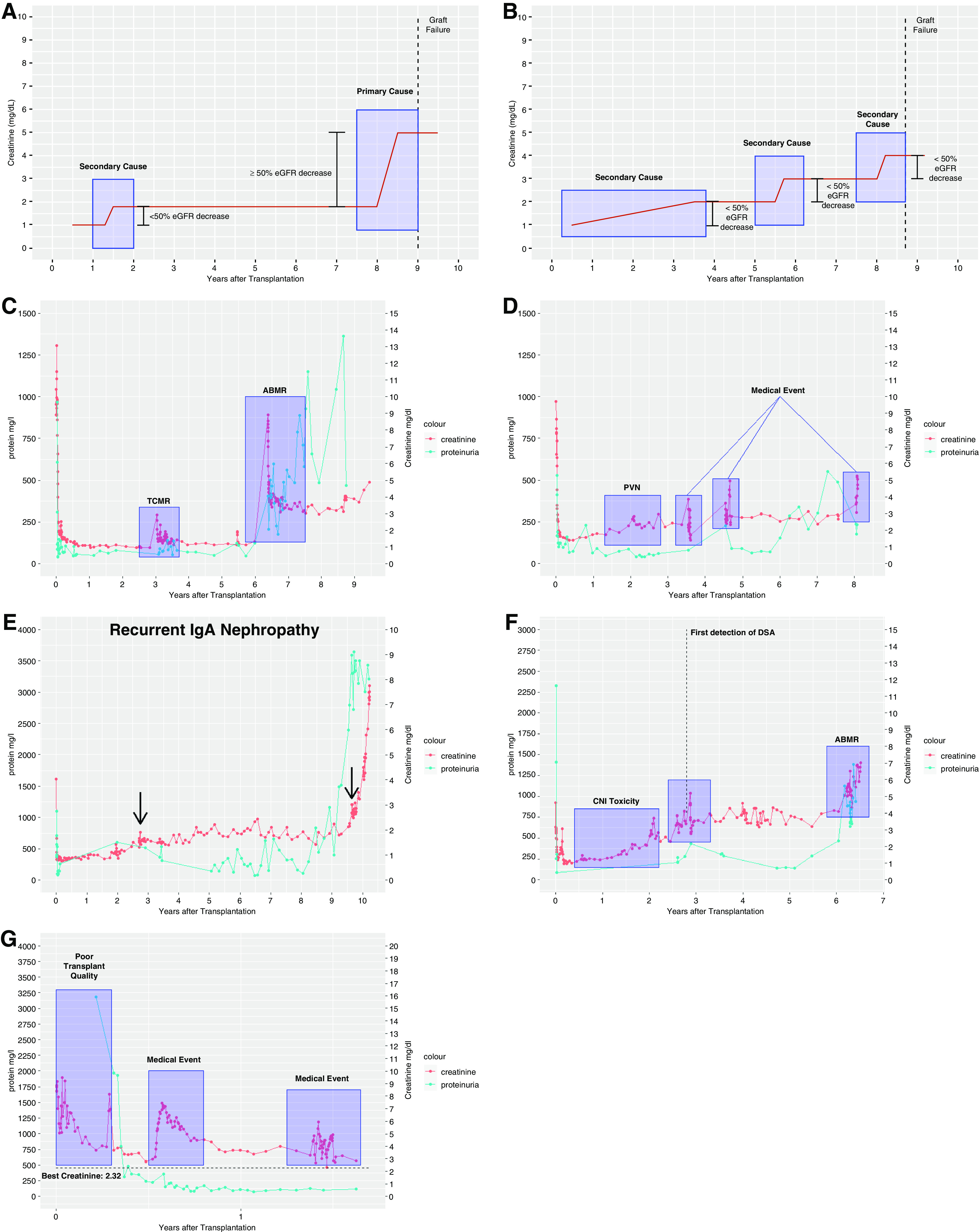
Evolution of kidney function and assignement of causes for graft failure. (A) Schematic diagram demonstrating the assignment of a primary and a secondary cause. (B) Schematic diagram demonstrating the assignment of multiple secondary causes. (C) Transplant failure due to rejection. Because kidney function was less affected after TCMR compared with ABMR, the latter has been categorized as primary cause. (D) PVN plus medical events (cardiorenal). (E) Recurrent disease. Patient with recurrent IgA nephropathy. Arrows show the biopsy dates confirming the diagnosis. (F) CNI toxicity followed by ABMR. After CNI withdrawal, creatinine improved; however, de novo DSA and ABMR developed during follow-up. (G) Patient with poor transplant quality (baseline creatinine >2.3 mg/dl) followed by a medical event (infection).
Figure 3.
Figure 3.
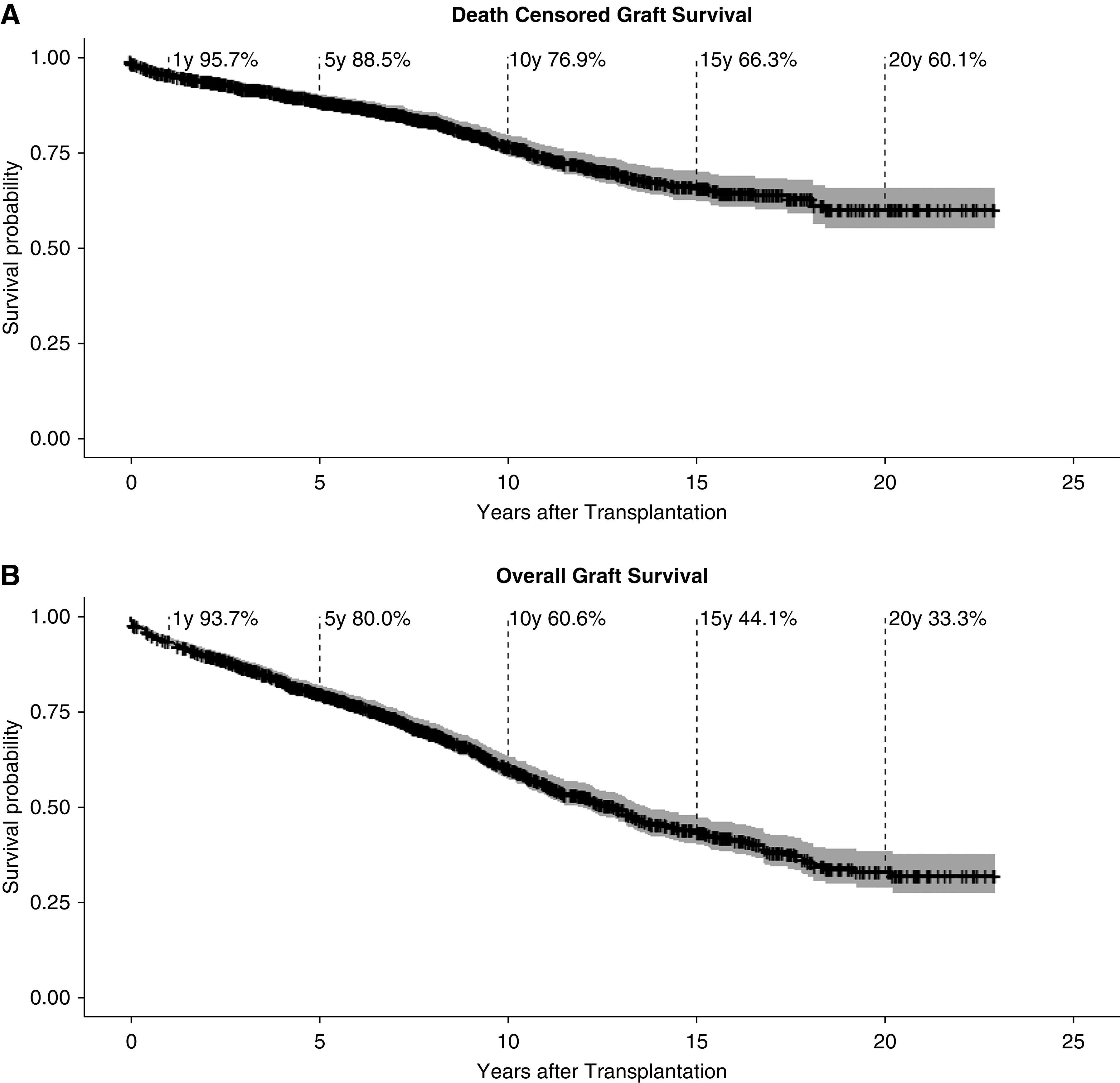
Survival curves showing Kaplan-Meier estimates for graft survival in all 1477 adult kidney transplant recipients. Confidence interval is shown in grey. (A) Death-censored graft survival (in case of death with a functioning graft the follow-up period is censored at the date of death) and (B) overall graft survival.
Figure 4.
Figure 4.
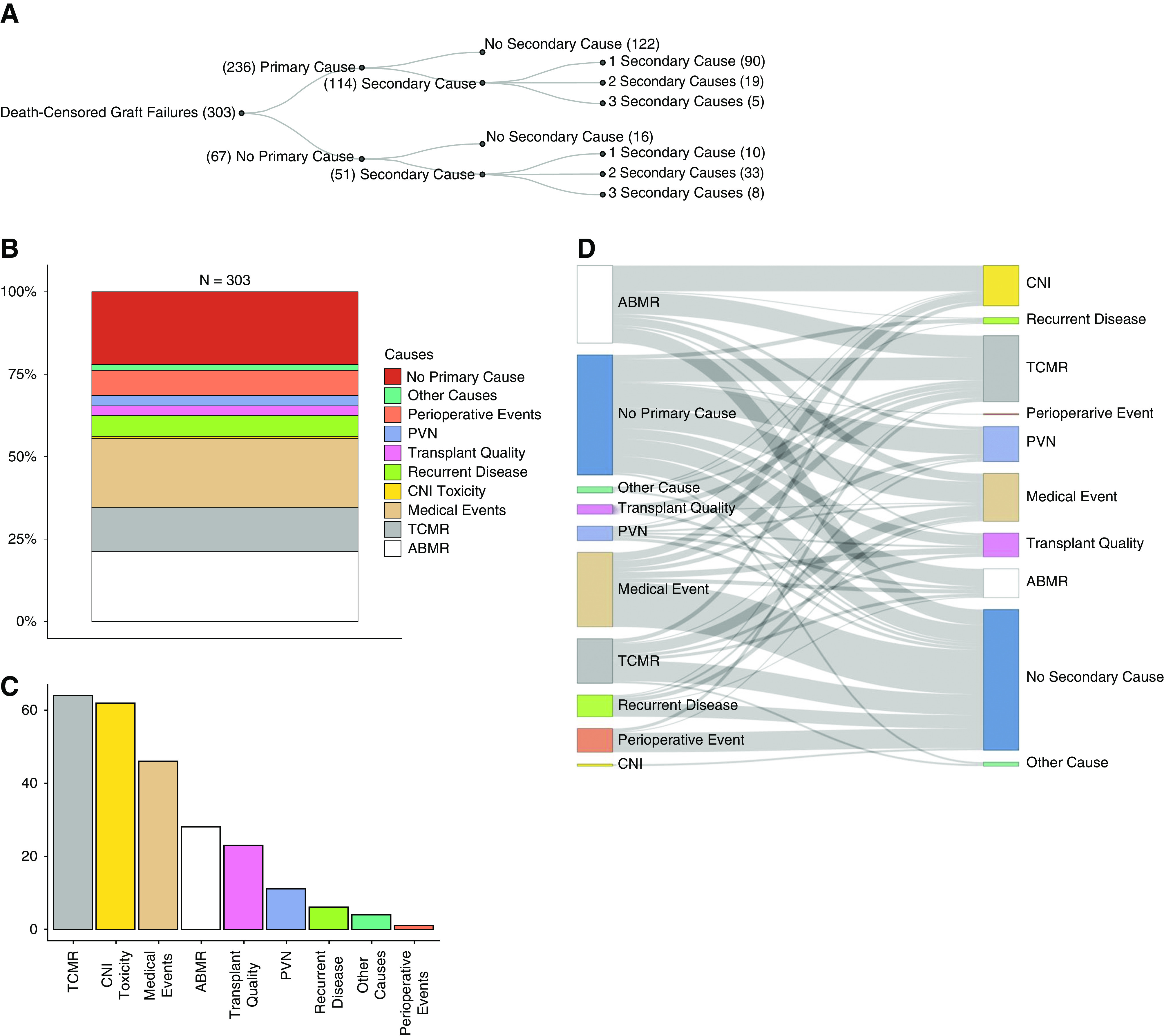
Distribution and co-occurence of primary and secondary causes. (A) Overview of primary and secondary causes for graft failure. (B) Percentage of primary causes of graft failures in relation to all 303 graft failures. (C) Absolute numbers of secondary causes for graft failure. (D) Co-occurrence of primary causes (left panel) with secondary causes (right panel) per transplant failure. Bar length of primary causes (left panel) does not correlate with the corresponding absolute number because it is influenced by the number of secondary causes per transplant.
Figure 5.
Figure 5.
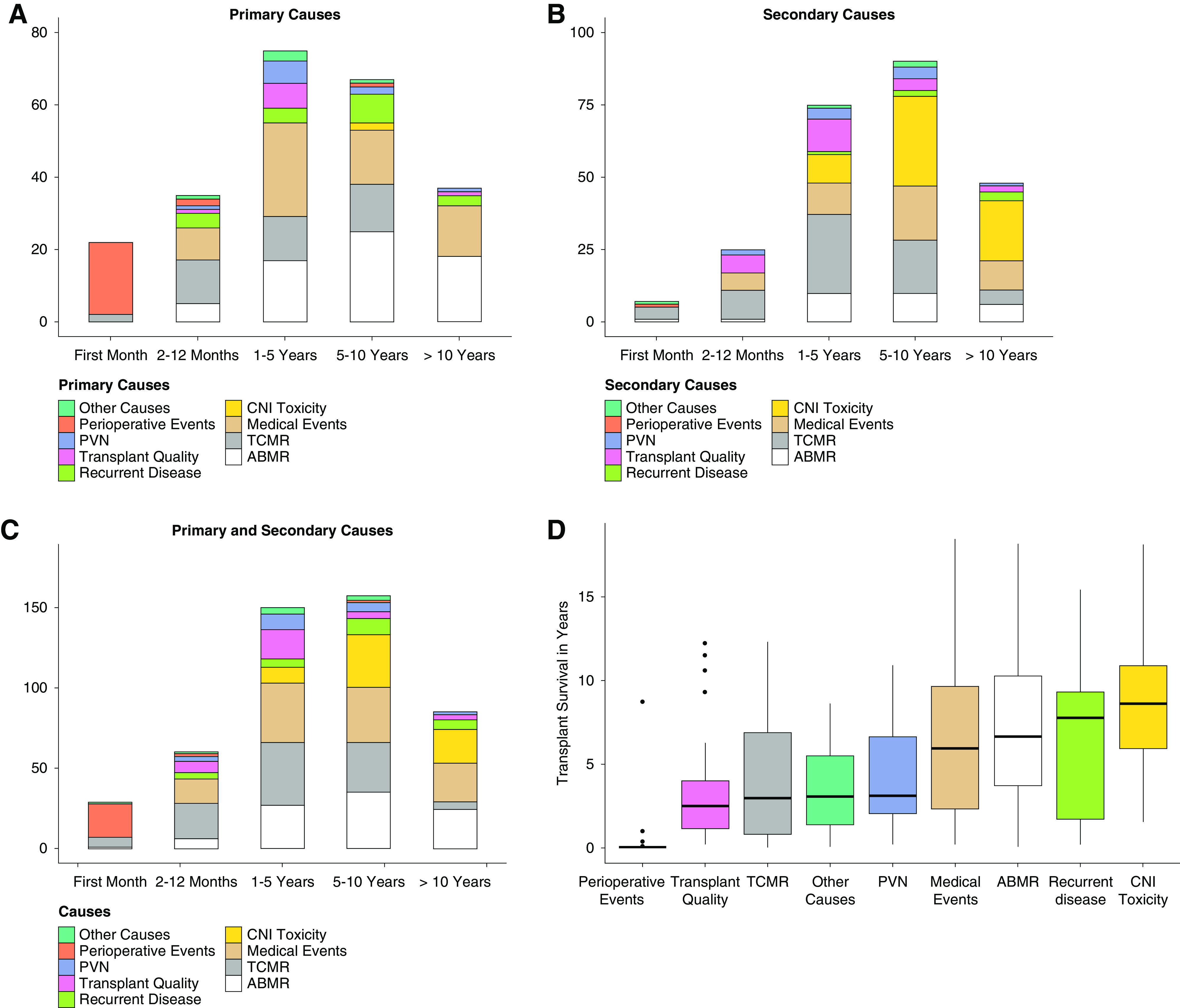
Evolution of causes depending on timing of graft failure and transplant survival for all categories. (A) Primary causes in different time intervals post-transplant. (B) Secondary causes in different time intervals post-transplant. (C) Primary plus secondary causes in different time intervals post-transplant. (D) Transplant survival for all main categories.
Figure 6.
Figure 6.
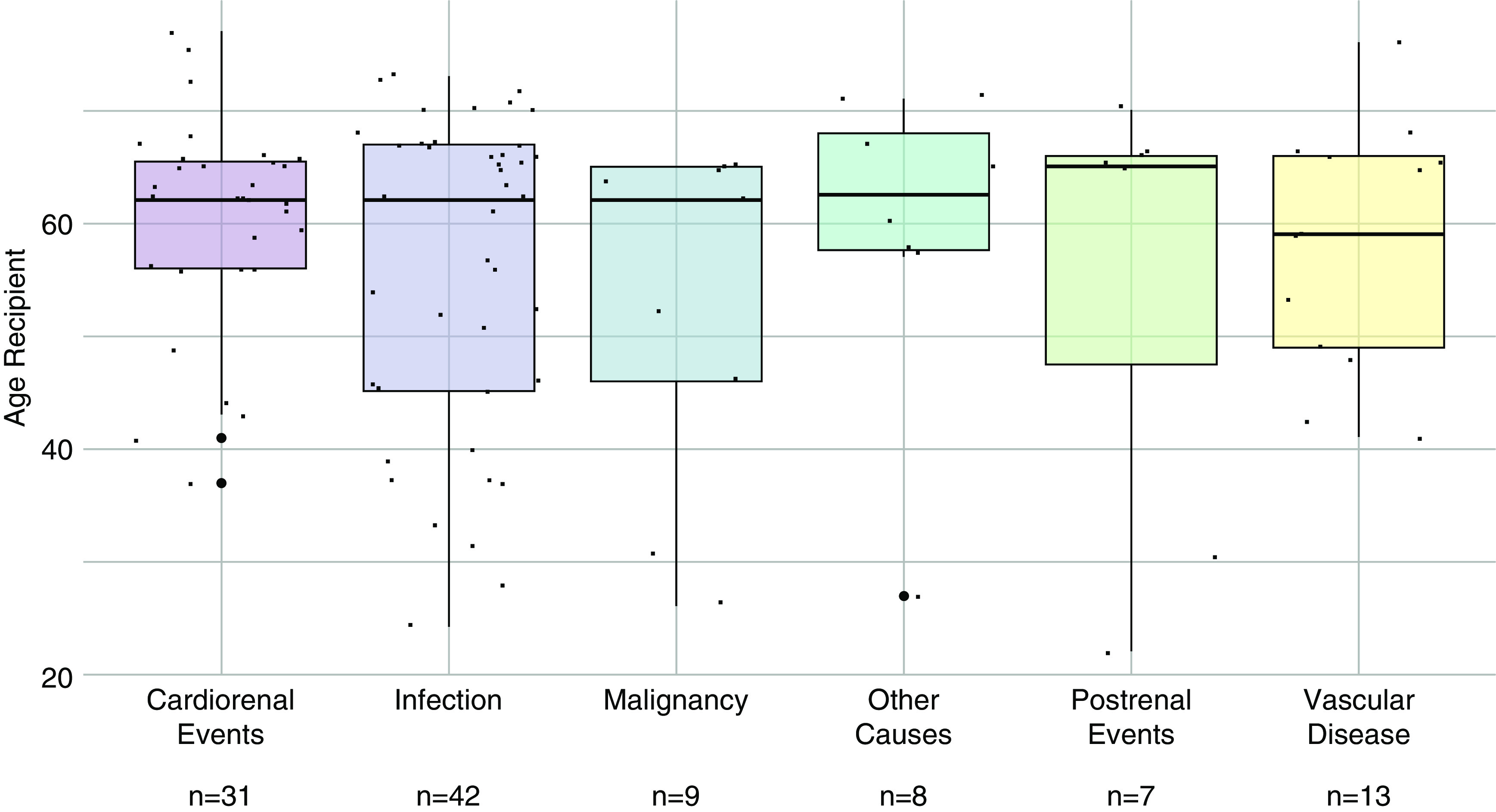
Recipient's age at transplantation and medical events leading to graft failure. Box plots showing recipient’s age (years) of patients with medical events leading to graft failure (n=110) divided in subcategories. Mean recipient’s age for all medical subcategories was 57.4 years.
Figure 7.
Figure 7.
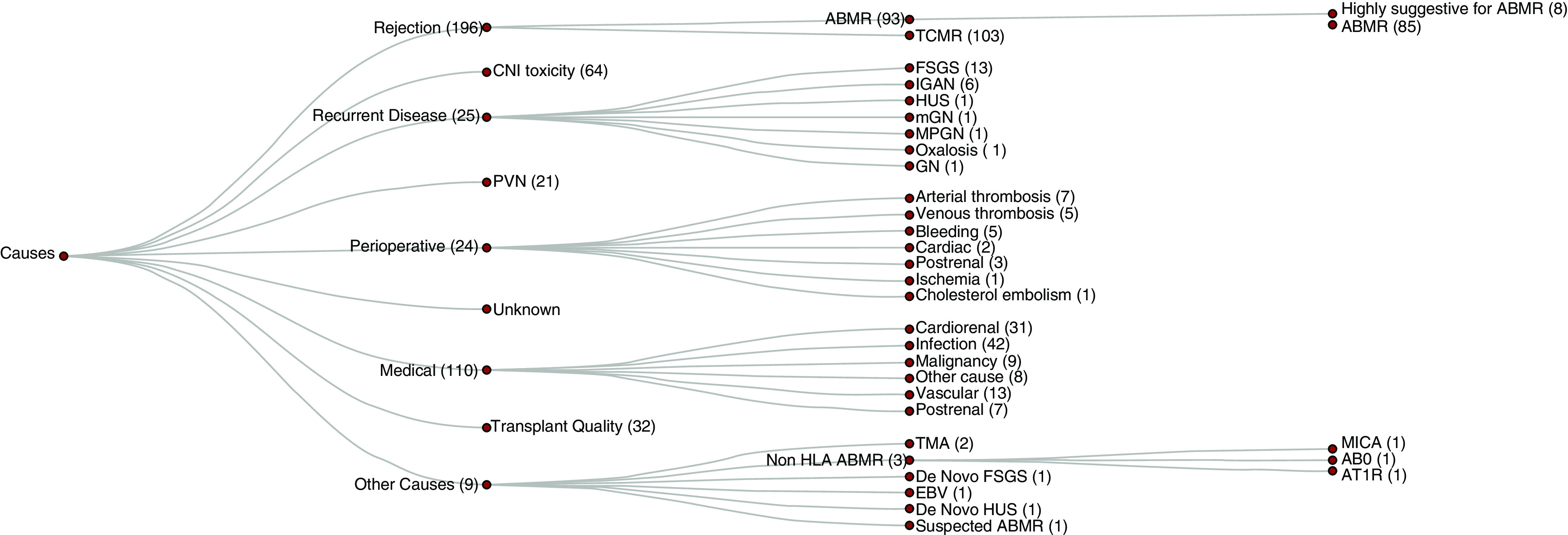
Granular breakdown of primary and secondary causes leading to graft failure. The most common cause for graft failure caused by disease recurrence was FSGS (13) followed by IGAN (6). Graft failures caused by perioperative events were mostly due to thromboses (12). ABO, ABO blood group system; AT1R, Angiotensin II Type 1–Receptor; EBV, Epstein–Barr virus; Focal segmental glomerulosclerosis; HUS, Hemolytic uremic syndrome; IGAN, IgA nephropathy; mGN, Membranous glomerulonephritis; MICA, Major Histocompatibility Complex Class I Chain-Related A; MPGN, Membranoproliferative glomerulonephritis; TMA, thrombotic microangiopathy.

References

    1. Wolfe RA, Ashby VB, Milford EL, Ojo AO, Ettenger RE, Agodoa LY, et al. .: Comparison of mortality in all patients on dialysis, patients on dialysis awaiting transplantation, and recipients of a first cadaveric transplant. N Engl J Med 341: 1725–1730, 1999. - PubMed
    1. Suthanthiran M, Strom TB: Renal transplantation. N Engl J Med 331: 365–376, 1994. - PubMed
    1. Schnuelle P, Lorenz D, Trede M, Van Der Woude FJ: Impact of renal cadaveric transplantation on survival in end-stage renal failure: Evidence for reduced mortality risk compared with hemodialysis during long-term follow-up. J Am Soc Nephrol 9: 2135–2141, 1998. - PubMed
    1. Oniscu GC, Brown H, Forsythe JL: Impact of cadaveric renal transplantation on survival in patients listed for transplantation. J Am Soc Nephrol 16: 1859–1865, 2005. - PubMed
    1. Valderrábano F, Jofre R, López-Gómez JM: Quality of life in end-stage renal disease patients. Am J Kidney Dis 38: 443–464, 2001. - PubMed

MeSH terms

Substances