. 2021 Jul;32(7):1779-1790.
doi: 10.1681/ASN.2020091311. Epub 2021 Apr 21.

Phase 3 Randomized Study Comparing Vadadustat with Darbepoetin Alfa for Anemia in Japanese Patients with Nondialysis-Dependent CKD

Affiliations

Phase 3 Randomized Study Comparing Vadadustat with Darbepoetin Alfa for Anemia in Japanese Patients with Nondialysis-Dependent CKD

Masaomi Nangaku et al. J Am Soc Nephrol. 2021 Jul.

Abstract

Background: Standard care for treating anemia in patients with CKD includes use of erythropoiesis-stimulating agents, which sometimes involves increased risks of cardiovascular morbidity and mortality. Previous studies in patients with anemia and nondialysis-dependent CKD (NDD-CKD) found significantly elevated hemoglobin levels with use of vadadustat, an oral hypoxia-inducible factor prolyl hydroxylase inhibitor, compared with placebo.

Methods: In this phase 3, open-label, active-controlled noninferiority trial, we randomized 304 Japanese adults with anemia in NDD-CKD (including erythropoiesis-stimulating agent users and nonusers) to oral vadadustat or subcutaneous darbepoetin alfa for 52 weeks. The primary efficacy end point was average hemoglobin at weeks 20 and 24. Safety data included adverse events (AEs) and serious AEs.

Results: A total of 151 participants received vadadustat and 153 received darbepoetin alfa. Least squares mean of the average hemoglobin at weeks 20 and 24 was 11.66 (95% confidence interval [95% CI], 11.49 to 11.84) g/dl for vadadustat and 11.93 (95% CI, 11.76 to 12.10) g/dl for darbepoetin alfa. The 95% CIs for both treatments were within the target hemoglobin range (11.0-13.0 g/dl), and the lower 95% confidence limit for the difference between groups (-0.50 g/dl) was above the predefined noninferiority margin (-0.75 g/dl), demonstrating noninferiority of vadadustat to darbepoetin alfa. Similar proportions of patients in each group reported AEs and serious AEs. The most frequent AEs with vadadustat were nasopharyngitis, diarrhea, and constipation.

Conclusions: In Japanese patients with NDD-CKD, vadadustat was noninferior to darbepoetin alfa, was effective up to week 52 in terms of average hemoglobin, and was generally well tolerated. These results suggest that vadadustat may be a potential treatment for anemia in this patient population.

Keywords: HIF prolyl hydroxylase inhibitor; Japan; anemia; erythropoiesis; nondialysis-dependent CKD; vadadustat.


Figures

None
Graphical abstract
Figure 1.
Figure 1.
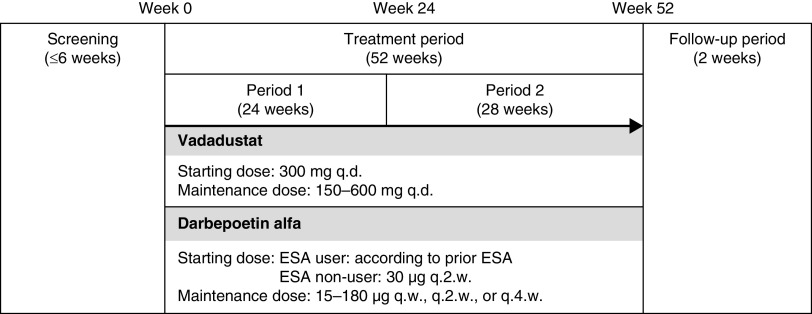
Study design. The study comprised a screening period, a 52-week treatment period, and a follow-up period. Patients were randomized 1:1 to oral vadadustat or subcutaneous darbepoetin alfa. Vadadustat was started at 300 mg once daily and doses were adjusted (dose range: 150–600 mg once daily) to maintain hemoglobin levels within the predefined target of 11.0–13.0 g/dl. The initial dose of darbepoetin alfa was set in accordance with previous ESAs in ESA users and was 30 μg every 2 weeks in ESA non–users. Doses of darbepoetin alfa were adjusted between 15 and 180 μg once weekly, every 2 weeks, or every 4 weeks to maintain Hb levels within the target range. The primary efficacy end point was the average Hb at weeks 20 and 24. q.d., once daily; q.w., once weekly; q.2.w, every 2 weeks; q.4.w, every 4 weeks
Figure 2.
Figure 2.
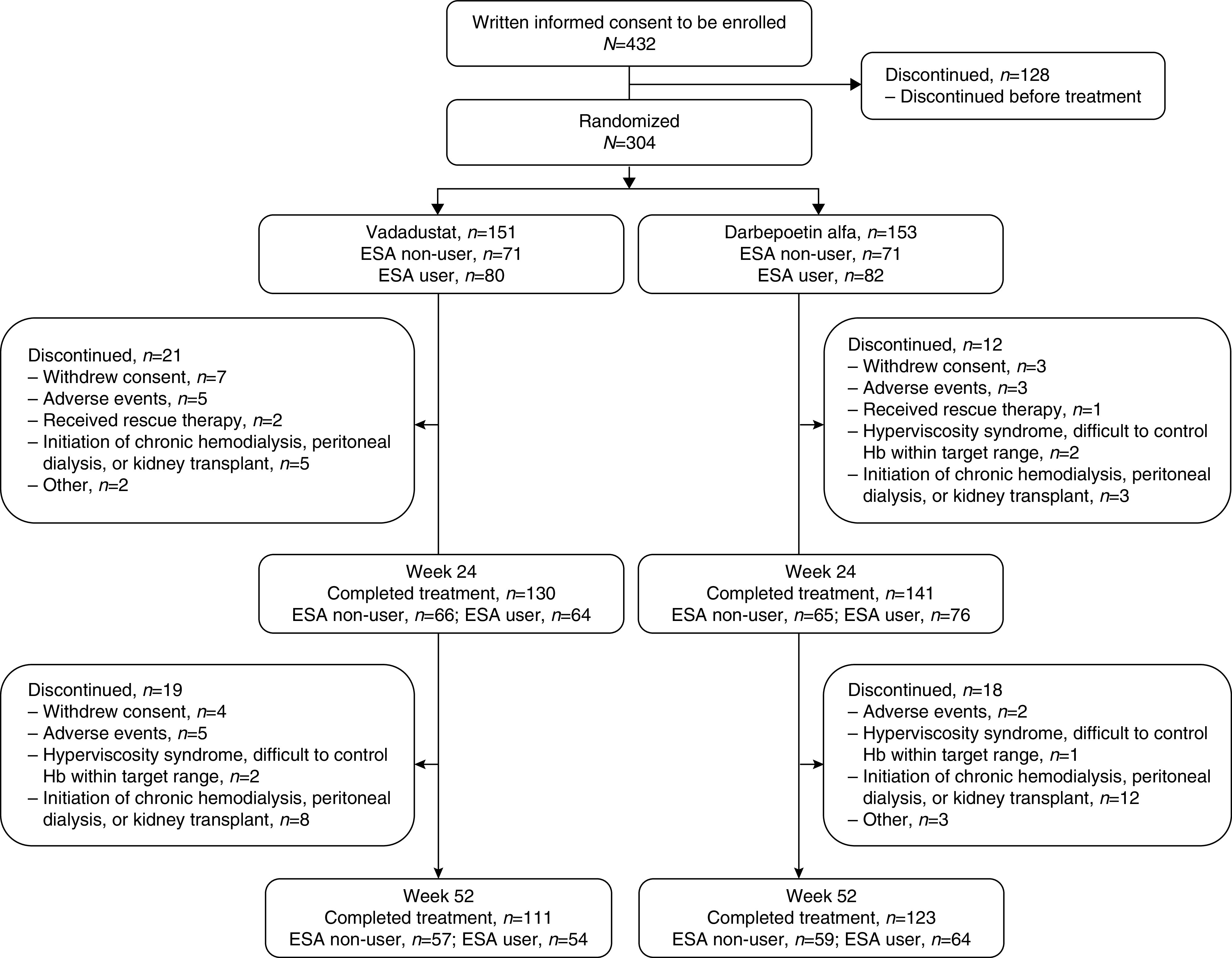
Patient flow diagram. In this study, 304 patients were randomized to vadadustat (n=151) or darbepoetin alfa (n=153). Of these, 271 patients completed the 24-week treatment period and 234 patients completed the 52-week treatment period.
Figure 3.
Figure 3.
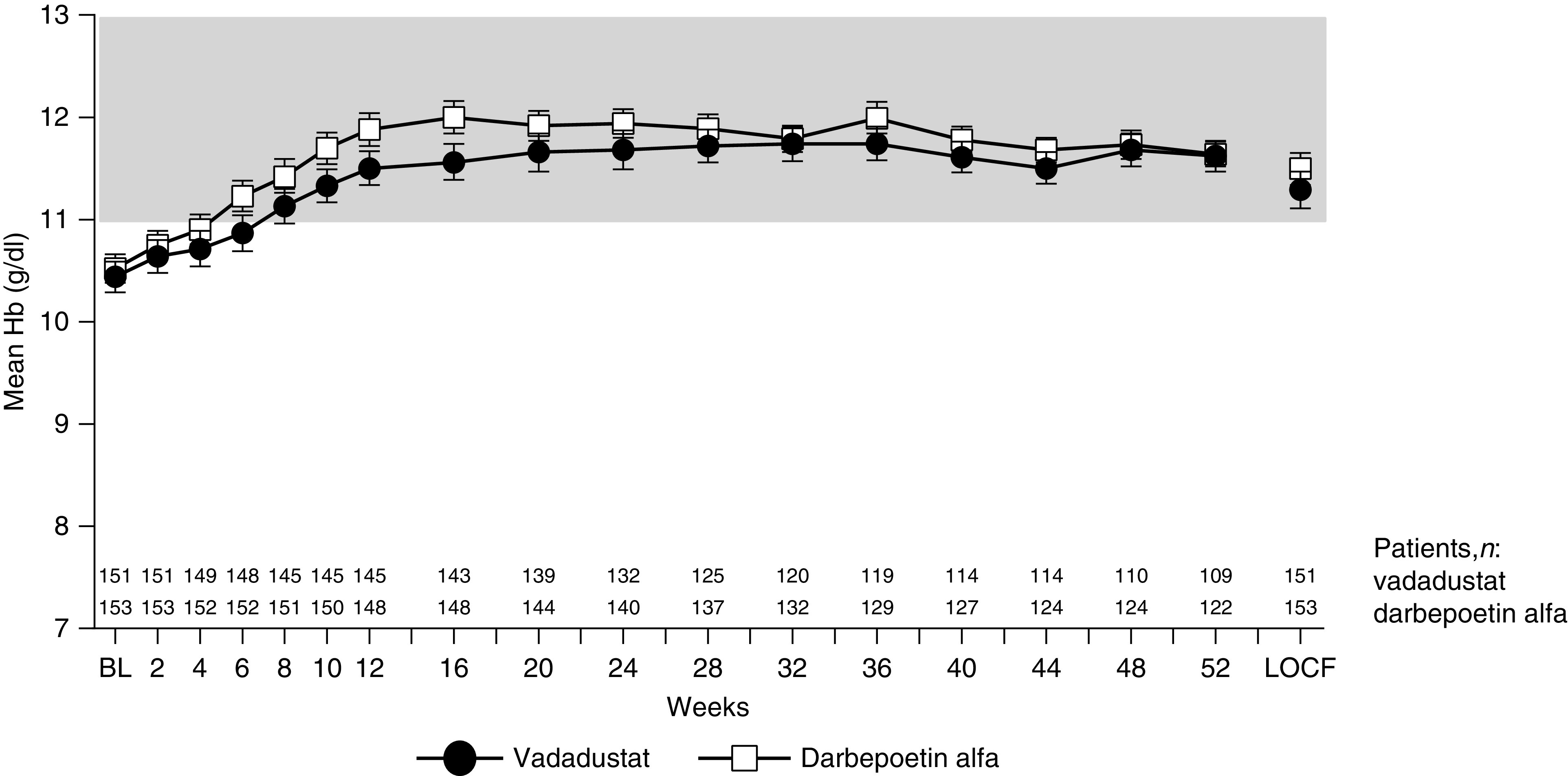
Mean Hb over time (overall population). Hb (g/dl) was measured every 2 weeks from baseline to week 12, and then every 4 weeks from week 12 to week 52. Data are displayed as mean and 95% CI. The shaded area represents the target Hb range. Mean Hb increased from baseline, reached the target range at weeks 6–8 in both treatment groups, and was maintained within the range up to week 52. BL, baseline.
Figure 4.
Figure 4.
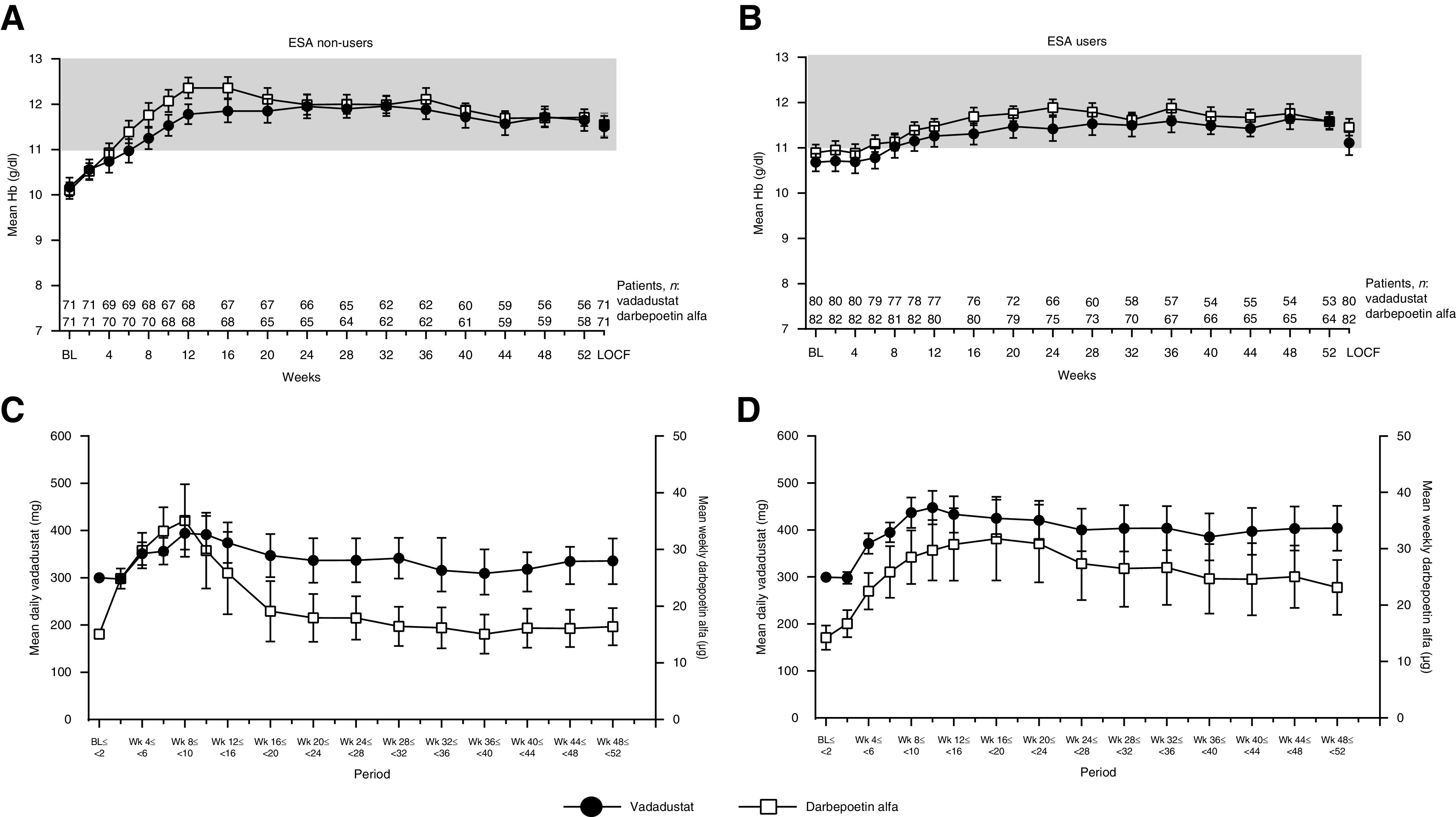
Mean Hb over time and mean dose of vadadustat (daily) or darbepoetin alfa (weekly) in the ESA non–user (A and C) and ESA user (B and D) groups. Data are displayed as mean and 95% CI. Hb (g/dl) was measured every 2 weeks from baseline to week 12, and then every 4 weeks from week 12 to week 52. The shaded area represents the target Hb range. In both ESA non–users (A) and ESA users (B), mean Hb increased from baseline, reached the target range at weeks 6–8 in both treatment groups, and remained within the range thereafter. In ESA non–users (C), the mean dose from weeks 48 to 52 was 335.65 mg/d for vadadustat and was 16.37 µg/wk for darbepoetin alfa. In ESA users (D), the mean dose from weeks 48 to 52 was 403.67 mg/d for vadadustat and was 23.15 µg/wk for darbepoetin alfa.
Figure 5.
Figure 5.
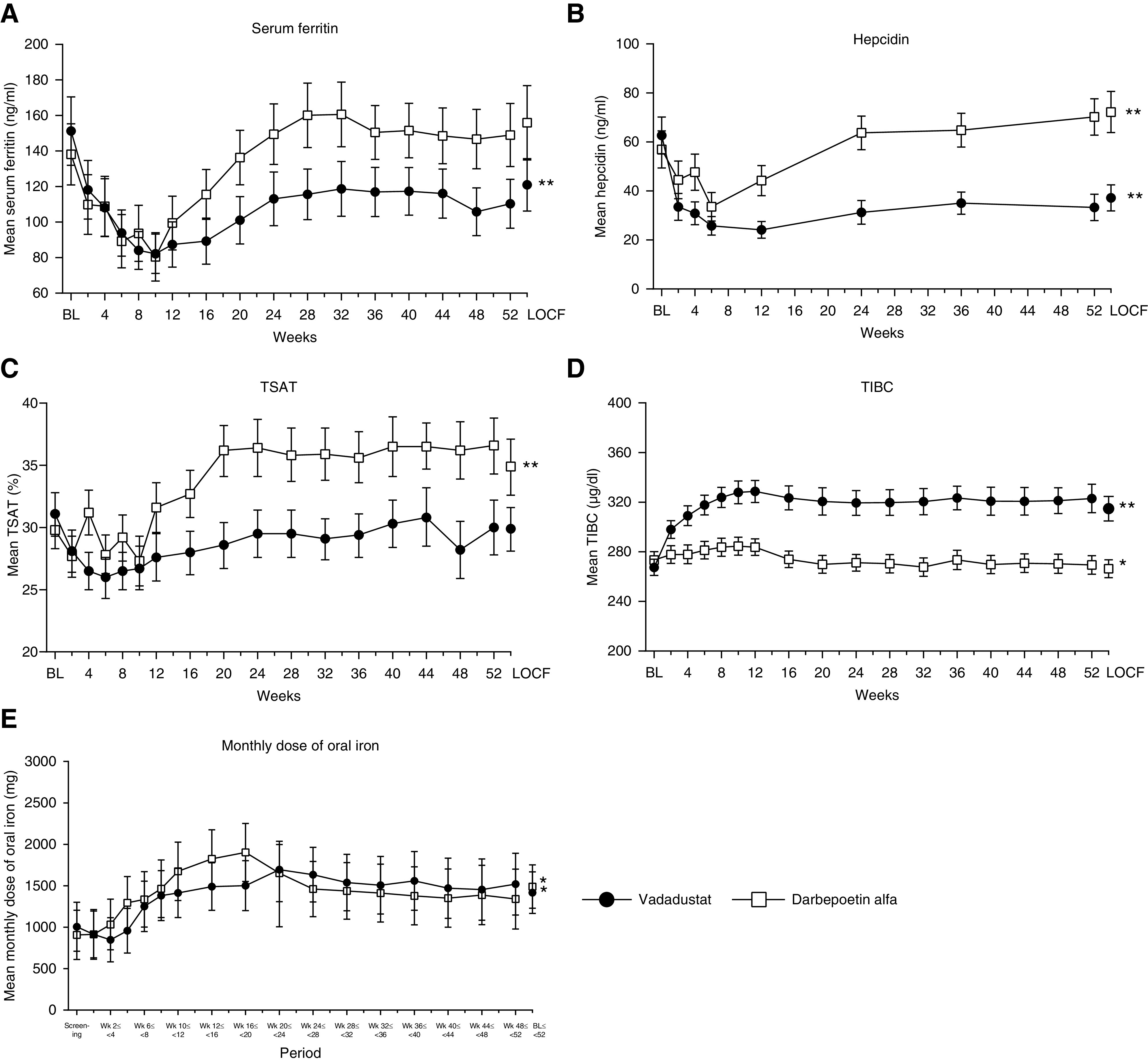
Mean iron-related parameters over time (52 weeks); (A) serum ferritin, (B) hepcidin, (C) TSAT, (D) TIBC, and (E) monthly dose of oral iron. Data are displayed as mean and 95% CI. Asterisks indicate statistically significant difference between week 52 LOCF and baseline, except for monthly dose of iron, which is between weeks 48 and 52 and screening (paired t test; *P<0.05, **P<0.01). In the vadadustat group, serum ferritin and hepcidin decreased, and TIBC increased from baseline to week 52 LOCF. In the darbepoetin alfa group, hepcidin and TSAT increased, and TIBC decreased from baseline to week 52 LOCF. The monthly iron dose was higher at weeks 48–52 than during the screening period in both treatment groups.
Figure 6.
Figure 6.
Mean red blood cell–related parameters over time. (A) MCV, (B) MCH, (C) MCHC, and (D) RDW. Data are displayed as mean and 95% CI. Asterisks indicate statistically significant difference between week 52 LOCF and baseline (paired t test; *P<0.05; **P<0.01). In the vadadustat group, MCV, MCH, and MCHC levels were higher than baseline at 52 weeks LOCF and there was no change in RDW. In the darbepoetin alfa group, there were no changes in these red blood cell indices except for RDW.

References

    1. Astor BC, Muntner P, Levin A, Eustace JA, Coresh J: Association of kidney function with anemia: The Third National Health and Nutrition Examination Survey (1988-1994). Arch Intern Med 162: 1401–1408, 2002 - PubMed
    1. McClellan W, Aronoff SL, Bolton WK, Hood S, Lorber DL, Tang KL, et al. .: The prevalence of anemia in patients with chronic kidney disease. Curr Med Res Opin 20: 1501–1510, 2004 - PubMed
    1. Imai E, Matsuo S, Makino H, Watanabe T, Akizawa T, Nitta K, et al. .: Chronic Kidney Disease Japan Cohort study: Baseline characteristics and factors associated with causative diseases and renal function. Clin Exp Nephrol 14: 558–570, 2010 - PubMed
    1. Portolés J, Gorriz JL, Rubio E, de Alvaro F, García F, Alvarez-Chivas V, et al. .; NADIR-3 Study Group: The development of anemia is associated to poor prognosis in NKF/KDOQI stage 3 chronic kidney disease. BMC Nephrol 14: 2, 2013 - PMC - PubMed
    1. Iseki K, Kohagura K: Anemia as a risk factor for chronic kidney disease. Kidney Int Suppl 72: S4–S9, 2007 - PubMed

LinkOut - more resources