Idioventricular rhythm and shock after a honeybee sting
- PMID: 33887752
- PMCID: PMC8295876
- DOI: 10.24875/ACM.20000035
Idioventricular rhythm and shock after a honeybee sting
Abstract
Objective: The objective of this study was to describe the case of a 19-year-old male presenting with bradycardia and hypotension after a honeybee sting making a review of the literature and pathophysiology of the cardiovascular and electrocardiogram (EKG) changes after a bee sting.
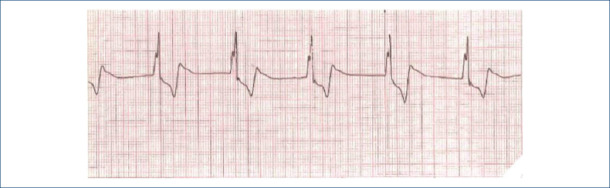
Methods: The patient's airway was inspected and secured. Electrocardiogram with an idioventricular rhythm at 41' bpm. Oxygen was administered, an intravenous access was established, and the transcutaneous pacemaker leads were placed on the chest of the patient, then published guidelines management was induced.
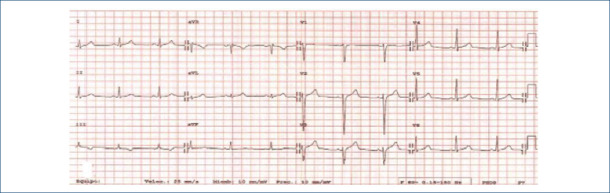
Results: The EKG showed idioventricular rhythm at a rate of 41 beats/min that resolved to a normal sinus rhythm after treatment.
Conclusions: A full and prompt cardiovascular evaluation should be performed in all patients presenting to the emergency department after a bee sting, and published guidelines regarding the management of bradycardia and anaphylaxis should be followed to achieve successful outcomes.
Objetivo: Describir el caso de un paciente masculino de 19 años que presenta bradicardia e hipotensión después de una picadura de abeja haciendo una revisión de la literatura y fisiopatología de los cambios cardiovasculares y electrocardiográficos después de una picadura de abeja.
Métodos: Se inspeccionó y aseguró la vía aérea del paciente. Un rastreo de ECG realizado al ingreso reveló ritmo idioventricular a una ritmo de 41 latidos por minuto. Se administró oxígeno, se estableció un acceso IV y se colocaron los cables del marcapasos transcutáneo en el tórax del paciente, luego se indujo el manejo de las guías publicadas.
Resultados: El electrocardiograma mostró un ritmo idioventricular a una frecuencia de 41 latidos por minuto que se resolvió a un ritmo sinusal normal después del tratamiento.
Conclusiones: Se debe realizar una evaluación cardiovascular completa y rápida en todos los pacientes que se presentan al departamento de emergencias después de una picadura de abeja, y se deben seguir las pautas publicadas sobre el manejo de la bradicardia y la anafilaxia para lograr resultados exitosos.
Keywords: Honeybee sting; Bradicardia; Bradycardia; Idioventricular rhythm; Picadura de abeja; Ritmo idioventricular.
Copyright: © 2021 Permanyer.
Conflict of interest statement
None.
Figures
References
-
- Ciszowski K, Mietka-Ciszowska A. Hymenoptera stings. Prz Lek. 2007;64:282–9. - PubMed
-
- Mingomataj EÇ, Bakiri AH, Ibranji A, Sturm GJ. Unusual reactions to hymenoptera stings:what should we keep in mind? Clin Rev Allergy Immunol. 2014;47:91–9. - PubMed
-
- Brown TC. Reactions to honeybee stings:an allergic prospective. Curr Opin Allergy Clin Immunol. 2013;13:365–71. - PubMed
-
- Langley RL. Animal-related fatalities in the United States-an update. Wilderness Environ Med. 2005;16:67–74. - PubMed
-
- Becerril-Ángeles M, Núñez-Velázquez M, Arias-Martìnez MI Grupo del Programa de Control de la Abeja Africanizada, SAGARPA. Mortality related to honey-bee stings in Mexico from 1988 to 2009. Rev Alerg Mex. 2013;60:58–62. - PubMed
Publication types
MeSH terms
LinkOut - more resources
Full Text Sources
Other Literature Sources
Medical
Research Materials