


Common hepatic artery pseudoaneurysm: A rare complication following total gastrectomy: A case report
- PMID: 33887837
- PMCID: PMC8027270
- DOI: 10.1016/j.ijscr.2021.105816
Common hepatic artery pseudoaneurysm: A rare complication following total gastrectomy: A case report
Abstract
Introduction and importance: Common Hepatic Artery (CHA) Pseudoaneurysm is a rare entity, attributed to infections, trauma, and upper abdominal surgery. Most cases occur after biliary and pancreatic surgery. CHA pseudoaneurysm after total gastrectomy is uncommon and can be devastating.
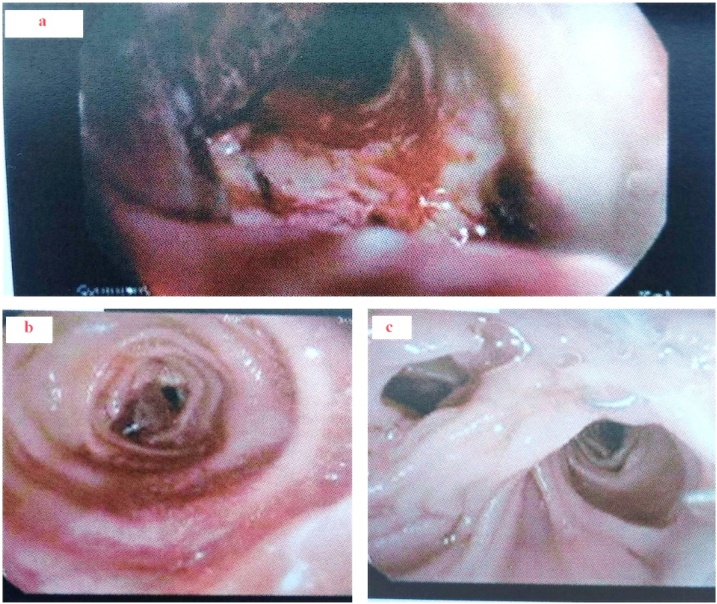
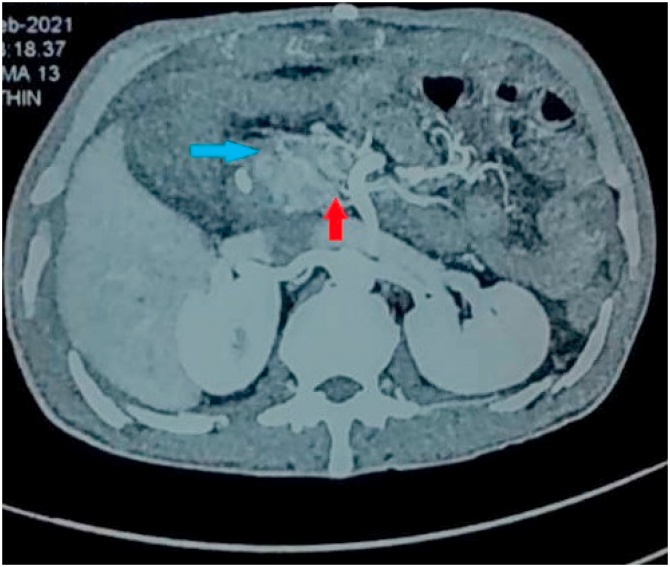
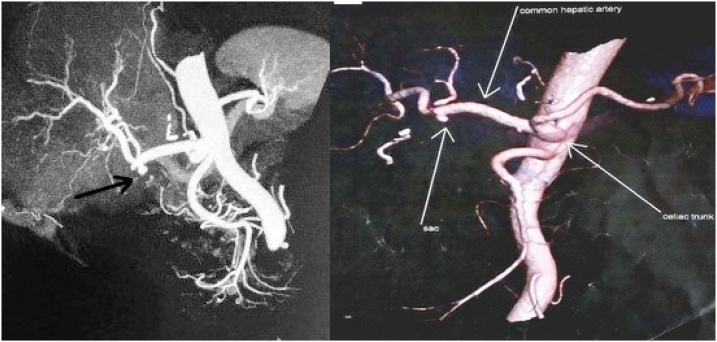
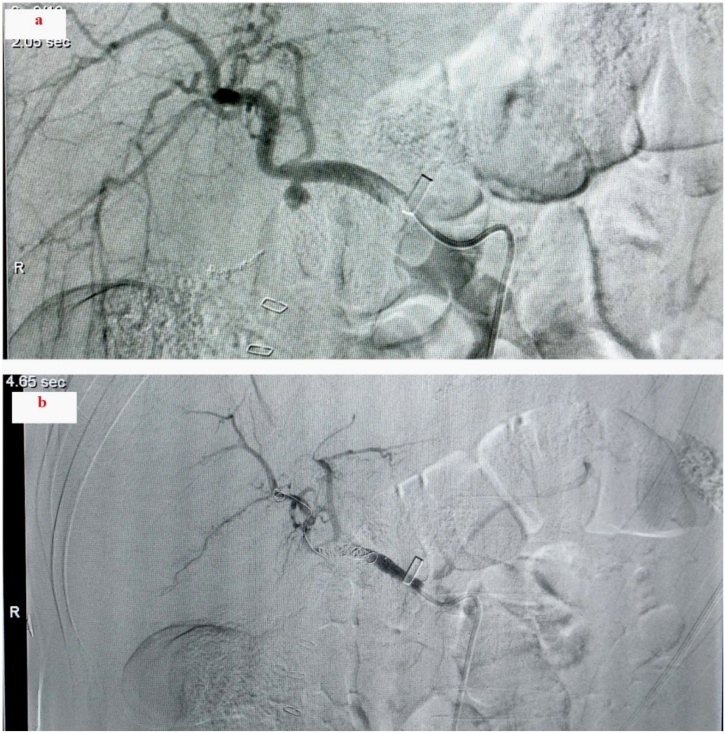
Case presentation: A 58-years male who underwent D2 total gastrectomy for gastric carcinoma ten days ago, presented with hematemesis, epigastric pain, and a history of melaena. After admission, upper gastrointestinal endoscopy showed a clot at the jejunojejunostomy site. Computed tomography with angiography was diagnostic of pseudoaneurysm of CHA located inferiorly. Coil embolization of CHA was done and the patient improved.
Clinical discussion: Pseudoaneurysm of the common hepatic artery is a serious complication after abdominal surgery. Only a few cases have been reported with similar symptoms related to gastrointestinal bleeding following various upper abdominal surgeries. Coil embolization is a gold standard technique with a high success rate.
Conclusion: CHA pseudoaneurysm is a dreadful potential complication of abdominal surgery including gastrectomy. Early recognition and emergency management of CHA pseudoaneurysm are crucial for a favorable outcome for patients with bleeding from CHA aneurysm.
Keywords: Common hepatic artery; Embolization; Gastrectomy; Pseudoaneurysm.
Copyright © 2021 The Authors. Published by Elsevier Ltd.. All rights reserved.
Figures
References
Publication types
LinkOut - more resources
Full Text Sources
Other Literature Sources
