


NHLBI-CMREF Workshop Report on Pulmonary Vascular Disease Classification: JACC State-of-the-Art Review
- PMID: 33888254
- PMCID: PMC8065203
- DOI: 10.1016/j.jacc.2021.02.056
NHLBI-CMREF Workshop Report on Pulmonary Vascular Disease Classification: JACC State-of-the-Art Review
Abstract
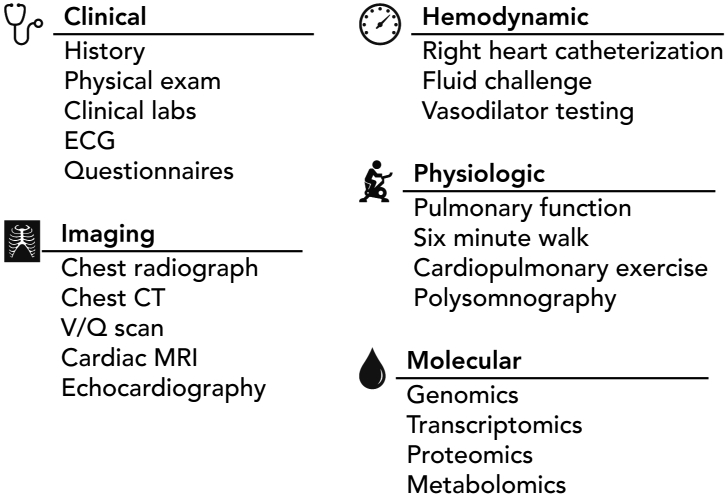
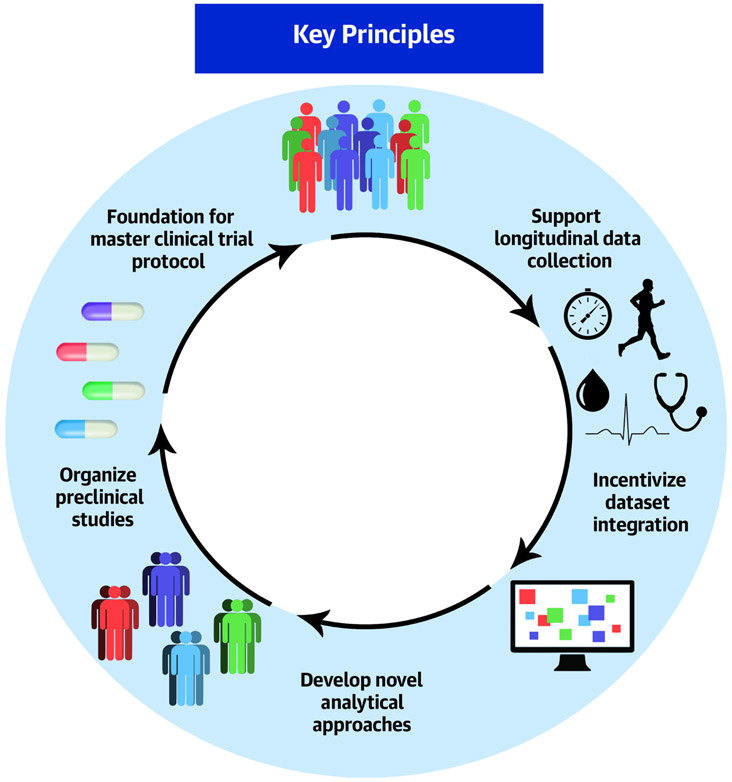
The National Heart, Lung, and Blood Institute and the Cardiovascular Medical Research and Education Fund held a workshop on the application of pulmonary vascular disease omics data to the understanding, prevention, and treatment of pulmonary vascular disease. Experts in pulmonary vascular disease, omics, and data analytics met to identify knowledge gaps and formulate ideas for future research priorities in pulmonary vascular disease in line with National Heart, Lung, and Blood Institute Strategic Vision goals. The group identified opportunities to develop analytic approaches to multiomic datasets, to identify molecular pathways in pulmonary vascular disease pathobiology, and to link novel phenotypes to meaningful clinical outcomes. The committee suggested support for interdisciplinary research teams to develop and validate analytic methods, a national effort to coordinate biosamples and data, a consortium of preclinical investigators to expedite target evaluation and drug development, longitudinal assessment of molecular biomarkers in clinical trials, and a task force to develop a master clinical trials protocol for pulmonary vascular disease.
Keywords: drug repurposing; integrative omics; master clinical trial protocol; precision medicine; pulmonary hypertension; systems biology.
Copyright © 2021 American College of Cardiology Foundation. All rights reserved.
Conflict of interest statement
Funding Support and Author Disclosures Several authors report funding support from the National Institutes of Health/National Heart, Lung, and Blood Institute (K08HL128802 to Dr. Oldham; R35HL140019 to Dr. Aldred; R01HL146588 to Dr. Brittain; R01HL135142, R01HL137927, R01HL089856, and R01HL147148 to Dr. Cho; R01HL136603 to Dr. Desai; K01HL146980 to Dr. Kelly; U01HL125215 to Dr. Leopold; and K23HL144418 to Dr. Modena). Dr. Oldham has received a research grant from the Cardiovascular Medical Research and Education Fund. Dr. Leopold was supported by grants from the American Heart Association. Dr. Wilkins was supported by the British Heart Foundation (RE/18/4/34215 and SP/18/10/33975). Dr. Hemnes has served as a consultant for Actelion, Bayer, Complexa, and United Therapeutics; and owns shares in PHPrecisionMed, all outside of the submitted work. Dr. Chan has served as a consultant for Zogenix, Aerpio, and United Therapeutics; is a director, officer, and shareholder in Synhale Therapeutics; has held research grants from Actelion and Pfizer; and has filed patent applications regarding the targeting of BMP signaling and metabolic pathways in pulmonary hypertension, all outside of the submitted work. Dr. Cho has received grant support from Bayer and GlaxoSmithKline; and served as a consultant for Genentech, AstraZeneca, and Illumina, all outside of the submitted work. Dr. Desai has served as a consultant for Novartis, outside of the submitted work. Dr. Modena has received honoraria from AstraZeneca, Genentech, GlaxoSmithKline, Regeneron, Sanofi, and Teva for consulting or lectures in the past; and has current research funding from Genentech and GlaxoSmithKline, all outside of the submitted work. Dr. Rhodes has received personal advisory board fees from Janssen and United Therapeutics, outside of the submitted work. Dr. Wilkins has consulted with Actelion, Novartis, GlaxoSmithKline, and MorphogenIX in the development of biomarkers for pulmonary hypertension, all outside of the submitted work. All other authors have reported that they have no relationships relevant to the contents of this paper to disclose.
Figures
References
Publication types
MeSH terms
Grants and funding
- FS/15/59/31839/BHF_/British Heart Foundation/United Kingdom
- R01 HL141387/HL/NHLBI NIH HHS/United States
- T32 HL129964/HL/NHLBI NIH HHS/United States
- K23 HL144418/HL/NHLBI NIH HHS/United States
- SP/18/10/33975/BHF_/British Heart Foundation/United Kingdom
- K08 HL128802/HL/NHLBI NIH HHS/United States
- R01 HL138437/HL/NHLBI NIH HHS/United States
- R24 HL105333/HL/NHLBI NIH HHS/United States
- R35 HL140019/HL/NHLBI NIH HHS/United States
- P01 HL108797/HL/NHLBI NIH HHS/United States
- R01 HL137927/HL/NHLBI NIH HHS/United States
- R24 HL123767/HL/NHLBI NIH HHS/United States
- K01 HL146980/HL/NHLBI NIH HHS/United States
- P30 ES006694/ES/NIEHS NIH HHS/United States
- K01 HL130625/HL/NHLBI NIH HHS/United States
- R01 HL147148/HL/NHLBI NIH HHS/United States
- R01 HL089856/HL/NHLBI NIH HHS/United States
- R01 HL135142/HL/NHLBI NIH HHS/United States
- R01 HL146588/HL/NHLBI NIH HHS/United States
- CH/09/001/25945/BHF_/British Heart Foundation/United Kingdom
- U01 HL125215/HL/NHLBI NIH HHS/United States
- RE/18/4/34215 /BHF_/British Heart Foundation/United Kingdom
- K23 HL151892/HL/NHLBI NIH HHS/United States
- R01 HL142720/HL/NHLBI NIH HHS/United States
- R01 HL124021/HL/NHLBI NIH HHS/United States
- R01 HL136603/HL/NHLBI NIH HHS/United States
LinkOut - more resources
Full Text Sources
Other Literature Sources
Medical
Miscellaneous
