


The extracellular matrix as modifier of neuroinflammation and remyelination in multiple sclerosis
- PMID: 33889940
- PMCID: PMC8370400
- DOI: 10.1093/brain/awab059
The extracellular matrix as modifier of neuroinflammation and remyelination in multiple sclerosis
Abstract
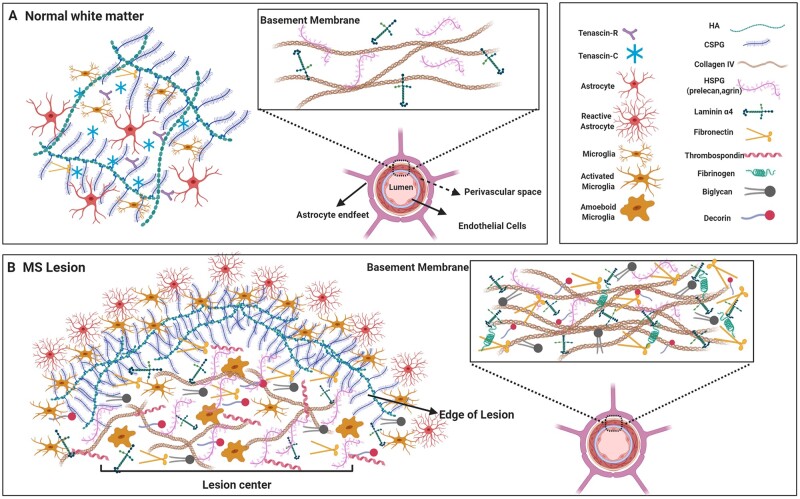
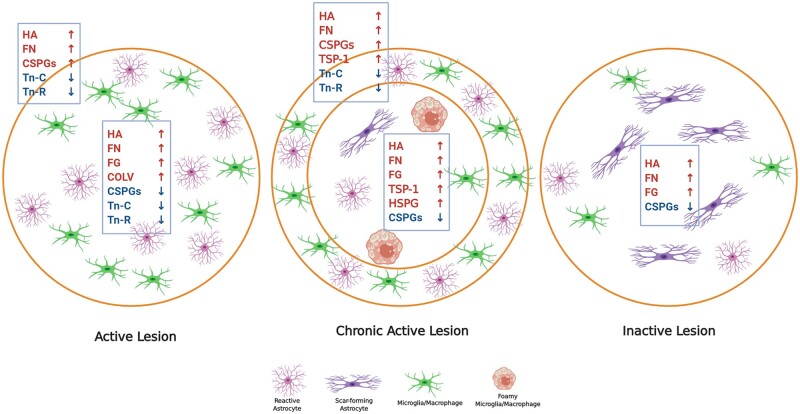
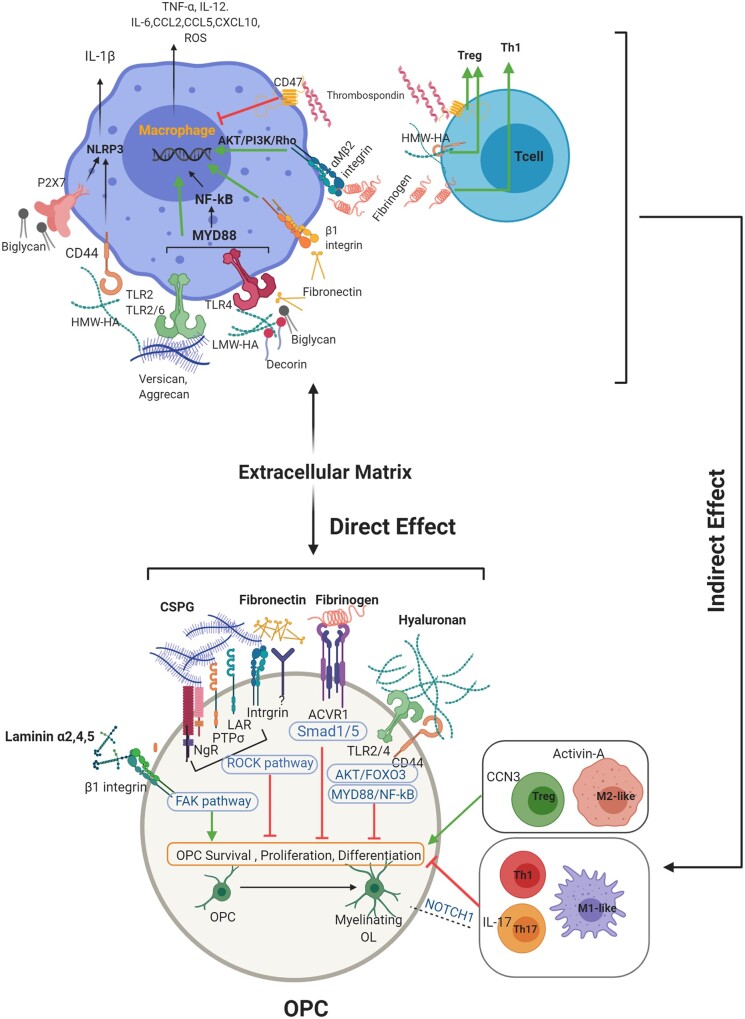
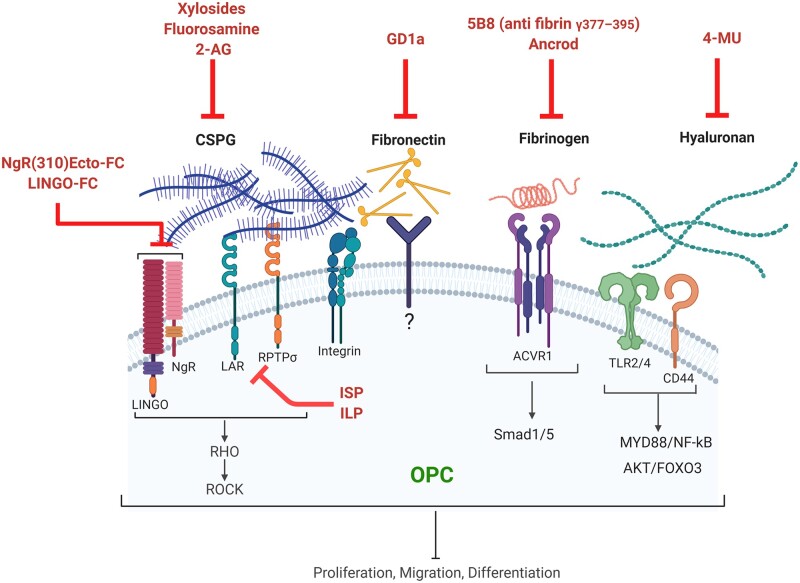
Remyelination failure contributes to axonal loss and progression of disability in multiple sclerosis. The failed repair process could be due to ongoing toxic neuroinflammation and to an inhibitory lesion microenvironment that prevents recruitment and/or differentiation of oligodendrocyte progenitor cells into myelin-forming oligodendrocytes. The extracellular matrix molecules deposited into lesions provide both an altered microenvironment that inhibits oligodendrocyte progenitor cells, and a fuel that exacerbates inflammatory responses within lesions. In this review, we discuss the extracellular matrix and where its molecules are normally distributed in an uninjured adult brain, specifically at the basement membranes of cerebral vessels, in perineuronal nets that surround the soma of certain populations of neurons, and in interstitial matrix between neural cells. We then highlight the deposition of different extracellular matrix members in multiple sclerosis lesions, including chondroitin sulphate proteoglycans, collagens, laminins, fibronectin, fibrinogen, thrombospondin and others. We consider reasons behind changes in extracellular matrix components in multiple sclerosis lesions, mainly due to deposition by cells such as reactive astrocytes and microglia/macrophages. We next discuss the consequences of an altered extracellular matrix in multiple sclerosis lesions. Besides impairing oligodendrocyte recruitment, many of the extracellular matrix components elevated in multiple sclerosis lesions are pro-inflammatory and they enhance inflammatory processes through several mechanisms. However, molecules such as thrombospondin-1 may counter inflammatory processes, and laminins appear to favour repair. Overall, we emphasize the crosstalk between the extracellular matrix, immune responses and remyelination in modulating lesions for recovery or worsening. Finally, we review potential therapeutic approaches to target extracellular matrix components to reduce detrimental neuroinflammation and to promote recruitment and maturation of oligodendrocyte lineage cells to enhance remyelination.
Keywords: CSPGs; extracellular matrix; multiple sclerosis; remyelination.
© The Author(s) (2021). Published by Oxford University Press on behalf of the Guarantors of Brain. All rights reserved. For permissions, please email: journals.permissions@oup.com.
Figures
References
-
- Croxford AL, Spath S, Becher B.. GM-CSF in neuroinflammation: licensing myeloid cells for tissue damage. Trends Immunol. 2015;36:651–662. - PubMed
-
- Plemel JR, Liu WQ, Yong VW.. Remyelination therapies: a new direction and challenge in multiple sclerosis. Nat Rev Drug Discov. 2017;16:617–634. - PubMed
-
- Lau LW, Cua R, Keough MB, Haylock-Jacobs S, Yong VW.. Pathophysiology of the brain extracellular matrix: a new target for remyelination. Nat Rev Neurosci. 2013;14:722–729. - PubMed
-
- Sorokin L.The impact of the extracellular matrix on inflammation. Nat Rev Immunol. 2010;10:712–723. - PubMed
-
- Rauch U.Brain matrix: structure, turnover and necessity. Biochem Soc Trans. 2007;35:656–660. - PubMed
Publication types
MeSH terms
Grants and funding
LinkOut - more resources
Full Text Sources
Other Literature Sources
Medical
