Safety, pharmacokinetics and pharmacodynamics of HTL0009936, a selective muscarinic M1 -acetylcholine receptor agonist: A randomized cross-over trial
- PMID: 33891333
- PMCID: PMC8596821
- DOI: 10.1111/bcp.14872
Safety, pharmacokinetics and pharmacodynamics of HTL0009936, a selective muscarinic M1 -acetylcholine receptor agonist: A randomized cross-over trial
Abstract
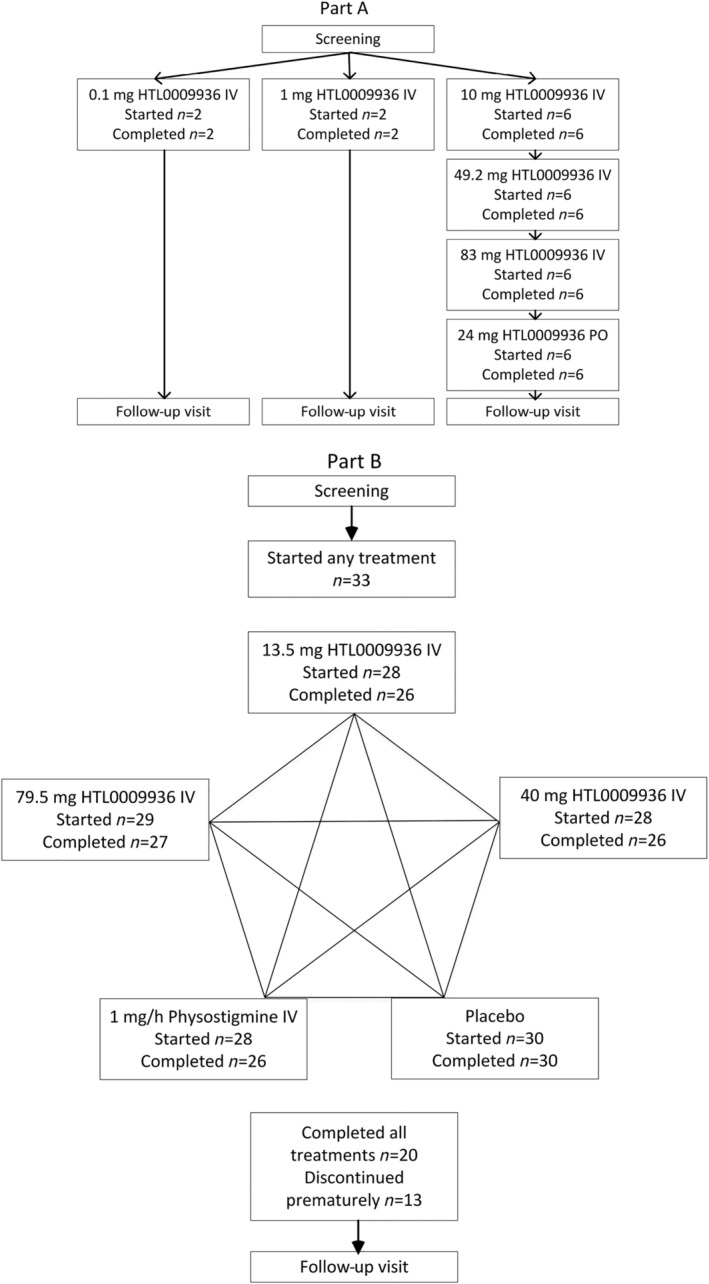
Aims: HTL0009936 is a selective M1 muscarinic receptor agonist in development for cognitive dysfunction in Alzheimer's disease. Safety, tolerability and pharmacokinetics and exploratory pharmacodynamic effects of HTL0009936 administered by continuous IV infusion at steady state were investigated in elderly subjects with below average cognitive functioning (BACF).
Methods: Part A was a four-treatment open label sequential study in healthy elderly investigating 10-83 mg HTL0009936 (IV) and a 24 mg HTL0009936 single oral dose. Part B was a five-treatment randomized, double-blind, placebo and physostigmine controlled cross-over study with IV HTL0009936 in elderly subjects with BACF. Pharmacodynamic assessments were performed using neurocognitive and electrophysiological tests.
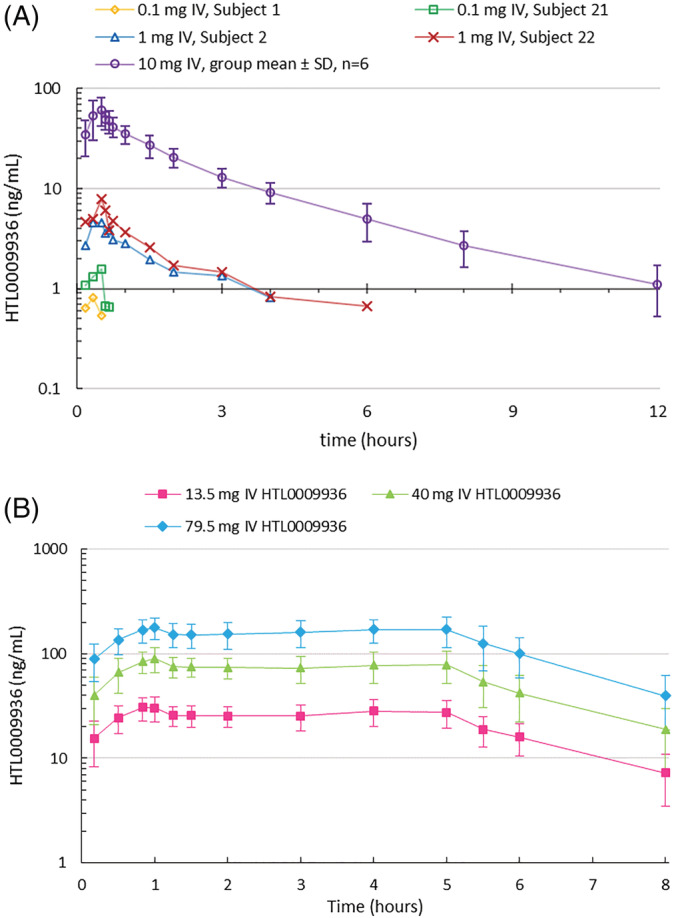
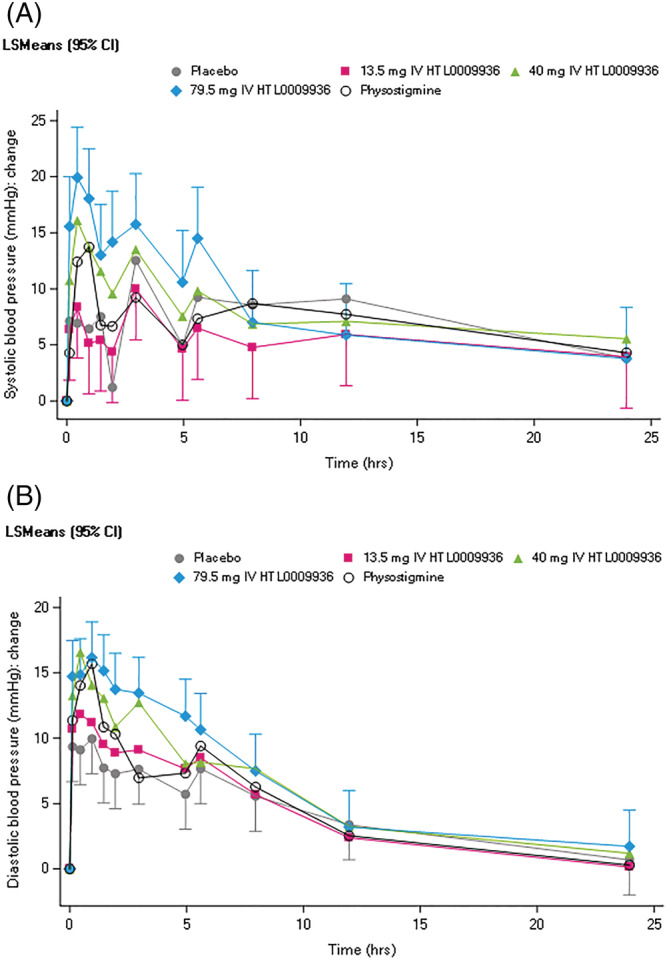
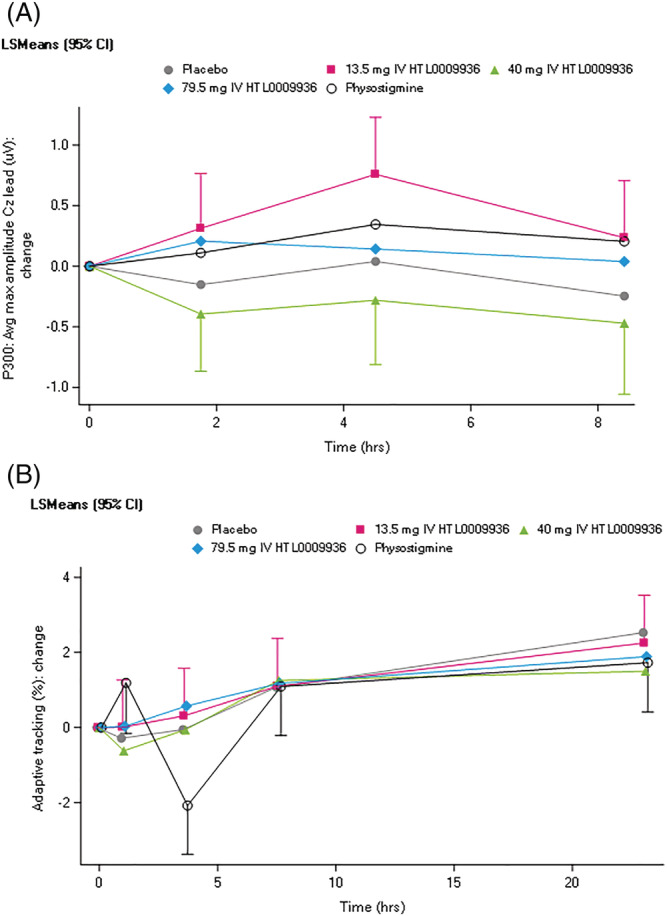
Results: Pharmacokinetics of HTL0009936 showed dose-proportional increases in exposure with a mean half-life of 2.4 hours. HTL0009936 was well-tolerated with transient dose-related adverse events (AEs). Small increases in mean systolic blood pressure of 7.12 mmHg (95% CI [3.99-10.24]) and in diastolic of 5.32 mmHg (95% CI [3.18-7.47]) were noted at the highest dose in part B. Overall, there was suggestive, but no definitive, positive or negative pharmacodynamic effects. Statistically significant effects were observed on P300 with HTL0009936 and adaptive tracking with physostigmine.
Conclusions: HTL0009936 showed well-characterized pharmacokinetics and single doses were safe and generally well-tolerated in healthy elderly subjects. Due to physostigmine tolerability issues and subject burden, the study design was changed and some pharmacodynamic assessments (neurocognitive) were performed at suboptimal drug exposures. Therefore no clear conclusions can be made on pharmacodynamic effects of HTL0009936, although an effect on P300 is suggestive of central target engagement.
Keywords: Alzheimer's disease; M1 receptor; cholinergic system; elderly; muscarinic receptors; pharmacokinetics; safety.
© 2021 The Authors. British Journal of Clinical Pharmacology published by John Wiley & Sons Ltd on behalf of British Pharmacological Society.
Conflict of interest statement
This study was sponsored by Sosei Heptares. J.L., G.A.B., A.B., M.C., M.W., F.H.M., T.T. and P.J.N. are employees of Sosei Heptares and hold shares in the company.
Figures
References
-
- Riedel WJ. Preventing cognitive decline in preclinical Alzheimer's disease. Curr Opin Pharmacol. 2014;14:18‐22. - PubMed
-
- Terry RD, Masliah E, Salmon DP, et al. Physical basis of cognitive alterations in Alzheimer's disease: synapse loss is the major correlate of cognitive impairment. Ann Neurol. 1991;30(4):572‐580. - PubMed
-
- Whitehouse PJ, Price DL, Clark AW, Coyle JT, DeLong MR. Alzheimer disease: evidence for selective loss of cholinergic neurons in the nucleus basalis. Ann Neurol. 1981;10(2):122‐126. - PubMed
-
- Galimberti D, Scarpini E. Treatment of Alzheimer's disease: symptomatic and disease‐modifying approaches. Curr Aging Sci. 2010;3(1):46‐56. - PubMed
Publication types
MeSH terms
Substances
LinkOut - more resources
Full Text Sources
Other Literature Sources
Miscellaneous