


Can a 'rewards-for-exercise app' increase physical activity, subjective well-being and sleep quality? An open-label single-arm trial among university staff with low to moderate physical activity levels
- PMID: 33892665
- PMCID: PMC8063391
- DOI: 10.1186/s12889-021-10794-w
Can a 'rewards-for-exercise app' increase physical activity, subjective well-being and sleep quality? An open-label single-arm trial among university staff with low to moderate physical activity levels
Abstract
Background: This study examined the impact of a 'rewards-for-exercise' mobile application on physical activity, subjective well-being and sleep quality among 148 employees in a UK university with low to moderate physical activity levels.
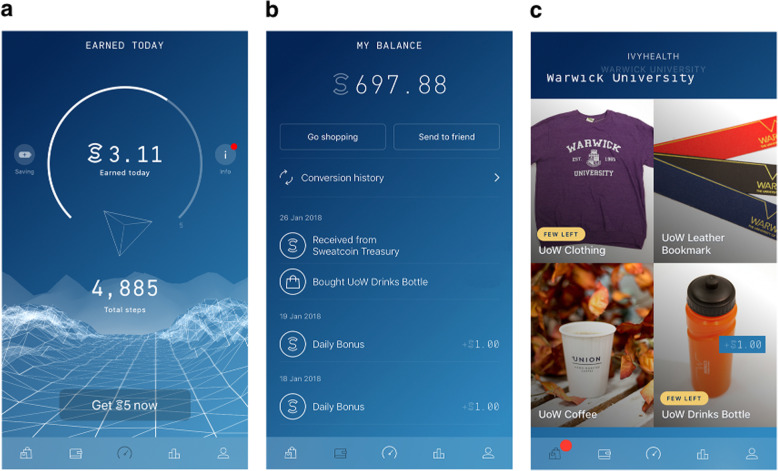
Methods: A three-month open-label single-arm trial with a one-year follow-up after the end of the trial. Participants used the Sweatcoin application which converted their outdoor steps into a virtual currency used for the purchase of products available at the university campus' outlets, using an in-app marketplace. The primary outcome measure was self-reported physical activity. Secondary measures included device-measured physical activity, subjective well-being (i.e., life satisfaction, positive affect, negative affect), and self-reported sleep quality.
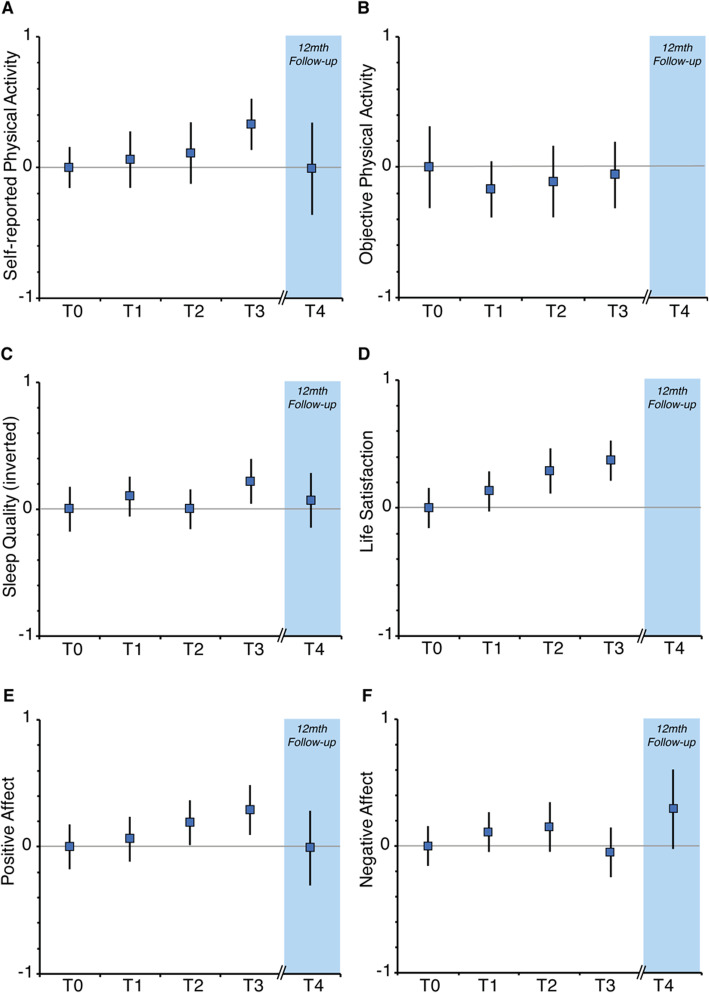
Results: The findings show an increase in self-reported physical activity (d = 0.34), life satisfaction (d = 0.31), positive affect (d = 0.29), and sleep quality (d = 0.22) during the three-month trial period.
Conclusion: The study suggests that mobile incentives-for-exercise applications might increase physical activity levels, positive affect, and sleep quality, at least in the short term. The observed changes were not sustained 12 months after the end of the trial.
Keywords: Behaviour change; Extrinsic incentives; Mobile applications; Physical activity; Sleep quality; Subjective well-being.
Conflict of interest statement
Dr. Mark Elliott held an honorary unpaid research position within Sweatco Ltd. (Sweatcoin) for the period of the Innovate UK funded project (May 2017–May 2018). The rest of the authors have no conflict of interest to disclose.
Figures
References
-
- Armijo-Olivo S, Warren S, Magee D. Intention to treat analysis, compliance, drop-outs and how to deal with missing data in clinical researchA review. Phys Ther Rev. 2009;14(1):36–49. doi: 10.1179/174328809X405928. - DOI
Publication types
MeSH terms
Grants and funding
LinkOut - more resources
Full Text Sources
